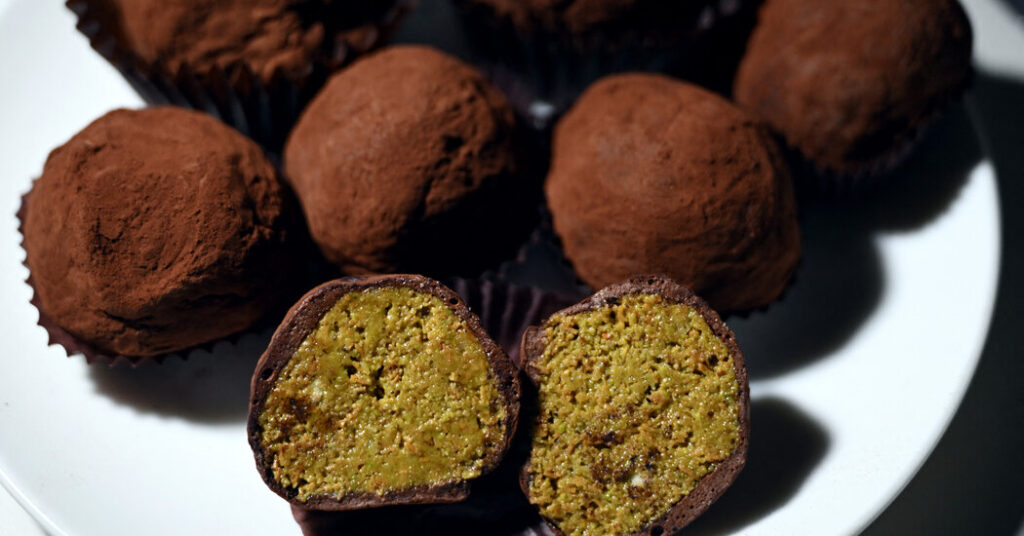
The desserts languished in the display case: brown and round, each the size of an egg, with a crunchy pistachio filling wrapped in a cocoa and marshmallow coating.
Last month, Seong Jeongmin was selling out of about 1,000 of the desserts in a few hours. On a recent Sunday evening, however, dozens remained from the 250 he had made that day. A few days earlier, he had decided to lift a four-per-customer limit.
“Now, when customers come in, they don’t look at it,” Mr. Seong, 42, said.
The rise and fall of dujjonkus or “Dubai chewy cookies” — which, despite the name, are neither cookies nor from Dubai — is emblematic of South Korea’s boom-and-bust dessert fads, according to experts. Novelty items can quickly become national sensations, but fall out of favor just as fast as the market becomes saturated and consumers lose interest.
In 2018-2019, it was “fatcarons,” macarons stuffed with extra filling. In 2022, it was Pokemon bread, pastries wrapped in packaging featuring characters from the Japanese franchise. In 2023-2024, it was tanghulu, a Chinese street snack of fruit pieces coated in a hard candy shell.
The dujjonku is a variation of Dubai chocolate, bars filled with pistachio cream and shredded phyllo known as kataifi that were developed by a chocolatier in Dubai. They became a global hit in mid-to-late 2024. In South Korea, where Dubai chocolate was also popular, a dessert store created its own version in April, the dujjonku. Its popularity took off in the second half of the year, as celebrities and K-pop idols began posting on social media.
In recent weeks, it has spread overseas, appearing in stores in New York, Toronto, Sydney and even back in Dubai.
The dujjonku craze swept South Korea over the winter. Cafes, bakeries and even ramen joints and salad counters stocked them by the dozens or hundreds, with some drawing criticism for allowing customers to buy one only if they purchased other items. Residents queued in freezing temperatures and tracked supply using a website that updated in real time. Convenience stores and franchises, including Starbucks, spun up their own versions.
Experts say several factors helped fuel the dujjonku’s surge: its chewy texture, which appeals to Korean tastes; its distinctive appearance, including a bright pistachio filling that was widely shared on social media; and its implied overseas origin, which often draws outsized attention to food in South Korea.
The frenzy was so intense that “it’s difficult to find a cafe that does not offer at least one menu item that is related to Dubai chewy cookies,” said Jerry Jisang Han, an associate professor of marketing at Sungkyunkwan University in Seoul.
Popularity reached a high in January, according to store owners and search data. This month, it has all but vanished.
On a recent Sunday in Mangwon, a neighborhood popular among younger generations for its proliferation of aesthetic cafes, bars and vintage stores, the desserts sat piled up by the dozens in many shops. Store owners like Mr. Seong, who co-owns a patisserie called Dangaodang, said sales had plummeted since early February.
“I think it’s already over,” he said. “Koreans fall out of love with things very quickly.”
Data from Naver, the country’s most popular search engine, tell a similar story. After surging to a high in mid-January, searches for the dessert dropped by half in about 17 days.
Once a product starts to gain popularity, South Koreans often feel pressure to quickly jump on the bandwagon because of the country’s collectivist norms, said Mr. Han, the marketing professor. This can result in a trend’s explosive growth.
But because trendiness, rather than any intrinsic attribute of the product, is the selling point, interest can fall sharply once the shine wears off, said Lee Yongjae, a food critic based in Seoul. That dynamic can leave questions about how much the dessert’s appeal ever had to do with flavor at all.
“You don’t care how it looks, how it tastes. All you want to do is get in line,” Mr. Lee said.
Mr. Lee is not a fan. “The outer skin is kind of leathery and the filling is very sandy and tough,” he said, adding that the dessert was not particularly visually appealing. Still, the texture was popular with Koreans, who favor dense, chewy and fudgy foods, he said.
For some Koreans, like Park Minji, 24, the dessert’s price is also a deterrent. The dujjonkus sell for about $4 to $7 apiece (6,000 to 10,000 won), relatively expensive by Korean standards. Ms. Park, who was shopping with a friend in Mangwon on Sunday, said that she bought one in January. She was intrigued by its popularity and liked the flavor, but not enough to buy another one.
“One time is okay,” she said.
The fast-moving trend cycle can be challenging for businesses. When tanghulu, the Chinese street snack, became popular in South Korea in 2023 and 2024, new specialty stores opened up around the country. As the trend fell out of fashion, many closed.
“These businesses usually recognize that the trend is likely to be short-lived,” Mr. Han said, “and their objective is to strike while the iron is hot and then sell the business or close up shop before the end of the cycle.” He added that the strategy carries significant risk.
Existing cafes and dessert shops, too, feel pressure to stay ahead of shifting trends.
Elly Moon, the co-owner of Kelly Green, a bakery in Mangwon, said she only sells 10 to 15 dujjonkus a day, less than half of what she was selling in mid-January.
Ms. Moon said she is experimenting with new pistachio-flavored desserts, in part to use up remaining stock and because she believes customers are still interested in pistachio-flavored products.
“It’s difficult, not only for us, but for everyone,” she said. “We need to keep developing other desserts or inventing new things.”
Yan Zhuang is a Times reporter in Seoul who covers breaking news.
The post South Korea Fell Hard for This Dessert, but That Was So Last Month appeared first on New York Times.