The reports are dire.
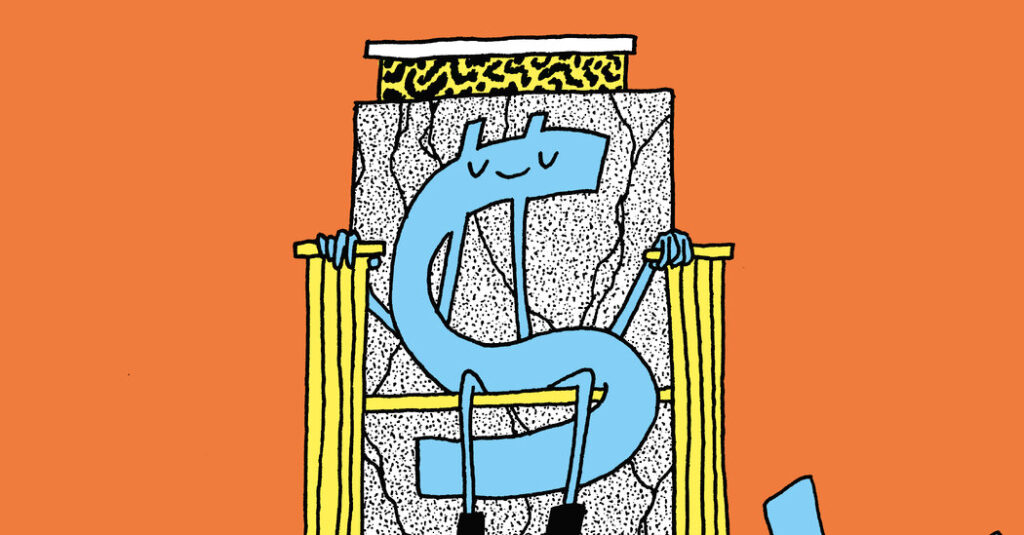
The dollar’s days of dominance are rapidly coming to an end, thanks to U.S. economic and political dysfunction. China is plotting to displace the dollar and rallying the world around the idea that its centrality in the global financial system hurts everyone else. Even American allies are shying away from the dollar now that the United States is becoming more antagonistic toward other countries.
This narrative is plausible, logical and ostensibly supported by data. But it is false. The dollar remains secure on its pedestal. The reason, though, is less the power of U.S. exceptionalism and more the weaknesses of America’s rivals and allies.
The perception of a stumble is partly thanks to Washington’s seemingly doing everything within its power to damage the dollar’s stature. The U.S. government shows no signs of reining in budget deficits and rising levels of debt. This ought to jeopardize the long-term value of Treasury securities, widely regarded as one of the most trusted and safest assets in the world. The U.S. political system has become dysfunctional, with threats of government debt defaults and lack of sanity in how fiscal policy is set and managed. America has weaponized the dollar’s dominance in global payments to throttle the international trade of rivals such as Iran and Russia but also to threaten its own allies — losing access to dollars and the U.S. banking system makes it difficult for a country to send or receive payments to other countries.
President Trump has launched a frontal attack on the independence of the Federal Reserve, which is responsible for maintaining the dollar’s value by tamping down inflation. Mr. Trump and his enablers are eroding checks and balances that keep economic and trade policies from going off the rails. Assaults on the rule of law have become the norm, leaving central banks and other international investors wondering if they can count on being able to reliably repatriate their dollar assets.
The dollar’s dominance means that volatile U.S. policies and financial market problems infect the entire world, adding instability to an already volatile situation.
Small wonder that other countries are desperate to “de-risk” by reducing their exposure to the dollar and promoting alternatives. But for all the talk of diversification away from the dollar, though, the reality is quite different. The dollar may have lost ground modestly in some respects but still dominates international reserves (it makes up central banks’ rainy day funds) and payments.
China’s central bank and others are indeed buying more gold for their reserves, while China’s reported holdings of Treasuries seem to have fallen sharply. That certainly bolsters the narrative of dollar decline. At the same time, countries like Belgium, Britain and Canada have ramped up their reported holdings of Treasuries. There’s a connection: Reports indicate that China is routing its holdings through custodial accounts in some of those countries, which hardly means Beijing is ditching the dollar.
Overall, foreign investors’ holdings of Treasuries have, in fact, increased by $650 billion since Mr. Trump took office, not much different from the increases in the two previous years. Even foreign central banks added nearly $70 billion to their stash. So the world is still buying copious amounts of “safe” dollar assets even as those assets look riskier.
Technology, in theory, ought to assist the shift away from the dollar. China has issued a digital renminbi and the European Central Bank plans to issue a digital euro in 2029. The United States has no plans to issue a digital dollar, which some argue puts the dollar at a disadvantage. China has beefed up its payment systems and made it easier to use the renminbi in international transactions. Russia and China can now directly exchange rubles and renminbi, without having to use the dollar as an intermediating currency.
In reality, the dollar’s share of global payments (excluding payments within the eurozone, which are all in euros) has held firm at close to 60 percent in recent years. A digital renminbi and digital euro are hardly going to alter the balance. A currency’s availability in digital rather than physical form will make it more convenient to use but will hardly change the trust that domestic residents and foreigners have in that currency. China’s renminbi has gained some traction in international transactions, but it still accounts for a tiny global share, and even that is mainly due to China’s own trade with other countries.
In fact, technology might end up favoring the dollar. The proliferation of dollar-backed stablecoins — cryptocurrencies backed by stores of Treasury securities and dollar deposits in banks — could make the dollar even more prominent in payments both within and between countries.
The rest of the world can complain all it wants to about the dollar but the blame for its dominance falls squarely on those very countries complaining most loudly.
Beijing clearly wants to elevate the renminbi’s prominence in international finance. But despite recent domestic and external pressure on the Chinese government to loosen up capital controls and relax management of the renminbi’s exchange rate, Beijing so far appears unwilling to do so. If foreign investors cannot move freely into and out of renminbi assets, or count on an exchange rate freely determined by market forces rather than government control, they will shy away from those assets. China’s institutional framework, including a court system and central bank that are under the thumb of the Communist Party, hardly inspires confidence among international investors.
The eurozone has economic heft but its financial system is highly fragmented and the rise of populist nationalism is fomenting dissension within and between its member countries. Major European economies and others like Britain and Japan face slow growth, high debt levels and other sorts of economic malaise. They have shown little resolve in strengthening their economies and financial systems.
So when exporters, importers, investors and central banks go looking for a safe place to park their funds and for a currency they can use easily and with few constraints, they still mostly turn to the dollar.
Thus, the real question is whether other countries are going to set their economic and financial houses in order and do what’s needed to improve their own institutions. Without that, they will remain at the mercy of the dollar, with only themselves to blame.
Eswar Prasad is a professor of trade policy at the Dyson School at Cornell University, a senior fellow at the Brookings Institution and author of “The Doom Loop: Why the World Economic Order Is Spiraling Into Disorder.”
The Times is committed to publishing a diversity of letters to the editor. We’d like to hear what you think about this or any of our articles. Here are some tips. And here’s our email: [email protected].
Follow the New York Times Opinion section on Facebook, Instagram, TikTok, Bluesky, WhatsApp and Threads.
The post No, the Dollar Is Not Dying appeared first on New York Times.