A man arrived in New York in April 2024 to discuss plans with an old acquaintance to sell traditional, yarn-dyed clothes from Pakistan to American customers.
But investigators believed his business venture was merely a ruse for assassination plots backed by the Islamic Revolutionary Guard Corps of Iran, targeting leaders including then-presidential candidate Donald J. Trump. The man, Asif Merchant, aimed to hire hit men for his targets, prosecutors said.
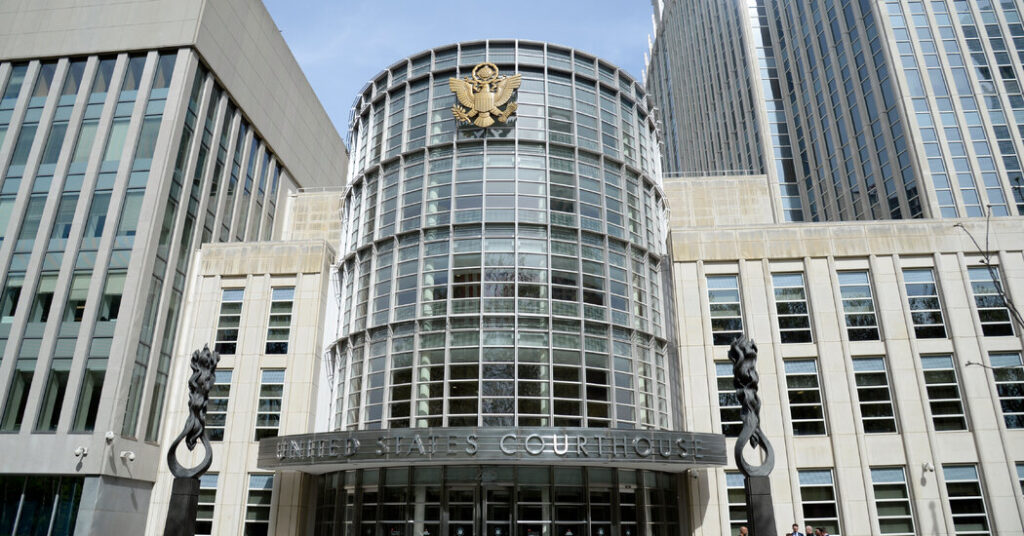
Mr. Merchant, 47, was arrested in New York on July 12, 2024, as he was trying to leave the country. He is now on trial in Federal District Court in Brooklyn and faces up to life in prison if he is convicted of terrorism charges.
During the trial’s opening statements on Wednesday, Nina Gupta, a federal prosecutor with the U.S. attorney’s office in Brooklyn, said that Mr. Merchant used a clothing business as “cover for his murder plot,” focused on people who he thought were “hurting Pakistan and the Muslim world.”
Iranian officials have for years aimed to avenge the death of Qassim Suleimani, a high-ranking member of Iran’s Revolutionary Guard who was killed in a U.S. drone attack in 2020. Such a plot was foiled in 2022, when a member of the Revolutionary Guard was charged with planning to murder John R. Bolton, the former national security adviser under Mr. Trump.
Investigators believe Mr. Merchant’s capture represents the foiling of one of several Iranian plots that targeted Mr. Trump’s life in the run-up to the 2024 election. And the day after Mr. Merchant was arrested, an American man tried to assassinate Mr. Trump at a rally in Butler, Penn., slightly wounding him.
No evidence emerged of a connection between the two schemes, though evidence at trial will show that Mr. Merchant searched the internet for the locations of Mr. Trump’s campaign rallies, prosecutors say. U.S. intelligence agencies were tracking a separate attempt on Mr. Trump’s life at the time, facilitated by Iranian officials.
During the 2024 presidential campaign, U.S. officials warned that Iran was plotting to assassinate Mr. Trump. In November 2024, after Mr. Trump was re-elected, federal prosecutors said that Iranian officials had been involved in a plot to kill Mr. Trump and Masih Alinejad, a human-rights activist in New York who has criticized the Iranian government’s repression of women.
Iran’s Foreign Ministry has denied that it was involved in those reported efforts to kill Mr. Trump, calling it a “malicious conspiracy orchestrated by Zionist and anti-Iranian circles.”
Before the trial, Mr. Merchant’s lawyers argued to the court that prosecutors should be prevented from introducing classified material from their investigation that was not shared with him as evidence. They also said that Mr. Merchant was being investigated since before he entered the United States.
On Wednesday, Christopher Neff, a lawyer for Mr. Merchant, described his client as a self-made, deeply religious man who frequently traveled to Iran and Pakistan, where he had separate families.
“To be clear, having two wives is perfectly legal in both of the countries Mr. Merchant calls home,” Mr. Neff said.
Soon after arriving from Pakistan, he contacted a man, under the guise of a business opportunity, who he thought would help him. He knew the man from previous trips to New York, Wednesday’s court proceedings revealed.
Instead, the man reported Mr. Merchant to the authorities and became a confidential informant, prosecutors said in filings.
In June 2024, Mr. Merchant traveled from Texas to New York to meet the informant, who drove them to a hotel in Queens. There, Mr. Merchant told the informant that the business opportunity would be ongoing, using his hands to mimic a gun.
Later on the trip, in the informant’s hotel room, Mr. Merchant took a napkin and placed objects on it that represented people and places in a potential assassination plot, including the target, a crowd and surrounding buildings.
He then created code words to guide their future conversations and that laid out the plot. A “T-shirt” referred to organizing protests at political rallies; “flannel shirt” meant stealing; and “fleece jacket” was murder.
From there, prosecutors said Mr. Merchant hired people he thought were hit men in his plots, but were in fact undercover U.S. law enforcement officers. He told them the plan — stealing documents, organizing counter-protests at rallies and to “kill somebody” — and agreed to pay $5,000 as an advance payment, prosecutors said.
In late June, Mr. Merchant met the hit men and handed them the money in cash, according to prosecutors. He told the informant that the plot would be carried out after he left the United States, prosecutors said.
After Mr. Merchant’s July 2024 arrest, he told investigators that he was trained by the Revolutionary Guard, according to a November 2024 memo written by Lisa Monaco, the deputy attorney general under President Joseph R. Biden Jr.
He communicated with his Revolutionary Guard handler by sending messages hidden inside gift bags that were sent to Pakistan, according to the memo. Investigators did not find any evidence of Iranian operatives connected to Mr. Merchant working inside the United States, the memo said.
Santul Nerkar is a Times reporter covering federal courts in Brooklyn.
The post Man Accused of Plotting to Kill Trump Goes on Trial appeared first on New York Times.