Brad Gausman is executive director of the Minnesota Wildlife Federation. Collin O’Mara is president and CEO of the National Wildlife Federation.
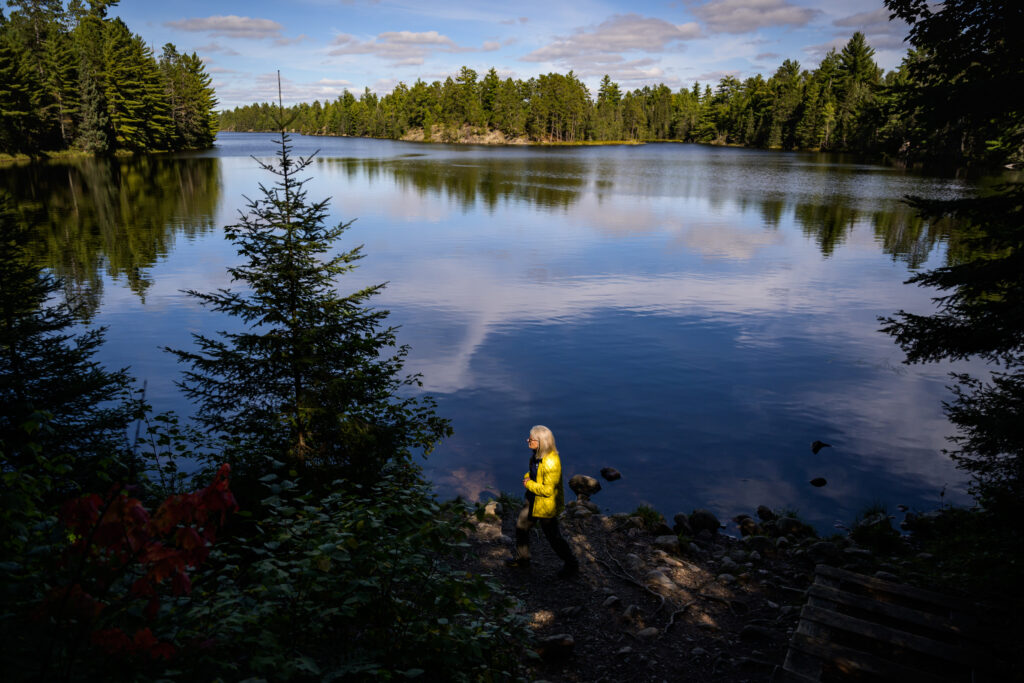
If you paddle far enough into the Boundary Waters Canoe Area Wilderness in Minnesota, the noise of the modern world falls away. In its place, you hear the call of a loon, the slap of a beaver’s tail and a silence that has remained unchanged since the glaciers receded.
For those of us who hunt, fish and love the outdoors, the Boundary Waters is 1.1 million acres of the most pristine backcountry on the planet — the kind of place where you drink water straight from the lake and track white-tailed deer through woods that have never known a saw.
But in Washington, the Senate this week is expected to vote on a resolution that would pave the way for a Chilean conglomerate to turn much of this paradise into an industrial zone. The resolution proposes an unprecedented use of the Congressional Review Act (CRA) that would dismantle the last remaining safeguards against a massive mining project in the wilderness’s headwaters.
The Boundary Waters and nearby U.S. Forest Service lands have been safeguarded since 2023 by a 20-year mineral withdrawal, which limits mining activity in the area. This protection prevented Twin Metals Minnesota, a subsidiary of Chilean conglomerate Antofagasta plc, from developing two hard rock mining leases, which were first issued in the 1960s.
The resolution uses the CRA — which enables Congress to review and overturn certain federal actions — to undo the mineral withdrawal, opening the door for the mining project to move forward.
For hunters and anglers — and that includes us — opposing this project isn’t about being “anti-mining.” Our state is home to the Iron Range. Many Minnesotans grew up with the taconite industry and support American mining and mineral development when it can be done safely and responsibly. But Ted Stevens, the Republican senator from Alaska who died in 2010, put it best when he fought to protect Bristol Bay in 2008: “I am not opposed to mining, but it is the wrong mine for the wrong place.”
That same logic applies to the Boundary Waters.
The proposed mine would not be tucked away in some remote corner; it would sit directly upstream of the interconnected lakes and streams that make the wilderness a natural treasure. And unlike the iron mining that built Minnesota, this project would dig for copper in sulfide-bearing ore. When that waste rock hits air and water, it creates sulfuric acid.
The geography of the Rainy River Basin makes the ecological risks dire. The Boundary Waters sits on the Canadian Shield, a massive slab of granite with almost no limestone to neutralize acid. The water is “soft” and has virtually no defenses. If acid mine drainage leaks — and the Environmental Protection Agency’s own data shows that nearly every copper mine of this type eventually spills — the sulfuric acid and other toxic pollutants would inevitably ride the current downstream.
An acid spill could mean the collapse of the Boundary Waters food chain. Acidification kills the zooplankton and minnows upon which the rest of a lake depends. When the baitfish die, the native lake trout and trophy walleye follow.
Minnesotans are being asked to risk damaging a $1 billion American outdoor economy that supports 17,000 jobs for a speculative venture. The copper concentrate mined in Minnesota would likely be shipped overseas to feed smelters in China. An iconic American wilderness would be scarred to supply the global market, with the profits flowing to Santiago, Chile, and the strategic benefits going to foreign competitors rather than helping secure U.S. mineral independence.
The procedural precedent would be even more concerning. The CRA was built to check federal regulatory overreach, not to micromanage a specific state’s backyard. In the nearly 30 years since Congress enacted the law, no resolution addressing a specific project in a specific state has passed the Senate without the support of the home-state senators. And yet Congress is barreling ahead despite the opposition of both Minnesota senators.
The Senate should honor the wishes of Minnesota’s senators and acknowledge that this project would simply be the wrong mine for the wrong place. The Boundary Waters deserves to be kept wild, clean and exactly as it has been for thousands of years.
The post This Minnesota wilderness is the wrong place for a copper mine appeared first on Washington Post.