Peak oil may be on the horizon. But peak plastic is nowhere in sight.
In a new book, “Plastic Inc.,” the journalist Beth Gardiner digs into an industry that mostly flies below the radar but has huge impacts on human health, environmental pollution and global warming.
She reveals a set of corporate actors, including some well-known names like Exxon Mobil and Saudi Aramco, that are doing everything in their power to get the world to use as much plastic as possible.
It’s a sobering read that exposes disinformation campaigns, efforts to foist responsibility onto individual consumers and brutally effective political lobbying, all of it very similar to the playbooks used by Big Tobacco and Big Oil.
I spoke with Gardiner on Monday, ahead of the book’s release today. Her remarks were lightly edited for clarity.
What do most people misunderstand about plastic?
So much of the way that we talk about plastic focuses on one of two things: either where it ends up, beaches covered with trash or a turtle with a straw up its nose, or how we can personally use less of it.
But we’ve lost the focus on where plastic is coming from, and that obviously is the fossil fuel and petrochemical industries. While you and I are taking our canvas bags to the grocery store, Exxon and Saudi Aramco are actually going the other direction. They are ramping up to increase plastic production in the years to come. I’m trying to shift the lens to who built this system that we are all living in.
(Both companies say they are working to improve recycling technologies and make plastic more sustainable.)
The industry says it’s just meeting demand. What did you find?
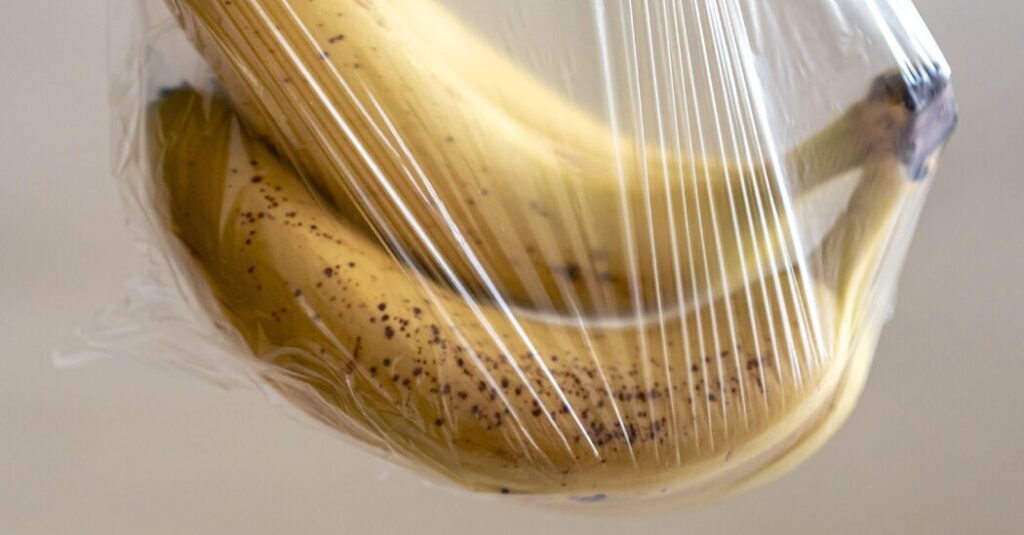
If you go to the supermarket, and you buy a bunch of bananas, and they come wrapped in plastic, you did not demand plastic wrapping. You demanded, economically speaking, bananas.
Plastic has always had this unique ability to reverse the usual dynamic between supply and demand. If you look at the American fracking boom, the main product is methane. But you also get this byproduct, ethane. In the early years of U.S. fracking, ethane was being burned off at well heads because there was no use for it. Soon, the industry realized it could be monetized because, through several steps, it can be processed into polyethylene, which is the most common plastic in the world. Suddenly something that had been a waste product is a marketable product with a dollar value.
You document a deliberate industry playbook to keep all this unregulated.
If you look back to 1945, you see in the historical documentation planning for a very deliberate effort to promote disposability. As the country becomes aware of a big waste problem, the industry co-opts concerns: “We share your concern,” and “the problem with plastic is only about where it ends up, there’s not an issue with how much is being used.”
And as they’re mounting media campaigns to this effect, they’re fighting tooth and nail behind the scenes against every law that might impinge on their ability to sell more plastic. That public green talk is paired with a very bare-knuckles, big-money push to stop any political measure that would hamper their ability to sell more plastic.
What about the health consequences?
There’s research linking chemicals from plastics with infertility, cancers like prostate and breast and uterine cancer, but also with neurocognitive issues like Attention Deficit Hyperactivity Disorder. Autism may be influenced by chemicals from plastic. What’s shocking is how much they correlate with the things we see all around us. And the other shocking thing is how little they’re regulated.
What’s the connection between plastic and climate that people are missing?
I had always thought of climate and plastic pollution as two separate environmental crises. They are, in fact, interconnected to a greater degree than I had understood. And of course they are, because it’s the same companies.
When you frack, you get methane and ethane. If you’re using the ethane to make plastic, it’s an additional revenue stream, so when the price of methane tanks, it keeps that well pumping, and you’re still going to sell the methane, and it’s still going to get burned. It’s a way of keeping this business model, which has been so disastrous for our collective well-being and future, alive.
So what do we do about it?
The thing you hear most from policy experts is to extend producer responsibility laws. The fundamental idea is that they put the financial burden of plastic waste onto the companies that produced and sold the plastic in the first place. The reason plastic is so omnipresent in our lives is that it is so cheap, and its low cost does not reflect its real cost.
-
More on plastics: A federal judge in Texas has dismissed Exxon’s lawsuit against environmental groups that sued the company. Exxon had accused the groups of trying to sabotage its recycling business.
Some Reese’s Treats Drop the Milk Chocolate. Mr. Reese Disapproves.
Brad Reese, the grandson of the inventor of the Reese’s Peanut Butter Cup, took to LinkedIn recently to defend his family’s candy name.
He wasn’t happy about a bag of Valentine’s Day Reese’s Mini Hearts, a seasonal peanut-buttery treat covered in chocolate. Except, the covering was not actual milk chocolate. Hershey’s, which makes Reese’s brand candies, was using a chocolate-flavored coating that can’t legally be referred to as milk chocolate, a term that is regulated by the Food and Drug Administration.
Hershey’s said it had made recipe adjustments to some Reese’s products “that allow us to make new shapes, sizes, and innovations.”
It’s the latest of the recipe changes that have been spreading across the candy business as prices for cocoa have climbed in recent years, driven by a confluence of factors including drought, financial speculation and labor shortages. — Claire Brown Read more.
More climate news from around the web:
-
Two data center developers have asked the E.P.A. for exemptions from environmental regulations, Grist reports. The requests, uncovered under the Freedom of Information Act, illustrate the industry’s desperate quest for energy.
-
The Wall Street Journal walks through the weather science behind the blizzard that hit the East Coast this weekend.
Read past editions of the newsletter here.
If you’re enjoying what you’re reading, please consider recommending it to others. They can sign up here.
Follow The New York Times on Instagram, Threads, Facebook and TikTok at @nytimes.
Reach us at [email protected]. We read every message, and reply to many!
David Gelles reports on climate change and leads The Times’s Climate Forward newsletter and events series.
The post Plastic, Plastic Everywhere appeared first on New York Times.