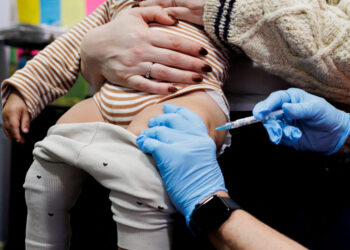
There are more than 900 confirmed measles cases in the United States, as of the Centers for Disease Control and Prevention’s most recent weekly count. It’s less than two months into the year, “and we already have over a quarter of [the measles cases] we had all of 2025, so things are not great,” said Katrine Wallace, an epidemiologist and adjunct assistant professor at the University of Illinois at Chicago School of Public Health.
Measles is the most contagious disease known and can be serious, especially for young children. It spreads when a person coughs or sneezes and can cause a distinctive rash with flat red spots, along with fever and upper respiratory symptoms. More severe complications sometimes develop, such as pneumonia and encephalitis. Before a vaccine was available, measles was responsible for an estimated 2.6 million deaths a year.
Two doses of the measles, mumps and rubella or measles, mumps, rubella and varicella (chickenpox) vaccines — MMR and MMRV, respectively — usually provide lifetime protection against measles. At least 95 percent of the population needs to be immune to achieve herd immunity, which is critical for protecting those who can’t be vaccinated, such as children younger than 12 months. But plunging vaccination rates allow outbreaks to occur, and even states that have vaccination rates above 90 percent are experiencing outbreaks.
“We’re starting to see this tipping point where these outbreaks are lasting longer, they’re bigger, they’re more frequent,” said Nathan Lo, an infectious diseases physician and scientist at Stanford Medicine. Some experts, including Lo, worry the U.S. will lose its measles elimination status this year, a designation it has had since 2000. Measles is considered eliminated in a geographic region when it is no longer circulating naturally. A number of countries have lost this status over the past few months, including the United Kingdom and Spain.
When vaccination rates decrease, the most highly contagious diseases pop up first, “and that’s why we call measles the canary in the coal mine,” said Wallace. Other vaccine-preventable infectious diseases could follow, the World Health Organization warned in a joint statement with UNICEF and Gavi, the Vaccine Alliance, last year. Some already show a worrisome upward trend.
“Measles is the most contagious disease that we have, period,” Wallace said. “So as soon as we start to see measles, we know that the [vaccination] rates in that county or state are starting to drop, and so other diseases will follow on to that, but they just take longer to rip through the communities.”
Pertussis
After measles, “I think the second-most concerning is whooping cough, or pertussis,” said Karen Kotloff, a pediatrician and head of the Division of Infectious Disease and Tropical Pediatrics at the University of Maryland School of Medicine. Whooping cough can be mild, but the respiratory illness is potentially dangerous for young children. (The condition causes severe coughing fits and gets its name from the “whooping” sound people make when gasping for breath afterward.) “The fatality for pertussis is even higher than for measles, and it tends to affect little babies,” Kotloff said.
Unlike measles, pertussis never went away — the bacterial infections follow a cyclical pattern, reemerging as an epidemic every three to five years. Cases dipped during the covid-19 pandemic, when masking and social distancing prevented its spread, but “now it’s starting to creep up again,” Kotloff said.
With vaccination coverage declining, provisional data shows pertussis cases were about six times higher in 2024 than in 2023, levels greater than they were before the pandemic. In preliminary 2025 data, cases also appear higher than those pre-pandemic numbers. The dip in pertussis cases during the pandemic “masked the reduction in immunization rates, because there were disruptions in immunization, so that trend has continued,” said Saad Omer, a professor at the UT Southwestern Medical Center and dean of the O’Donnell School of Public Health, both in Dallas.
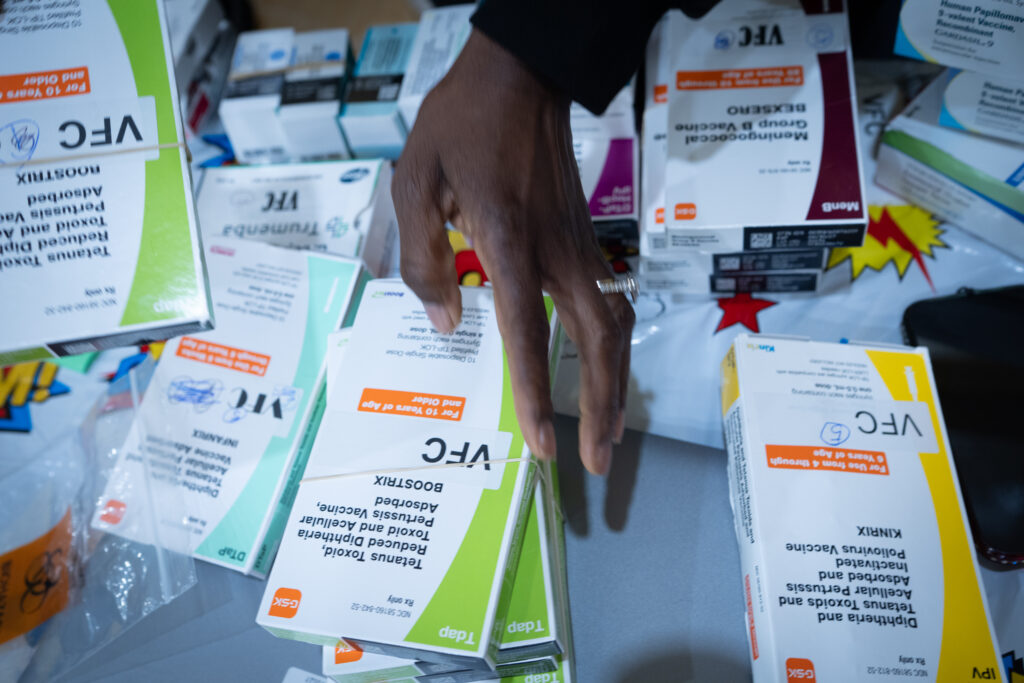
The pertussis vaccine — the “P” in the DTaP and Tdap shots, which also cover diphtheria and tetanus — protects against whooping cough; the first dose can be given at 2 months. This vaccine does not offer lifelong protection, so boosters are needed, especially during pregnancy, when a mother can pass some immunity to her baby for the first weeks of life, as well as for other adults caring for a newborn.
Meningitis
Meningococcal disease, or meningitis, isn’t as widespread or infectious as measles and pertussis. But cases have been increasing since 2021, and the meningococcal vaccine was recently removed from the CDC’s universal recommendation for adolescents. Experts said this could create conditions that enable future outbreaks.
“If we have meningitis in the community, and then we decide we aren’t vaccinating our teenagers anymore for meningitis, we’re going to end up having outbreaks in college dormitories,” Wallace said. Meningococcal disease is fast-moving and serious, potentially causing death within hours. “I don’t even want to think about having [meningitis] become more common,” Lo said.
Polio
Children receive four doses of the inactivated polio vaccine (IPV) starting at 2 months old. Poliovirus infection can be serious, leading to paralysis or death. Some survivors develop post-polio syndrome, which can cause lifelong muscle weakness, fatigue or joint pain.
“Back in the 1950s, people were hysterical about the risk and dangers of polio in their communities, and saw the development and availability of the polio vaccine as an amazing success,” said Art Reingold, a professor of epidemiology at University of California at Berkeley School Public Health.
The hope, Reingold said, had been that polio would eventually disappear globally, as smallpox did in the late 1970s after its successful eradication program. But while polio has been eliminated in the U.S. since 1979, wild poliovirus continues to cause disease in Afghanistan and Pakistan. In 2022, there was a case of paralytic polio in an unvaccinated adult in Rockland County, New York, an area that had low vaccination coverage.
There’s no evidence the virus is currently circulating in this country, but it could be reintroduced if vaccination levels drop. In a simulation model published in JAMA last year for which Lo was a co-author, researchers found that if there were a 50 percent decline in childhood vaccinations, there could be 4.3 million annual polio cases in the U.S. by 2050. “The chances [of polio reemerging] are lower than measles, but what makes it uncomfortable is that it’s not zero,” Omer said.
Rotavirus
Rotavirus can cause babies and other young children to become rapidly dehydrated. Before the availability of rotavirus vaccines, which can be given by 15 weeks, “almost all children during the first two years of life would get rotavirus infection,” Kotloff said, “and now, with the vaccine in the U.S., young doctors in training might not even see rotavirus infections, it’s been such an effective vaccine.”
Infections are usually mild, Reingold said, “but occasionally kids will get very sick.” Rotavirus was responsible for around 70,000 hospitalizations and 20 to 60 deaths a year before the vaccine was introduced in 2006. The virus is still a leading cause of severe diarrheal disease in young children worldwide.
It’s “a little too soon to say” whether there will be more frequent outbreaks now that this vaccine is no longer universally recommended by the CDC, Reingold said. But if vaccine rates dip, cases are “likely to increase in the near term,” Lo said.
RSV
Like rotavirus, symptoms of respiratory syncytial virus (RSV) are often mild. But certain people are at risk for severe illness, particularly kids who are born prematurely or have underlying diseases, such as heart defects, according to Kotloff. “Those kids can end up in the ICU.”
The Food and Drug Administration approved vaccines or antibody treatments for RSV in 2023 and 2024: the maternal RSV vaccine (Abrysvo), which can be given during pregnancy to protect newborns during RSV season, and two monoclonal antibodies (nirsevimab and clesrovimab), which can be used to treat infants whose mothers did not receive a maternal RSV vaccine. Three vaccines (Abrysvo, Arexvy and mResvia) are approved for older adults, a group also more susceptible to complications from this virus. Data from the 2024-2025 RSV season, the first with widespread availability of RSV vaccines, showed lower RSV hospitalization rates than during the pre-pandemic years.
“Until recently, we’ve lived in a world without RSV vaccines, and now suddenly you have these great vaccines,” Lo said. With RSV vaccination no longer universally recommended for children by the CDC, “we may miss out on the full public health impact that widespread vaccination could achieve,” he said.
Tetanus
Unlike many other vaccine-preventable diseases, herd immunity doesn’t exist for tetanus, a rare but potentially life-threatening infection caused by Clostridium tetani bacteria. “You get tetanus from the environment.” Lo said. “So the only people who are protected are those who are vaccinated.” You can get tetanus from stepping on a nail or splinter, a burn or other types of tissue damage that introduces soil, dust or other contaminants that contain bacterial spores — even minor cuts and scrapes.
Luckily, tetanus, which can cause muscle spasms so severe that they can fracture bones, is uncommon in the U.S., with fewer than 40 cases reported each year. Tetanus is part of DTaP vaccination during childhood, as well as in the Td or Tdap shots as a booster, which is recommended every 10 years for adults. Coverage of the DTaP vaccine declined in more than half of states during the 2024-2025 school year, and more people could become vulnerable to tetanus if that trend continues.
Rubella
In addition to being at risk for measles and mumps, anyone not up-to-date on their MMR vaccine is susceptible to rubella. Like measles, rubella may be mild, with symptoms like a cough, fever and red rash. But serious complications can develop, too, particularly if someone contracts rubella during pregnancy.
“Congenital rubella syndrome occurs when mothers are infected during the first trimester of pregnancy and passes the infection to her unborn baby,” Kotloff said, which can result in miscarriage, or problems with a child’s heart, eyesight or organs, such as the spleen or liver.
In the JAMA simulation model Lo co-wrote, researchers found there could be 9.9 million rubella cases in the U.S. in 25 years, should childhood vaccinations decline by 50 percent. “Rubella is currently eliminated in the U.S., but would be at risk of returning if vaccine rates go down significantly,” he said.
Hepatitis B
Hepatitis B is a liver infection spread through bodily fluids, often from mother to child. Getting infected at a young age carries a high risk for developing cancer later on, “so early vaccination at birth is key to prevent this,” Lo said.
Since the introduction of the HepB vaccine in the late 1980s, there has been a 99 percent decline in infant hepatitis B infections. But the hepatitis B vaccine is also no longer universally recommended by the CDC for all newborns, which “runs the risk of increasing the number of unprotected children who become infected and are at risk for suffering and death,” Kotloff said. Infants of women who are not screened for hepatitis B during pregnancy will be especially at risk, she said.
Diphtheria
Diphtheria is no longer common in the U.S. But the bacterial disease still circulates in parts of the world with lower vaccination coverage, and there have been cases where it was brought back by travelers. In that same 2025 JAMA simulation model, researchers found there could be 197 diphtheria cases in the U.S. annually by 2050 if childhood vaccinations decline by 50 percent.
A serious disease, diphtheria spreads through respiratory droplets in the air and damages tissues in the nose, tonsils and throat within days. In someone who is unvaccinated, the disease has about a 30 percent chance of being fatal, according to the World Health Organization. “Diphtheria is an infection that virtually suffocates a child,” Kotloff said. “These are horrible diseases that we’ve been fortunate enough to eradicate in this country, and it just terrifies me to think that for irrational reasons, we’re going to lose our lucky opportunities.”
The post As measles spreads, these 9 vaccine-preventable diseases could be next appeared first on Washington Post.