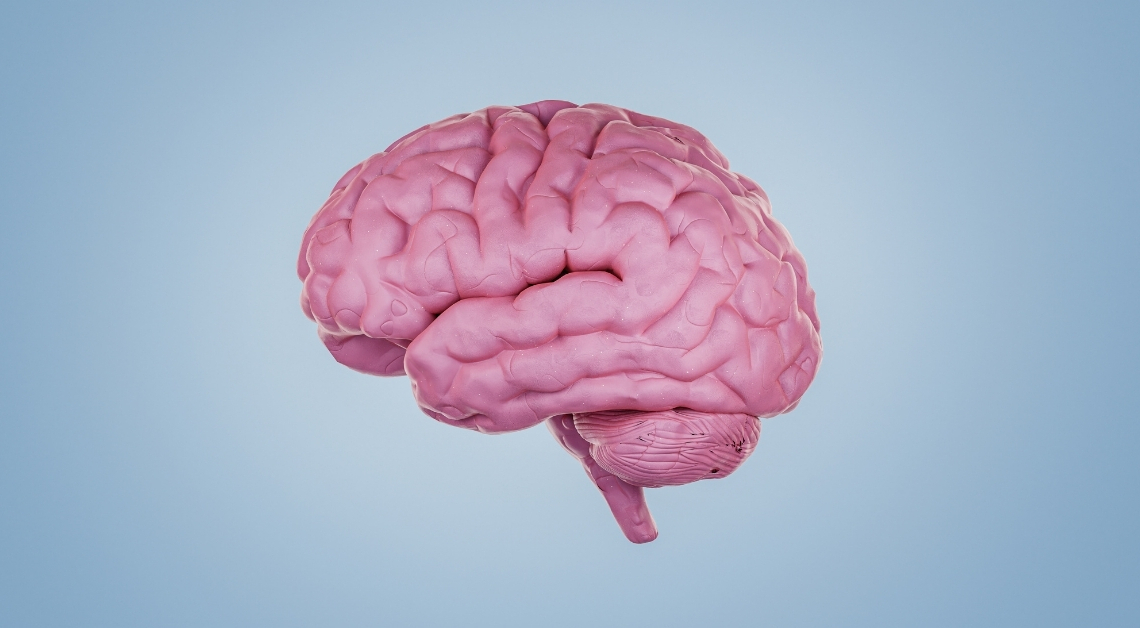
It’s one of those commonly accepted “facts” that isn’t really a fact at all. Your frontal lobe hasn’t fully developed until the age of 25.
Now, according to reporting in The Conversation by Taylor Snowden, Post-Doctoral Fellow in Neuroscience at Université de Montréal, that “age 25” is not only flat out wrong, but it sells short how much growth our brains undergo well past the age of 25.
The frontal lobe is where all of our planning, judgment, and decision-making takes place. Yes, it matures later than other regions. Brain imaging studies from the early aughts that tracked grey matter development in children and teens found “pruning” in the brain, a process by which the brain trims unused neural connections while strengthening the more frequently used ones. Separate research found that frontal regions were still maturing in participants up to age 20.
The research teams seemingly stop scanning brains after the early to mid-20s. Scientists couldn’t pinpoint when development actually ended, so the estimate of 25 became a placeholder that was close enough and quickly became enshrined in the hallowed halls of pop science common knowledge.
The Idea That Your Brain Stops Developing at 25 Isn’t Exactly True
Newer research that actually dared to scan brains beyond the early to mid-20s found that, by examining more than 4200 people from infancy to age 90, major developmental stretching from age 9 to 32 was observed in the brain’s white matter connectivity, which is the brain’s communication pathways.
It all has to do with the types of functions the brain performs at different ages. Around 32, the brain seems to slow the formation of new routes and instead begins stabilizing and maintaining the most-used pathways. But even that doesn’t paint a complete picture. A more well-rounded view, according to Snowden, is that brain development is a long-term, decades-long construction project, in which your teens and 20s are spent building, and your 30s are spent tweaking and refining.
But just because the brain is building new pathways during the early 30s doesn’t mean neuroplasticity is nosediving. You can keep your brain elastic by reading and exercising while keeping your stress levels low, so stress doesn’t fog your brain.
The post Your Brain Doesn’t Stop Developing at 25, It Keeps Changing Until This Age appeared first on VICE.