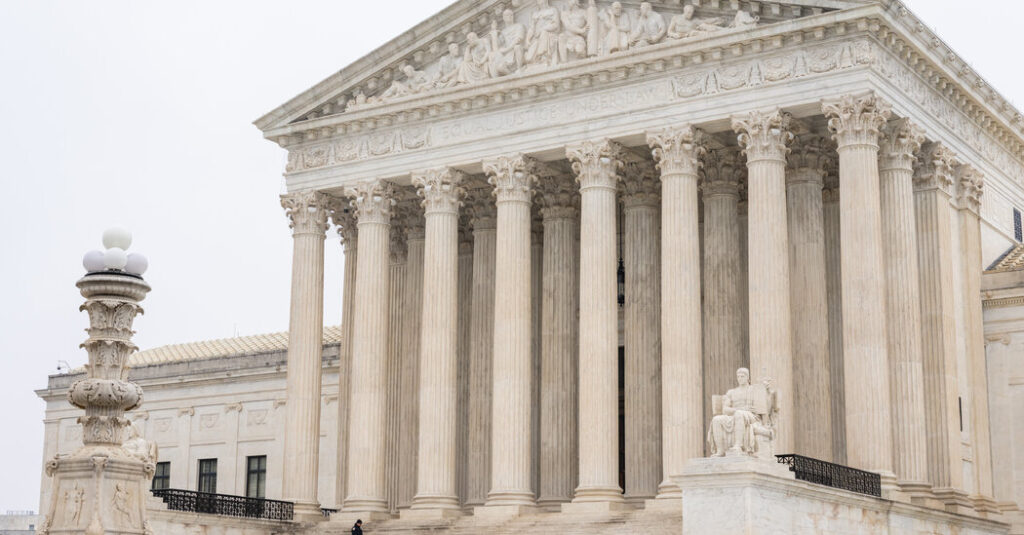
On Friday, the Supreme Court ruled that President Trump’s sweeping tariffs on U.S. trading partners violated federal law. The ruling dealt a major blow to the administration’s economic agenda and left trade deals in limbo as world leaders tried to figure out their next steps.
Here’s what has happened since Friday:
The court’s 6-3 decision determined that Mr. Trump exceeded his authority in imposing the levies.
-
Chief Justice John G. Roberts Jr. wrote for the majority that the 1970s emergency statute that Mr. Trump invoked to bypass Congress did not allow him to unilaterally impose the duties.
-
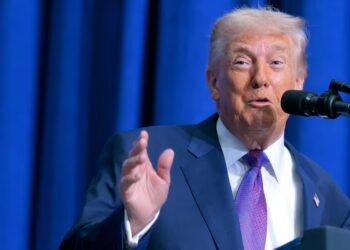
Mr. Trump was in the East Room of the White House speaking to a group of governors and cabinet officials when he found out that the court had struck down his tariffs. He told those gathered that he had a contingency plan and ended the meeting early.
-
In a news conference at the White House on Friday afternoon, Mr. Trump announced a 10 percent global tariff on all imports, using a different legal authority to impose them. He also said that he would open investigations into unfair trade practices in an effort to secure additional tariffs, and that he would not reinstate the so-called de minimis exemption, a policy that had allowed billions of dollars of low-value imports to enter the United States tax-free.
-
Mr. Trump vowed to press forward with his tariff tactics despite the ruling. “It’s ridiculous but it’s OK. Because we have other ways, numerous other ways,” the president said on Friday. “The numbers can be far greater than the hundreds of billions we’ve already taken in.”
-
On Saturday, Mr. Trump said that he would raise the new global tariff rate to 15 percent, effective immediately.
Fiscal concerns swirl as experts assess the fallout from the court’s decision and the president’s reaction.
-
The federal budget has reached a new level of volatility. Tariffs had become a key source of revenue, and it’s unclear if Mr. Trump will be able to make up the difference to help pay for an expensive tax cut that he signed into law last year that will add to the nation’s deficit.
-
The fate of billions of dollars in duties collected by the United States remains up in the air. The Supreme Court has left it to the U.S. Court of International Trade and the lower courts to figure out refund proceedings. Mr. Trump was also unsure of how the process would work.
-
The ruling may have dashed Mr. Trump’s spending dreams, which had tariffs as their centerpiece. He had promised to use tariff revenue to offset the costs of programs that included a bailout for farmers who had faced retaliation from other countries because of his trade wars.
-
But Trump aides said on Sunday that the administration was on track to resurrect its punishing tariffs through a new approach that they contended would better resist legal challenges.
“The president has been campaigning on tariffs and protecting American industry for many years,” Jamieson Greer, the U.S. trade representative, said on ABC’s “This Week.” “The policy hasn’t changed.”
American businesses and consumers are unsure how any new tariffs will affect them.
-
American companies celebrated the ruling after enduring months of burdensome import taxes. But their relief quickly turned into newfound concern as Mr. Trump renewed his trade war with a slate of new tariffs.
-
A poll released on Friday that was taken before the Supreme Court’s ruling showed that 64 percent of Americans disapproved of Mr. Trump’s tariffs.
-
Consumers will have to wait to see how the ruling affects prices for imported products like apparel, electronics and furniture. Economists warned that any short-term boost to the economy could be hurt by a lengthy period of uncertainty.
-
Apple might be among the biggest winners if lower tariffs stick. While the tech giant has moved to shield itself from Mr. Trump’s trade squabbles, it has paid more than $3 billion in tariffs over the past three quarters.
In Washington, an angry President Trump is singling out those who opposed him.
-
Mr. Trump castigated the justices who ruled against him, calling them “fools and lap dogs” and said he would push forward with new tariffs anyway. He suggested that two he had nominated during his first term — Justices Neil M. Gorsuch and Amy Coney Barrett — were “an embarrassment to their families” because they didn’t take his side.
-
Mr. Trump punished a Republican lawmaker, Representative Jeff Hurd of Colorado, on Saturday by withdrawing his endorsement of the lawmaker. Mr. Hurd had joined House Democrats in voting to cancel tariffs on Canada. Mr. Trump backed Mr. Hurd’s right-wing primary opponent.
-
A small group of Republicans in Congress lauded the court’s ruling, including Senator Chuck Grassley of Iowa and Senator Mitch McConnell, the Kentucky Republican and former longtime party leader, who called for their branch of government to reassert its role in trade matters.
With international trade deals imperiled, world leaders look for clarity.
-
Countries that had struck trade deals with Mr. Trump to get lower tariff rates are now stuck with them. Last week, Japan committed to $36 billion in investments in the United States and Indonesia signed an agreement in Washington under threat of damaging levies. The court ruling has left their leaders wondering if their agreements will stand.
-
In Europe, officials had hoped that this year would bring stability to international trade after a chaotic 2025, but the ruling now leaves last year’s trade deal between the European Union and the United States in flux. With questions of refunds and Mr. Trump’s new unilateral tariffs, European leaders are closely watching the president’s next move.
-
For Canada, the most detrimental tariffs remain in place. American levies aimed at Canadian manufacturers — including the automotive, steel and aluminum industries — and the lumber sector were imposed under a different law and are unaffected by the court’s ruling.
Kim Bhasin is a business reporter covering the retail industry for The Times.
The post What’s Happened Since the Supreme Court’s Tariff Ruling appeared first on New York Times.