After the Supreme Court struck down the legal basis for President Trump’s sweeping tariffs on Friday, many U.S. trading partners saw the tariff rate on their goods lowered from what they faced before the ruling. But for others, like Britain and Australia, the math went the other way.
The legal setback led the Trump administration to announce that it would temporarily impose new 10 percent tariffs under a different law, Section 122 of the Trade Act. Over the weekend, the administration raised the rate to 15 percent, the maximum the law allows.
Like the earlier “reciprocal” tariffs that were invalidated by the court, the new import duties upend years of economic cooperation. In some cases, the new tariffs thrust into doubt trade deals agreed to only months ago.
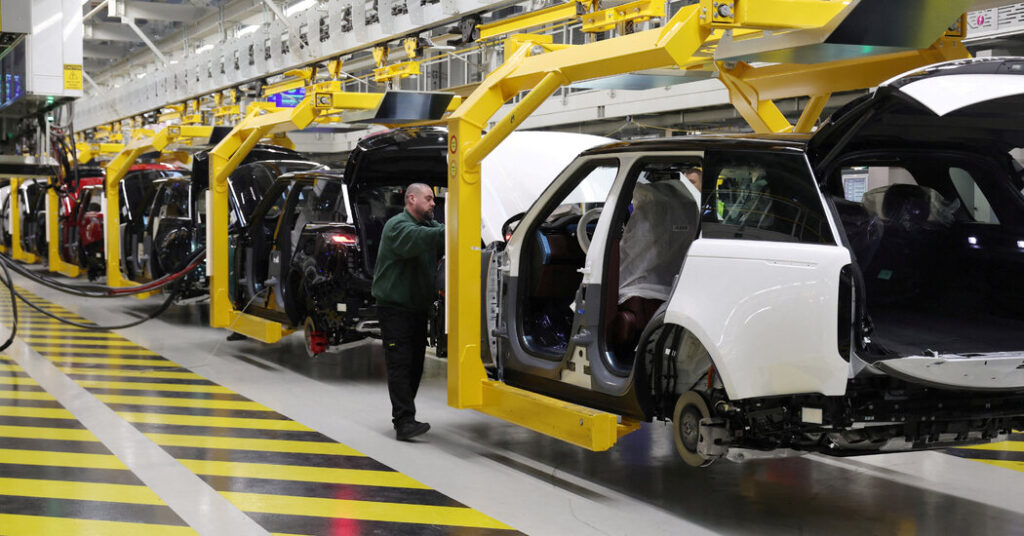
Britain became the first country to reach a trade deal during Mr. Trump’s second term, and both governments emphasized the “special relationship” between the two countries. As part of the deal, reached in May, Britain secured a 10 percent tariff rate, which was applied on top of existing levies. Britain also secured some lower sectoral tariffs, which rely on a U.S. legal authority not subject to the Supreme Court ruling, on its exports of cars and plane parts, in exchange for accepting higher imports of American beef and ethanol.
After Mr. Trump said on Saturday that he would raise an across-the-board tariff to 15 percent, putting Britain in a worse situation, government leaders in London sounded less certain about their country’s special status. Bridget Phillipson, the education secretary, said on Sky News on Sunday that Britain had secured a “preferential deal” and that “we would hope and expect that to continue, but these discussions are ongoing.”
The higher global tariff rate makes Britain the biggest loser among America’s top 20 import countries, with Japan, South Korea and major European Union members also worse off, according to Global Trade Alert, a nonprofit policy tracker. Brazil, China and India stand to benefit the most.
Most of Britain’s trade with the United States is in services, but last year it exported about 60 billion pounds ($81 billion) of goods to the United States, from about 40,000 companies.
These businesses “will be dismayed at this latest turn of events,” William Bain, head of trade policy at the British Chambers of Commerce, said in a statement. “We had feared that the president’s Plan B response could be worse for British businesses and so it is proving.”
For Australia, a free-trade agreement signed in 2005 eliminated virtually all trade barriers between it and the United States. Mr. Trump’s initial batch of tariffs last spring imposed a base-line 10 percent rate on Australia and many other countries. That means that Australia is also now subject to higher rates than before the court ruling for most of its exports.
Prime Minister Anthony Albanese of Australia called the new levies unfair at a news conference on Monday. “We will of course make appropriate representations,” he said. “We support free and fair trade.”
The White House did not respond to a request for comment.
Trade with the United States is a small fraction of Australia’s total trade activity, but it is strategically important. In October, the two countries signed a deal to secure the supply of critical minerals and rare earths, materials the United States needs as it tries to reduce its dependence on China, which has used restrictions on rare earth exports as a trade cudgel. Australia is the world’s fourth-largest rare earth producer, according to the Center for Strategic and International Studies.
Strong economic ties between Australia and the United States were viewed as important factor for national security, said Jared Mondschein, director of research at the United States Studies Centre, an Australian think tank. Rewriting the trade rules, he added, “doesn’t help the U.S.-Australia alliance.”
Several aspects of Britain’s trade agreement with the United States have been bogged down in negotiations, which have been complicated by the Supreme Court ruling. Britain has been pushing for the United States to enact lower tariffs on its steel exports, while the Trump administration wants Britain to accept more U.S. agricultural goods and is frustrated with the country’s digital services taxes and regulations.
“This is an evolving situation,” Ms. Phillipson said on Sunday. “But of course, we want to get the best possible deal for British businesses.”
Eshe Nelson is a Times reporter based in London, covering economics and business news.
The post U.K., Australia and Others Worse Off Under Trump’s New Tariffs appeared first on New York Times.