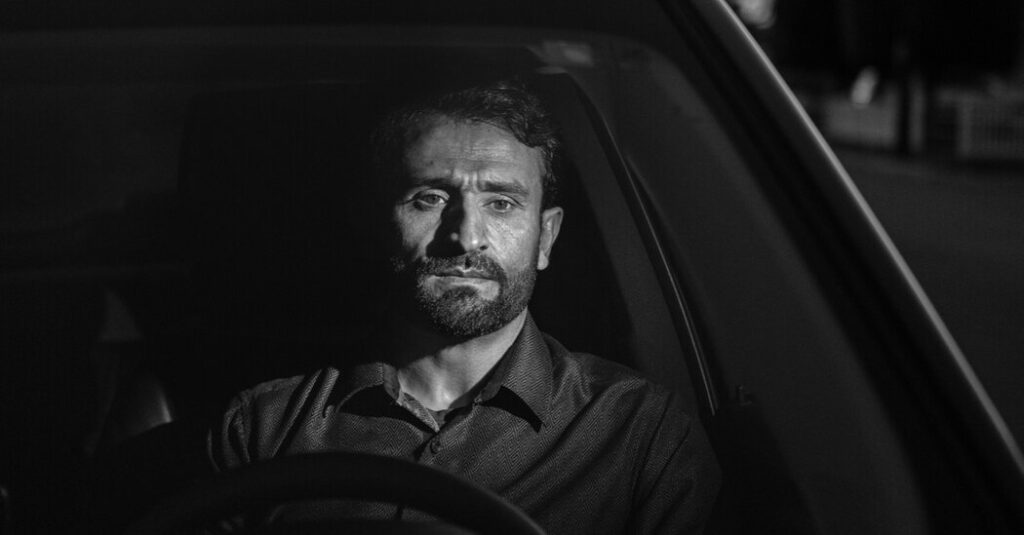
Mohammad Iqbal used to command more than 1,000 soldiers in Afghanistan, but late last year he was working maintenance at a hotel near where he lived in El Cajon, Calif., a working-class suburb of San Diego. Few outside the Afghan community there knew that the slight, soft-spoken father of six was anything more than another ordinary immigrant.
He was at his shift on Nov. 26 when his phone started buzzing with notifications from a group chat for former members of his military unit. He was busy and ignored them, until a friend called and insisted that he open a TikTok link that had been shared in the chat. It was a video reporting that an Afghan immigrant had just shot two Army National Guard soldiers in Washington, D.C.
Reeling, Iqbal checked the news, where the shooting was being called an act of terrorism. The authorities had identified the suspect, Rahmanullah Lakanwal, as an Afghan refugee who had been part of the Zero Units — the shadow army of Afghan soldiers, funded and directed by America’s Central Intelligence Agency, that Iqbal himself had fought with for more than four years. Iqbal called his former intelligence chief, also now living in the United States, and asked him if Lakanwal had been part of their unit. The officer confirmed that he had, and so had his brother Ismail.
For many Americans, news coverage of the attack was their introduction to the existence of the Zero Units, and to the fact that during the American withdrawal from Afghanistan in 2021, some 10,000 members of the units were evacuated, along with their families, to the United States. In response to the shooting, President Trump announced a “permanent pause on third-world migration,” part of a newly intensified crackdown targeting asylum seekers from what he called “hellholes like Afghanistan, Haiti, Somalia and many other countries.”
Portraying them as sources of crime and terrorism, Trump and his officials have blamed the Biden administration for bringing a total of nearly 200,000 Afghans to the United States without, they claim, proper vetting. A longtime C.I.A. asset like Lakanwal was no exception. “The individual — and so many others — should have never been allowed to come here,” John Ratcliffe, the C.I.A. director, said in a statement the day after the shooting.
In fact, it was the C.I.A. that had brought Lakanwal and the rest of the Zero Units to the United States; Ratcliffe’s comments stunned many Americans who served alongside them. The Zero Units were a classified C.I.A. counterterrorism program, what was known as a surrogate force, armed, paid and controlled by the United States. While the C.I.A. has established other surrogate forces since the Sept. 11 attacks, including units in Iraq and Somalia, the Afghan program was the biggest. Their evacuation was regarded by many within the C.I.A. as fulfilling a debt of honor.
Three weeks after the shooting, Iqbal sat with several other former Zero Unit soldiers at a makeshift Afghan community center in El Cajon, trying to make sense of what the brutal act of violence would mean for them. Lakanwal had been part of an elite reconnaissance team, tasked with surveillance and plainclothes work.
The Zero Units had prided themselves on discipline and their loyalty to their American advisers. What could have made one of their own betray both his adopted country and his fellow soldiers? Lakanwal was accused of shooting the two soldiers in Washington at close range near a subway station; only one survived. Lakanwal, they speculated, must have been unable to adjust and suffered a mental breakdown. One of the men, who asked not to be identified because of his pending immigration claim, described what he heard about Lakanwal’s situation: “He didn’t have any work. He was still in his house. He was very upset.”
The Zero Unit soldiers had been evacuated in the name of saving them from the new Taliban government. But their salvation was tenuous. Most had been granted temporary status, and efforts to help them permanently immigrate had failed in Congress. “Everybody already knew what was happening with immigration and the new administration,” Iqbal said. “And now beyond that, you get this trouble.”
Even as the C.I.A.’s recent paramilitary operations in Venezuela have attracted public scrutiny, the extent of its wartime role in Afghanistan has yet to be fully understood. Although intended as a covert program, the Zero Units expanded into a sophisticated standing army controlled by the C.I.A., its allegiance well known to both the Afghan government and its insurgent foes. Although the units were dogged by allegations of abuses and labeled by some critics as death squads, U.S. commanders came to consider them their most effective and trustworthy local assets. As the Afghan Army and police faltered, they came to play a key role in the war in Afghanistan, including during Trump’s first term.
But public understanding of who the Zero Units were, and how they ended up in the United States, has been impeded by the C.I.A.’s habitual secrecy, even about programs that have operated in plain sight for years. “I’m scared to talk, to be honest,” Iqbal said. But he believed that the story of the Zero Units deserved to be told.
‘We Trusted Them Completely’
Iqbal first heard about the C.I.A.’s mysterious commando units as a boy living in the mountains of eastern Afghanistan, along the border with Pakistan. The steep and heavily forested valleys there had long offered a base of operations for militants, including Al Qaeda. When the C.I.A. established its own outpost, Falcon Base, there in 2006, it recruited Afghans, including several of Iqbal’s relatives, through a local warlord.
The secrecy that surrounded the C.I.A.’s growing army was driven in no small part by bureaucratic imperatives. The 2001 invasion of Afghanistan was led by small teams of Special Forces and C.I.A. operatives working with existing militias from the Northern Alliance, which had been at war with the Taliban regime for years. The Pentagon faced legal restrictions on paying foreign fighters, but not the C.I.A., which was legally permitted to hand out cases full of U.S. cash to local warlords. In the months and years that followed, the C.I.A. hired Afghan fighters directly into what it called Counterterrorism Pursuit Teams — the teams that would later come to be known as the Zero Units.
Because it was authorized as a covert intelligence program, the Counterterrorism Pursuit Teams were cloaked by the fiction that they were run by independent Afghans who were only advised and assisted by Americans. Beyond providing the U.S. government deniability, this cover story also prevented embarrassment to the Afghan government over the presence of a foreign-controlled force within its own borders.
But there was little doubt on the ground about who was in charge of the Afghan fighters. “The way they were recruited, they were brought in locally, through word of mouth,” said Marc Polymeropoulos, a former C.I.A. base chief in Afghanistan. If any of the recruits underperformed or misbehaved, the C.I.A. could fire not only them but also the people who recommended them. The C.I.A. paramilitaries who ran the program — most of them veterans of the military’s elite Special Operations units who joined the spy agency as officers and contractors — called themselves advisers, but they trained their recruits, commanded them on missions and fought alongside them in battle. In addition to an unknown number of Afghans, at least nine C.I.A. officers and contractors died in combat with the teams.
One of the first to join the new teams was Mohammad Wali Tasleem, who was hired in 2002 when the agency asked several Northern Alliance commanders, including Tasleem’s uncle, to send recruits. Tasleem started out guarding C.I.A. officers as they moved around the country, but over time he was trained to conduct raids, clandestine surveillance operations and snatch-and-grab missions. “Just pick up the guys and run — no one would know,” said Tasleem, who emigrated to the United States in 2015, part of a trickle of unit members who obtained visas over the course of the war, before the Afghan government’s collapse.
The first C.I.A. teams worked out of what they called Eagle Base, located in a former brick factory northeast of Kabul International Airport, but other outposts spread around the country as the agency expanded its counterterrorism operations. Because the units operated under C.I.A. authority, they could carry out covert cross-border missions in Pakistan, but most of their work focused on fighting militants within Afghanistan, a role that expanded along with the U.S. presence.
At the peak of the U.S. war, the C.I.A. maintained Counterterrorism Pursuit Teams at seven paramilitary bases, each one made up of several hundred soldiers, as well as a larger unit of thousands of soldiers in Khost Province that maintained checkpoints along the border. With striking unit names — Tigers, Vipers, Mustangs — and distinctive Vietnam-style tiger-stripe uniforms, the ostensibly covert program was well known to locals. As the units came to resemble a light infantry force, they were increasingly drawn into combat missions that blurred the line between intelligence and military operations.
U.S. military leaders embraced the C.I.A.’s paramilitary force. Under the Omega program, the Joint Special Operations Command sent its own teams out with the units, typically from the Navy’s SEAL Team 6 and Army Rangers. The Omega teams brought with them access to the military’s air power and the ability to send detainees to U.S. military prisons. “We trusted them completely,” said John Burnham, a retired SEAL officer who oversaw the Omega teams and other JSOC forces in Afghanistan in 2008 and 2009. “They were tactically sound, well trained, and they had a feel for the local terrain that was essential.”
As time went on, the Afghan government chafed at the units’ total independence, and officials in Kabul began to complain about civilian casualties caused by units operating without their knowledge. In June 2009, the unit in the southern province of Kandahar clashed with the local police over the arrest of one of its members, resulting in a gun battle that killed 10 Afghan officials, including the provincial police chief. Furious, President Hamid Karzai demanded their arrest, and 41 soldiers from the unit were imprisoned.
The incident spurred the C.I.A. to integrate the program with the Afghan intelligence service, the N.D.S., which registered their men and weapons and assigned the units new names based on the Afghan codes for each province: Zero One was Kabul, Zero Two was Nangarhar, Zero Three was Kandahar and so on. Afghan officials soon began referring to them as qeteh-ye sefrdar, the Zero Units, the name by which they would eventually become known to the public.
The Zero Units were now formally part of the Afghan government, but they continued to be paid and commanded by their C.I.A. advisers. As the war entered its second decade and the United States began drawing down its military presence, the C.I.A. closed some bases and disbanded some of the Zero Units. But it kept the forces along the border and in cities like Kabul and Kandahar in place. A senior retired C.I.A. officer who was involved with the program put the reason for it bluntly: “We were forced to remain in place to keep the country from collapsing.”
‘There Was Never a Plan’
Iqbal joined the Zero Units in 2017, at a pivotal moment for the war in Afghanistan. Trump, who campaigned on a promise to quickly bring all of the American troops home, had been persuaded by his military commanders to begin a surge in hopes of bringing the Taliban back to the negotiating table. But the additional 4,000 soldiers were only a small fraction of those sent during his predecessor’s own surge, and U.S. and Afghan leaders leaned on special-operations forces like the Zero Units to execute Trump’s offensive. Iqbal, who had recently lost his job working as a military interpreter, was recruited to Zero Three, where several relatives also worked.
The unit operated out of Gecko Base, a U.S. compound at the bottom of a jagged spine of rock on the outskirts of Kandahar City that had once been home to the Taliban’s leader, Mullah Omar. Zero Three had its own section of the base, with a firing range, barracks, a meal hall and a landing pad for the Mi-17 helicopters that the C.I.A. used in Afghanistan. The Americans and the Afghans lived in separate parts of the compound but ate and trained together, sometimes running up the mountainside for exercise. Each month, Zero Three’s soldiers received $500 in cash from the Americans, roughly double what Afghan Army troops earned, in addition to a token salary, the equivalent of $8, from the Afghan intelligence service.
Iqbal at first worked as an interpreter in the intelligence section, which ran human sources in Kandahar and put together target packages for raids. He quickly clashed with his Afghan boss over what he said were sloppy practices that led to people being targeted based on weak intelligence, he said. But the C.I.A. advisers, appreciating his independence, promoted him to deputy and then head of the section.
Earlier in the war, Zero Three had focused on Qaeda operatives and other high-value targets, but now they hunted low-level insurgents in the rural districts surrounding Kandahar City, rolling out in drab-painted pickups or flying in Mi-17 helicopters operated by the C.I.A. In Kabul and Nangarhar, the Zero One and Zero Two units maintained an equally high tempo, hitting targets almost nightly in the provinces surrounding the capital city.
As the Zero Units took on a larger role in the war, they drew increasing scrutiny. Although the Afghan intelligence forces — which largely consisted of the Zero Units — were tiny in size compared with hundreds of thousands of army and police force members, the United Nations reported in 2018 that they were responsible for a majority of civilian casualties during government raids. The nature of combat in Afghanistan, which often took place inside homes and villages, meant that some civilian casualties were inevitable, but human rights groups and journalists accused the Zero Units of indiscriminate killings and summary executions.
Over the course of the war, the C.I.A. repeatedly denied such allegations, calling them Taliban propaganda. Some of the Zero Units’ former C.I.A. advisers say now that given the degree of U.S. supervision of their operations, it would have been impossible for the Afghans to carry out widespread abuses. “They weren’t perfect,” said a former paramilitary operative with the C.I.A., who like others who served with the units requested anonymity to discuss intelligence operations. “Neither were many American units. But the allegations of human rights violations are, in my experience, unfounded. It would’ve required more than complicity from advisers. It would’ve required direction. They followed our orders.”
But other former members of the Zero Units, the U.S. military and the C.I.A. described potentially illegal killings that were tacitly condoned, ordered or even carried out by American advisers, in the name of preventing militants from returning to the battlefield.
In this respect, far from being a renegade Afghan force, the Zero Units faced similar dynamics as other units within the U.S.-led special-operations campaign, which as time went on placed an increasing emphasis on killing rather than capturing those they suspected of being militants. It is, of course, legal to target opponents on the battlefield, but during the war in Afghanistan, aggressive raids in enemy-held terrain in some cases escalated to the killing of unarmed men who posed no immediate threat. In Britain and Australia, government inquiries have unearthed evidence of summary executions of captives, a war crime, and subsequent cover-ups by their nations’ special-operations units, and U.S. forces have faced similar allegations. Such practices, which were often concealed from higher command, were driven by frustrations with so-called catch-and-release detention, as well as the murkiness of an irregular war that blurred the distinction between combatant and civilian, one in which insurgent groups like the Taliban were also accused of committing extensive abuses.
One Special Operations veteran who served on the Omega teams said he’d been on multiple Zero Unit missions in which unarmed captives were shot. “We’d hear: ‘This guy is a bomb maker who keeps killing U.S. troops. He isn’t going to resist. He’s just going to surrender, but he’s just going to be released.’ So an adviser would tell a couple of guys to stay back and then kill him,” he said. Afterward, he said, photographs of the bodies would be taken with guns planted on them.
The executions would take place after most of the raid force left the target, to limit the number of people with direct knowledge. “I’ve seen it happen both ways, where a couple of Americans stayed behind and did it and where Afghans were told to do it. They were doing it willingly, but on an American’s instructions,” the former Omega team member said.
A former JSOC officer described an incident he witnessed while watching an aerial video feed of a Zero Unit convoy traveling through eastern Afghanistan in 2019. A group of Afghan soldiers dismounted and detained a man who had been watching their trucks go past, he said. Then a taller man from the convoy walked over and shot the prisoner. The footage was infrared, and there wasn’t enough detail to be sure whether the man was an Afghan or an American. But the officer said that he and others who watched the video with him believed that it was one of the C.I.A. advisers. “We taught these guys,” he said. “They shoot like us. They move like us. So I can’t be sure, but I thought it was an American because of his size. I watched someone be straight-up executed, a detainee, two in the chest and one in the head with a pistol.”
According to the officer, a formal military investigation was initiated and eventually turned over to the C.I.A. inspector general’s office. A spokeswoman for the U.S. military’s Special Operations Command declined to comment. Liz Lyons, the director of public affairs for the C.I.A., declined to comment on specific allegations but rejected them overall as baseless: “C.I.A. takes adherence to the law and the protection of civilian life extremely seriously.”
Other C.I.A. and Zero Unit veterans were adamant that they never participated in illegal killings and that any such allegations, if true, represented isolated incidents. Iqbal said he never witnessed any while he was with Zero Three; as a leader, he said, he didn’t permit them.
In early 2020, Iqbal was promoted to deputy commander of Zero Three just as the Trump administration was finalizing the Doha Accords with the Taliban, promising the withdrawal of all U.S. troops in 2021. Within the C.I.A., there was a widespread perception that Trump had signed the Afghan government’s death warrant. “We all knew,” said the senior retired C.I.A. officer who was involved with the Counterterrorism Pursuit Team program. “Nobody believed the government would survive.”
In Kandahar, Zero Three’s C.I.A. advisers stopped joining it on missions, Iqbal said, severely limiting its access to U.S. air support and medical evacuation, and foreshadowing the difficult battle it would face after the withdrawal. “It was very hard to convince my men we are capable,” Iqbal said. Many Afghan army and police units were facing waves of desertions. But Iqbal rallied Zero Three, arguing that it was their chance to counter their enemies’ claim that they were just mercenaries for the Americans.
As the deadline for the U.S. withdrawal approached, the C.I.A. had decided that only a small group of Zero Unit soldiers — the high-profile commanders who were most at risk and those who were privy to intelligence information — were to be urgently resettled in the United States. The rest of the C.I.A.’s Afghan proxies would be given a choice: Either stay and fight by joining the Afghan intelligence service’s own special forces, which the C.I.A. would continue financially support, or accept a generous cash payout.
“There was never a plan to bring them all to America,” the senior retired C.I.A. officer said. He said the sentiment among many advisers was that resettling thousands of them in the United States was a bad idea. The cultural gap was too vast, and many of the soldiers had little education or experience with anything besides warfare. “The paramilitary guys I talked to were like, ‘I trust these guys with my life here, but I wouldn’t want them as my neighbor in the U.S.’”
‘We’re Not Leaving These Guys’
The chaos of the U.S. pullout would scramble that plan. After Joe Biden took office in 2021, he and his advisers felt that there was no choice but to continue with the withdrawal that Trump had negotiated. Biden announced that U.S. troops would be out by Sept. 11, but the U.S. military rushed to pull out even faster. Without foreign advisers and contractors, the Afghan police and army began to crumble. Around the country, districts and cities fell to the Taliban’s relentless march.
As Kandahar City fell under siege, the C.I.A. pulled out of Gecko Base, leaving Iqbal, who had recently been promoted to overall commander of Zero Three, to lead a last-ditch defense. On Aug. 12, the governor and army and police commanders surrendered to the Taliban, and it was clear that all was lost. Iqbal and his men retreated to Kandahar Airfield to seek whatever transport they could to Kabul.
When they arrived at the airfield, they found a desperate scene, with members of the police and army searching for hiding places as Taliban forces gathered outside the perimeter. The Taliban had given Iqbal a midnight deadline to surrender himself and his unit, with no guarantee that they wouldn’t be executed. Iqbal prepared to die. But before the airfield was finally overrun, a pair of transport planes landed on the tarmac. The C.I.A. had come to the rescue. Over three tense nights, Iqbal and the rest of Zero Three were flown to Kabul. Exhausted, Iqbal called a U.S. veteran he’d stayed friends with from his days as an Army interpreter in Kunar. “God has given us all another life,” he said.
The speed of the fall, it turned out, had upended the political calculus in Washington, where many were overcome with guilt and horror at the calamitous way the war was coming to an end. Suddenly, there was broad bipartisan support to evacuate Afghans who, because of their work for the United States, would face retribution from the Taliban. C.I.A. leadership decided to pull out all the Zero Units. “They were target No. 1 for the Taliban,” a former senior intelligence official said. “We’re not leaving these guys to get slaughtered by the people they’ve been fighting against for America.”
Zero Three had escaped to Kabul, but the Taliban were closing in on the capital, too. The other Zero Units in Nangarhar, Orgun and Khost raced to the capital by road, in some cases striking bargains with the Taliban for safe passage. Weary and demoralized, the secret army, some 10,000 men in total, converged on Eagle Base, the C.I.A.’s remaining stronghold on the edge of Kabul. The sheer speed of the insurgents’ advance had caught everyone by surprise.
On Aug. 15, three days after the fall of Kandahar, the Taliban reached Kabul. The capital’s defenders panicked. President Ashraf Ghani and his entourage fled by helicopter to Uzbekistan; soldiers and police officers threw down their weapons and uniforms and melted away. As darkness fell, thousands of desperate Afghans stormed Kabul International Airport, where the first C-17 transports had begun to ferry people out. A U.S. force led by the Marine Corps was supposed to secure the runway, but at that point only 350 Marines had landed. The crowds surged onto the tarmac as the Marines fell back; as dawn broke, desperate Afghans clung to the landing gear of a C-17 as it took off, falling to their deaths.
The evacuation ground to a halt. Thousands of U.S. and other allied nationals were still trapped in the capital. U.S. military commanders realized that there was only one force that could get rid of the crowds: the Zero Units. “It was a conversation on the ground between the agency and the military,” the former senior intelligence official said. “They were trying to clear what was an out-of-control situation.”
The C.I.A. and the military quickly drew up a plan. The Marines would hold the northern end of the airfield; the Taliban, meanwhile, had secured the civilian terminal in the south. Between these two blocking forces, the Zero Units would do the ugly work of evicting unarmed men, women and children from the runways.
On the evening of Aug. 16, a convoy of more than 1,000 Zero Unit soldiers rolled out from Eagle Base. Arriving at the northwest side of the airport, they breached the perimeter wall and descended onto the crowd milling around the tarmac.
Among them was a combat interpreter with Nangarhar’s Zero Two unit who asked to be identified as Musa, his code name in the unit, out of concern that the Taliban would target his family in Afghanistan. “It was chaos,” Musa said. “The Marines who arrived, they were brand-new. They had no experience about Afghanistan.”
Some of the Marines were horrified by what they saw: Zero Units ramming their vehicles through crowds, firing live ammunition and beating people back with sticks. “The Afghans are firing rounds in the air, at people’s feet or at people to crowd control,” a Marine officer recounted in a military investigation into an ISIS suicide bombing that took place during the evacuation. Some Marine officers would later publicly claim, in the documentary “Escape From Kabul,” to have seen the Zero Units executing and running over unarmed civilians. The Marine Corps did not respond to a request for comment, and U.S. Central Command declined to comment. Zero Unit veterans pushed back on claims that they harmed civilians. “I didn’t see anything like that,” Musa said. “Yes, Zero Unit soldiers opened fire, but it was to scare the people. We fired in the air over them.”
By daybreak, the airfield was clear, and flights could resume. Over the next two weeks, the Zero Units and their C.I.A. advisers secured part of the airport perimeter, allowing many of them to bring out their immediate family members — more than 20,000 relatives, along with the 10,000 Zero Unit members. As the soldiers waited on the tarmac to board planes, the agency handed them their final payment in bundles of U.S. dollars.
No longer set apart by their tiger-stripe fatigues, the Zero Unit veterans were part of a wave of Afghan evacuees facing uncertain futures in exile. The United States granted them “humanitarian parole” — a temporary immigration status — and they scattered around the country. Some never saw their C.I.A. advisers again; others were helped by networks of veterans. Iqbal made his way to El Cajon by way of Seattle; Musa went to Texas, then landed in Virginia.
‘I See Them Like American Veterans’
In January, Musa was stocking the shelves at a halal market he runs in a town in Virginia where many Afghans have settled. The market, which bakes fresh naan twice a day, has become a gathering spot for his fellow Zero Unit veterans. That day, a group had bought a goat for a feast celebrating one veteran’s upcoming move to Nebraska. Another Zero Two veteran, a bomb-disposal specialist, proudly showed off his newly issued green card.
Permanent legal status, Musa said, was essential for Zero Unit veterans seeking to overcome the hurdles of culture shock and wartime trauma and integrate into American society. Without proper legal status, they were unable to work. When Musa lived in Texas, he saw jobless Zero Unit veterans living on the streets. “You will see a lot more of them become homeless in the near future because the administration has paused everything,” he said.
Faced with bureaucratic delays and inaction by Congress in providing immigration visas, many of the Zero Unit soldiers are now seeking asylum — in theory, an even more arduous bureaucratic path — on the grounds that if they were sent back to Afghanistan, they would face retribution from the Taliban they once fought. And indeed, when Trump began his second term, his administration worked to clear roughly two-thirds of the remaining 3,000 outstanding Zero Unit immigration cases, including that of Lakanwal, the shooting suspect. Since that attack, however, all asylum and special immigrant visa cases in the United States have been put on hold, including those of the remaining 1,000 Zero Unit veterans.
As part of their crackdown on asylum seekers, government officials have taken aim at Afghan evacuees. At a congressional hearing on Dec. 11, Joe Kent, a former C.I.A. paramilitary operative who is now the head of the National Counterterrorism Center, said that migrants who entered under the Biden administration, like Lakanwal, were “probably the top terrorist threat.” He dismissed the idea that their C.I.A. vetting should set a standard for clearance to enter the United States. Lakanwal “was vetted to serve as a soldier in Afghanistan,” Kent said. “The Biden administration essentially used his tactical-level vetting as a ruse to bring him here and to bring him into our communities.”
Apart from Lakanwal, several of the C.I.A.’s Afghan allies have been the focus of domestic terrorism cases. In 2024, Nasir Tawhedi, a former security guard, was arrested and charged with plotting an Election Day attack on behalf of ISIS; he pleaded guilty. In December, Mohammad Alokozay, another Zero Three veteran, was charged with making bomb threats in Fort Worth — an incident that his former teammates say was blown out of proportion from comments made during a heated online argument. That same month, ICE arrested Jan Shah Safi, a former Afghan intelligence officer, and claimed that he’d been involved in supporting terrorism in Afghanistan, releasing a statement that his case “marks the third arrest of an Afghan national terrorist released into the country by the Biden administration in less than a week” — without mentioning that all three had worked with the C.I.A.
The crackdown on asylum seekers has led one arm of the national-security state to turn on another. U.S. asylum law bars applicants involved in serious crimes and, according to people familiar with the proceedings of Zero Unit veterans in ICE detention, the government has brought up the same human rights reports that the C.I.A. has dismissed as the results of Taliban propaganda. “Those who meaningfully assisted U.S. troops and do not pose a threat to the homeland will still qualify for immigration benefits, but those who have no basis to be here and pose a risk to the American people will be removed,” said Tricia McLaughlin, a spokeswoman for the Department of Homeland Security.
Former Zero Unit members and their supporters argue that a few isolated cases of violence don’t represent a vast majority who simply want to settle their families and move on with their lives. “I see them like American veterans,” the former paramilitary operative said. “Last year, we had an Army veteran run through a bunch of people in New Orleans with his car and a Marine veteran shoot up a church in Michigan. It’s horrible, but we don’t then paint the whole Army or whole Marine Corps with that brush.”
The Zero Units, like other migrants in the United States, live with a daily fear of detention and deportation. At his market, Musa pulled out his phone to share a Spanish-language TikTok video, posted the day before, that appeared to show ICE vehicles outside a nearby Costco. Another Zero Unit veteran, Musa explained, had called him in the middle of the night after watching the video, asking what would happen to them. Would ICE raid their homes?
Their history, for better or worse, was their only protection. The Zero Unit veterans “are in a tough position, and I wish the U.S. government would help them tell their story,” said Burnham, the retired Special Operations commander. “I understand the impulse for secrecy, but I think it would be more valuable to have these guys talking about what they did.”
For now, some veterans of the Zero Units — men who fought for years in America’s longest war — fear leaving their homes in the country that once employed them. “They can’t sleep,” Musa said of his former comrades in arms. One of them hung an old photo of himself in Zero Unit tiger stripes on his wall, Musa said, “so that if there’s an immigration raid, they’ll see that he fought for us.”
Matthieu Aikins is a contributing writer for the magazine and a fellow at Type Media Center. His work for The Times has won two Pulitzer Prizes. Wesley Morgan is the author of “The Hardest Place: The American Military Adrift in Afghanistan’s Pech Valley.”
The post They Fought for the C.I.A. in Afghanistan. In America, They’re Living in Fear. appeared first on New York Times.