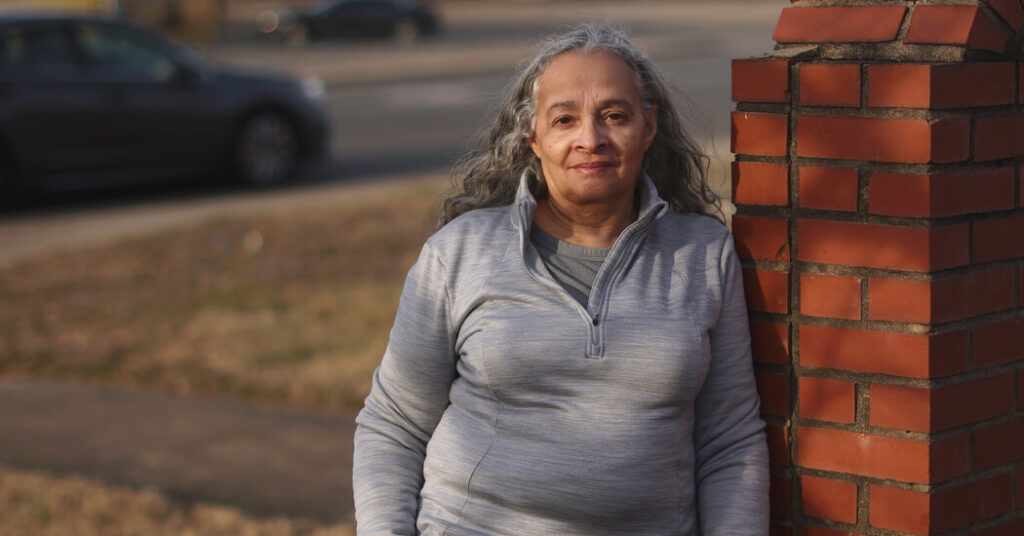
For 13 years, Maribel McBeath has cleaned plane cabins at the airport in Charlotte, N.C. She earns $16.50 an hour, which is not enough to cover her expenses — about half goes to rent — or allow her to save for the future.
At 66, Ms. McBeath would like to be counting down to retirement. She had hoped that by now, she could regularly visit her family in Puerto Rico, explore new places and enjoy going out to dinner occasionally. But with a pile of medical bills and no cushion for a financial emergency, “I have to keep working,” she said.
For millions of Americans, affordability has become a defining issue as the soaring cost of big-ticket necessities such as housing, education, health care and child care take a toll on household budgets.
Though unemployment is lower and inflation has slowed — data points that President Trump will likely cite in his State of the Union address on Tuesday — recent economic gains have largely benefited the wealthy. In interviews, some working Americans said the improved economy does not reflect their real-world struggles to pay bills or plan for the future. They have a hard time making sense of Mr. Trump’s claims that he has defeated inflation, and the rising stock market has no bearing on their income.
Kristin Errico, 43, a managing editor at a small publishing house in New York, wishes Mr. Trump would dispense with the “I’ve won affordability” rhetoric and use Tuesday’s speech to explain in detail how he plans to address the cost of groceries, housing and child care. “Everything is up 20 percent in cost except my salary,” she said.
The financial crunch has forced even solidly middle-class people to make difficult decisions, from delaying retirement or college to cutting grocery lists or relying on food banks. Some have taken second and third jobs in recent years to stay afloat, inspiring the modern term “polyworking.” The number of people with multiple jobs in January was about 8.6 million, according to monthly figures from the Bureau of Labor Statistics.
“For so many people, basic living has become a burden,” said Erin Hatton, a professor of sociology at the State University of New York at Buffalo who studies the labor market. “The fact is that there are so many people that don’t have a couple extra hundred dollars if faced with an emergency or, they can pay their bills but can’t save for their retirement.”
Even as overall inflation is cooling, prices of many everyday staples remain uncomfortably high.
Grocery prices, often the barometer for people’s perception of the economy and their own financial stability, are still rising. Though the price of eggs has dropped, the price of coffee was up nearly 20 percent in January from a year earlier; beef prices were up by 16.4 percent and the price of frozen fish had jumped 8.6 percent, according to the Bureau of Labor Statistics.
“People are dissatisfied because what they are looking for is not the inflation rate to get smaller, but for the prices to get smaller,” said Michael Walden, a professor emeritus in economics at North Carolina State University.
For Ms. McBeath, every financial decision is a trade-off. She missed the initial enrollment window for Medicare after she turned 65, but plans to enroll as soon as possible. Without insurance, she pays about $105 a month for medication. She doesn’t own a car, so she generally depends on public buses and Ubers for transportation.
“It is a struggle every month. I pay my rent and then I pay enough to keep the lights and water running,” said Ms. McBeath, who is employed by an American Airlines subcontractor and has worked with a service workers union to press for higher wages.
For average consumers, the data points and political sniping over affordability barely register as they try to make ends meet.
Until late last year, Aviva W., a preschool teacher, and her husband, a warehouse manager, earned about $80,000 a year combined. They rent a three-bedroom house for $3,300 a month in North Miami Beach, straining their finances because, as Orthodox Jews, it allows them to be within walking distance of their synagogue. Aviva asked that her last name not be used because she did not want people to know about her financial struggles.
In October, Aviva’s husband was laid off, and he has not found a comparable position. Instead, he has been stringing together odd jobs, and relatives have stepped in to supplement their income. They have also relied on a kosher food bank owned by Jewish Community Services of South Florida. The couple searched for a less expensive rental near the synagogue but did not find one, she said, and could not afford the cost of moving regardless.
“It’s been very tight,” said Aviva, a 42-year-old mother of four, adding that she is looking for a summer job. “We are taking things day by day and hoping things turn around.”
The financial struggle has shifted the way she thinks about her future. Some days, purchasing a house or paying for college tuition feels far away.
Bonnie Schwartzbaum, the director of the food bank where Aviva shops twice a month, said the average number of people using their service each month had increased by more than 50 percent since 2020. She said that after families tackled their biggest costs, there was little left for groceries.
“People across the board have been priced out,” Ms. Schwartzbaum said.
Even many of those whose income places them in the middle class find themselves making hard choices.
Ms. Errico is just on the other side of a series of events that threatened to upend the life she and her husband had built in Mineola, N.Y.
It started with the cost of child care, one of the biggest expenses that families face. “The day care bills set us back,” she said. “In fact, we tumbled into debt.”
In 2018, the couple was earning about $182,000 combined. But with two young daughters, they struggled to afford the $3,500 monthly day care bill, which was more than their mortgage. That year, they got a home equity loan to help cover their costs. In 2021, when interest rates dropped to record lows, they refinanced their house and wiped out their debt.
But a year later, as inflation was soaring, Ms. Errico’s husband suffered a devastating medical episode and lost his six-figure job. Faced with the loss of his income and mounting bills, the couple took out a second home equity loan with a much higher interest rate and reduced their younger daughter’s day care hours.
In 2023, Ms. Errico started a second job as a freelance copy editor, working evenings and weekends. “We were quickly reaching a precipice that’s hard to come back from,” she said.
That same year, her husband returned to the work force, again earning six figures. Ms. Errico finally felt stable and started using the money from her second job to rebuild their savings and pay for a few extras, such as her daughters’ dance lessons and the occasional discounted theater outing.
Still, she worries about the cost of replacing an aging boiler, and how long their two 15-year-old cars will last. And she worries about how quickly they can build a college fund for their daughters, now 8 and 11.
“I want to be able to afford a comfortable life,” she said, “not just a roof over my head and food on the table.”
Colette Coleman contributed reporting, and Kirsten Noyes contributed research.
Audra D. S. Burch is a national reporter, based in South Florida and Atlanta, writing about race and identity around the country.
The post For Many Cash-Strapped Americans, ‘Basic Living Has Become A Burden’ appeared first on New York Times.