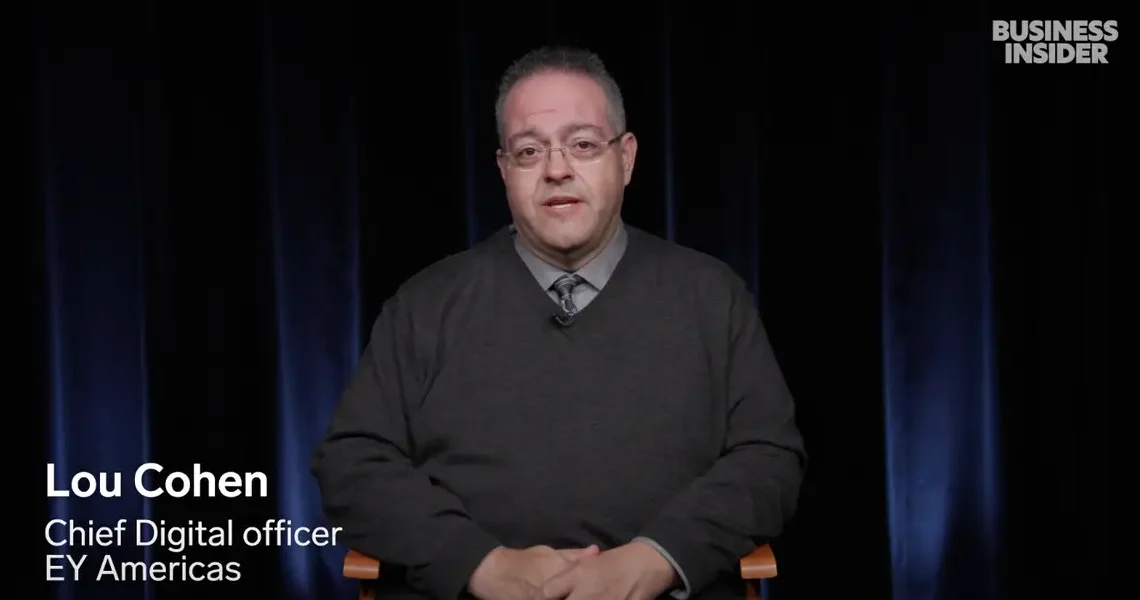
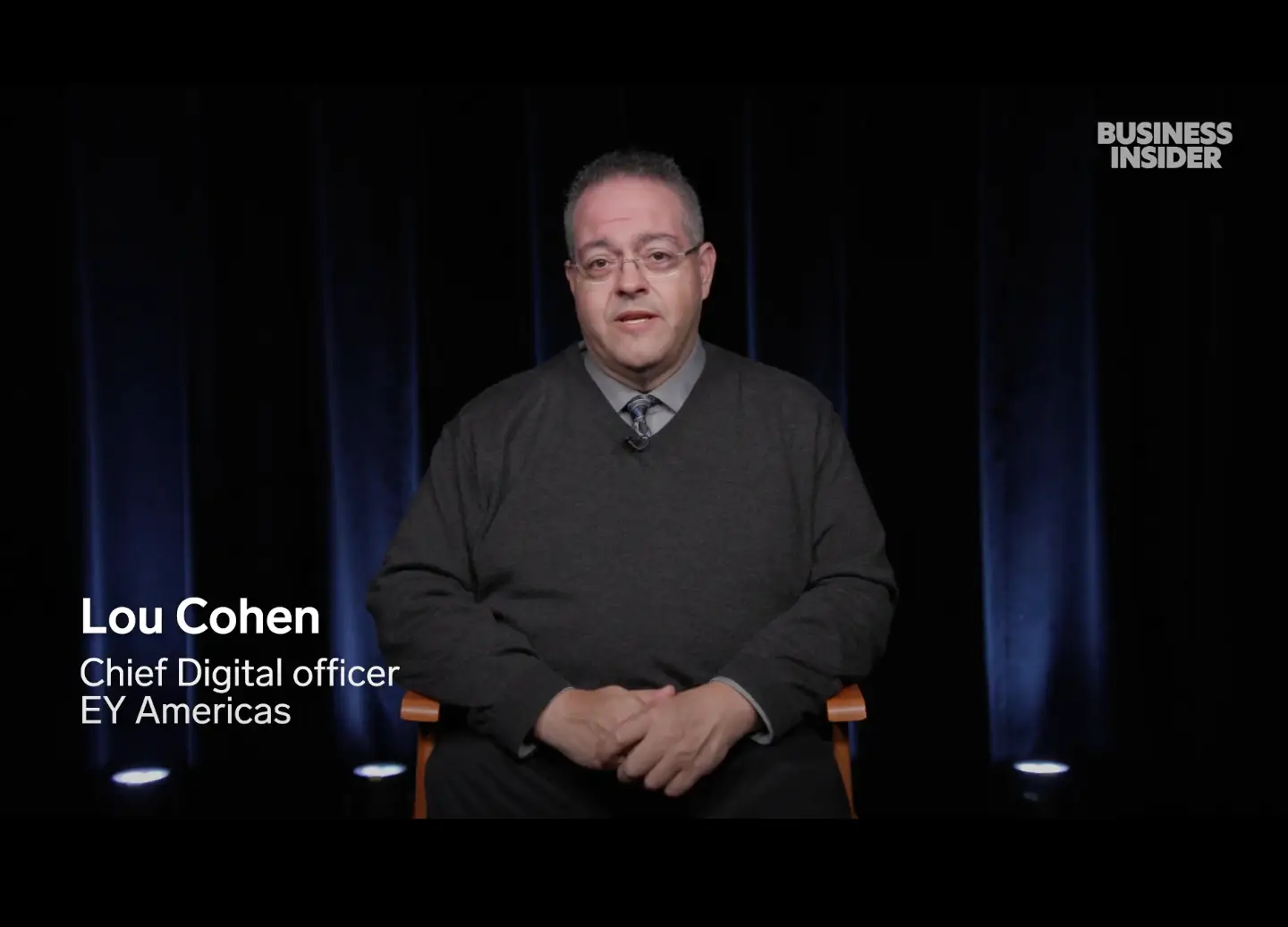
Lou Cohen, EY’s chief digital officer, said many marketers are not yet taking advantage of the benefits of artificial intelligence.
Cohen, who is also a professor at New York University, Yeshiva University, and Baruch College, said marketing is at an “inflection point,” with investment shifting from general digital innovation to AI transformation.
Cohen said that marketers who understand how to use AI in an assistive way, by focusing on what outcomes it delivers best, will access a deeper level of audience segmenting, targeting, and testing. He was interviewed for CMO Insider at Business Insider’s studio in New York City.
Ultimately, Cohen said, the marketing function will embrace the new opportunity. “Marketers, they’re not afraid to try things,” Cohen said. “We’re going to learn more from the things that we fail with and that don’t work than the things that do.”
The AI Marketer reports on how artificial intelligence is disrupting advertising, branding, creativity, data, and the CMO’s role. Contact Julia Hood for pitches or questions.
The following transcript has been edited for clarity.
We are at an interesting inflection point. In today’s marketing environment, you really need to understand how to make AI work for you; otherwise, you will end up working for it.
There are efficiency and operational gains to be had. But if you think about the outcomes that AI can enable from a marketing perspective, we could be smarter about how we segment our audiences for different campaigns. We could be more efficient in the ways our advertising runs. We could test more rapidly to get better-quality content in front of the right audiences at the right time in the right place.
But most marketing teams are not yet set up to take advantage of this potential. So the investments of the last 15 years in digital transformation are now shifting into AI transformation.
It’s a bit unknown now. Marketers are not totally comfortable with this because we’re so worried that it’s going to hallucinate or give us something that isn’t accurate. Marketers, they’re not afraid to try things. We’re going to learn more from the things that we fail with and that don’t work than from the things that do.
My colleague came up with a great way to evaluate the quality of our content using AI. We can paste in an article that a partner of ours wrote, and it will give us recommendations on how to make that piece of content better. But we’re never — I shouldn’t say never — we’re not likely to use content created by AI. But we certainly can use AI to enhance and give feedback to our content creators.
Hallucinations are real. The challenge is that as consumers of these technologies, we don’t yet understand the difference between probabilistic and deterministic outcomes. Probabilistic is the likely correct response that the AI is trying to give us. Deterministic is “one plus one equals two,” and arguably, one plus one always equals two.
When you’re doing a search on Google or Bing, for example, you are getting a deterministic response. You’re getting what it believes to be the likely to answer your question. Versus with the LLMs, the ChatGPTs, the Llamas, the Geminis of the world, you’re getting a probabilistic response. The model is bringing a bunch of different sources together to determine the answer it thinks you should get based on your prompt.
That means if we were using these tools for their designed purpose, we’d still need search engines to just navigate to the things we’re looking for, or to find the needles in the haystack of the internet. But LLMs give us a different opportunity. They can be assistants. That was some of the original idea behind these AI tools, to assist people in doing different tasks.
I think of these LLMs more as marketing assistants to give me real-time ideas, feedback, or suggestions, rather than doing the task for me. That’s a human putting AI to work to get better outcomes faster than if I were to just do it myself.
Read the original article on Business Insider
The post EY’s chief digital officer says marketing is at an AI ‘inflection point’ appeared first on Business Insider.