The United States has poured a veritable war chest into combating the sale and abuse of drugs over the past several decades. But in 2026, more than half a century after President Richard Nixon first declared his “War on Drugs,” powerful traffickers continue to unleash violence across the border, and illicit narcotics are more available than ever.
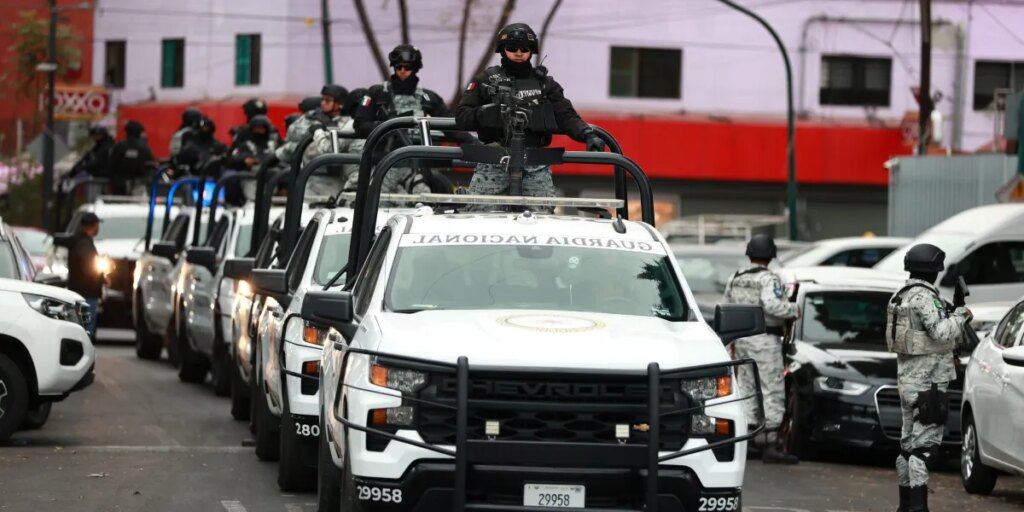
On Sunday, authorities in Mexico announced the death of the country’s most wanted cartel leader following a government operation to capture him. Nemesio Oseguera Cervantes, known as El Mencho, led the Jalisco New Generation Cartel, which in recent years grew into one of the largest traffickers of fentanyl and other drugs to the U.S. The Trump administration provided Mexico intelligence for the operation, the White House later confirmed.
Violence quickly erupted as the cartel retaliated, first in cities across Jalisco state and then nationwide. The violent scenes were a reminder of the intractability of North America’s drug trafficking problem, despite the mountains of resources that have been dedicated to resolving it. Successive administrations have spent massive amounts on policing, interdiction, and foreign counternarcotics campaigns, but demand for drugs in the U.S. has stayed resilient, and in some cases, appears to be climbing.
Since Nixon first declared drugs “public enemy No. 1” in 1971, the U.S. has spent well over $1 trillion on the drug war, a tally that includes everything from DEA operations, border surveillance, and public-awareness campaigns at home to military aid packages in Latin America. At the drug war’s onset, the annual counter-drug budget stood at around $100 million. In Joe Biden’s last year in office, the drug control budget request for the 2025 fiscal year totaled $44.5 billion.
Drug abuse continues to rise
Yet despite the increasingly eye-watering costs, there’s at least one key measure by which the war on drugs has not delivered the decisive victory Nixon envisioned: the number of people actually using drugs.
Over the past several decades, global drug consumption has expanded, not contracted. In 2023, 6% of the world’s population between the ages of 15 and 64 used drugs other than alcohol or tobacco, according to a UN report on drug abuse published last year, up from 5.2% a decade prior. Marijuana accounts for most global drug use, but cocaine production hit a record high in 2023, according to the UN.
More intensive cultivation and improved processing methods have facilitated the enormous growth in cocaine supply, but staggering profits for those selling the drug have further incentivized producers. Expanding production and smuggling routes to Europe, Asia, and the Middle East have opened up new markets, but demand in the U.S. has also risen. In recent years, cocaine use in the U.S. has begun to rival the highs seen in the 1970s and ‘80s, when the drug war was still in its infancy.
An unsure strategy
Most cocaine seized at the U.S. border is produced in Colombia, where booming coca cultivation has led to oversupply and lower prices in the U.S., according to the DEA. Much of that cocaine still moves through Mexico, however, and El Mencho’s career traces the arc of this supply-demand dynamic. Under his leadership, the cartel he commanded grew from a regional offshoot into one of Mexico’s most powerful criminal organizations, expanding its reach across dozens of Mexican states and into global markets for methamphetamine, fentanyl, and cocaine, according to Mexican and U.S. security assessments. The cartel’s rise was fueled in part by the fragmentation of older trafficking groups targeted by U.S.-backed crackdowns, as El Mencho prioritized a strategy of adopting “orphan” criminal cells across Mexico.
Between 2015 and 2024, nearly $13 billion in U.S. taxpayer money was allocated to international “counternarcotics” activities, designed to bring down operations like El Mencho’s. This far exceeds what the U.S. spent on primary education, water access, and sanitation in low- and middle-income countries over the same period, according to Harm Reduction International, an NGO focused on mitigating the effects of global drug use. In Colombia alone, the U.S. spent more than $10 billion in aid starting in 2000, in a program specifically designed to loosen the grip of drug groups in the country, yet coca cultivation later rebounded to record highs.
Despite that spending, overdose deaths have climbed steadily over the past two decades, propelled first by prescription opioids and heroin and more recently by synthetic opioids like fentanyl, which in the U.S. was originally mixed with other drugs but now commands a market all its own, largely owing to its high potency. Although the number of overdose deaths has declined since peaking in 2022, they remain at historical highs.
At the same time, cartels such as El Mencho’s have grown in power and influence not just in Latin America, but across Western and Eastern Europe as well, according to the UN.
Past efforts to unseat reigning kingpins, from the fall of Colombia’s Medellín cartel to the capture of Mexican drug lords like Joaquín “El Chapo” Guzmán, suggest that removing a top boss rarely shrinks the overall market. Instead, some research suggests, instances of violent conflict can actually increase as smaller and fragmented organizations fight for greater control.
As the U.S. marks more than 50 years in the war on drugs, El Mencho’s demise marks the latest generation of cartel leaders to have come and gone. Meanwhile, the flow of drugs northward—and the demand that sustains it—have outlasted them all.
The post Drug use is on the rise as U.S. spending on the War on Drugs tops $1 trillion and cartel leaders drive violent eruptions in Mexico appeared first on Fortune.