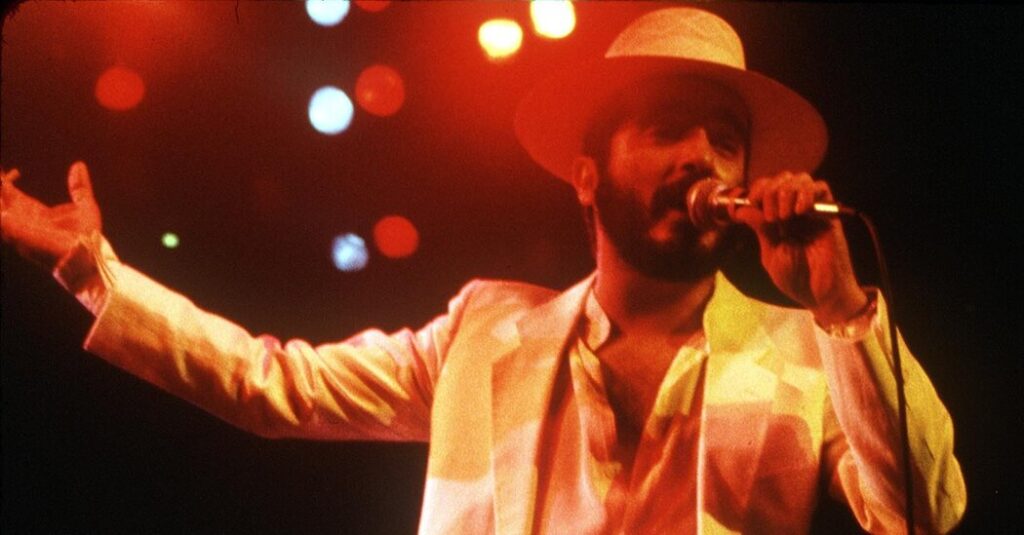
Every genre has its bad guy, villain, heel. In the world of salsa, that dark genius was Willie Colón, who died on Saturday at the age of 75.
His predilection for playing the antagonist came across in a variety of ways. The titles of his music albums: 1967’s “El Malo,” which translates to “The Bad Guy”; 1973’s “Lo Mato — Si No Compra Este LP,” or “I’ll Kill Him — If You Don’t Buy This Record”; 1970’s “Cosa Nuestra,” a play on the Mafia’s clandestine tag; and 1970’s “La Gran Fuga,” on whose cover he appears in a makeshift F.B.I. wanted poster. And Mr. Colón also fashioned himself as the heavy of the film, the offender.
“The clothes I was wearing and that gangsta thing played into the image and it really caught on,” Mr. Colón said in 2017 in “Latin Music USA,” a PBS documentary.
Mr. Colón may have designed his image after the transgressor, but he was a salve for the Latino youth of the 1960s. He became an avatar for young Latinos who could not style themselves after John Wayne, Muhammad Ali or Elvis Presley. Those Latinos were slicker and younger, and they had roots in this country that were just beginning to bloom. There was no one from their generation in the mainstream they could pin their own image onto.
Members of that generation felt unrepresented and struggled for a toehold in a culture they said overlooked them. Mr. Colón gave them a sly, tough example of success and charm and bravado to latch on to. They did not have to become small. They could be as big as they wanted to be.
“We were illegal immigrants as far as anyone was concerned,” Mr. Colón said in a 2013 interview with the journalist Maria Hinojosa. “The music was an act of civil disobedience, to an extent.”
As for his style, he procured his pieces any way he could.
“My mother was going out with this guy whose father was Harry Belafonte’s doorman,” Mr. Colón said in the documentary. “Harry Belafonte was always giving him these beautiful silk ties. He would give them to me because he had no reason to wear a tie. It was part of my look.”
The dramatic polyester suits, inch-wide sideburns, fur coats, tight curly Afros, bell-bottom pants and wide lapels were mostly taken from blaxploitation films such as “Shaft” and “Super Fly.”
“It was a mirror of what was going on in the media in those days,” Mr. Colón said in the documentary. “We started to identify a lot with the African American community.”
On the cover of his 1967 album “El Malo,” he appeared cleanshaven, wearing a red turtleneck and a black blazer at a mere 16 years old. It was his introduction to the world. Mr. Colón’s partnership with the singer Héctor Lavoe followed shortly after. While Mr. Lavoe was born in Puerto Rico, Mr. Colón was born in the South Bronx, and that gave him a different edge. He was not just Puerto Rican — he was Nuyorican.
The dynamic was undetectable in their music, but was on display on the cover art of their 1972 joint album, “Crime Pays.” The two can be seen flanking an old roadster; Mr. Colón wears a felt hat, leather gloves and a beige trench coat, and Mr. Lavoe is in a black peacoat and hat. Mr. Lavoe seems more formal in the pose, while Mr. Colón appears to be completely at ease.
“He taught me Spanish, I taught him English — it was great,” Mr. Colón said about Mr. Lavoe in 2017. “I had the Bronx street smarts going, and he had the country Puerto Rican folkloric thing, and it was a great combination.”
By 1977, Mr. Colón was an established producer working with other great singers including Celia Cruz, Tito Puente and, most memorably, Rubén Blades. By then, he sported a more relaxed look, open shirts and blazers with T-shirts, as opposed to the three-piece suits of his youth. Even with that shift in style, his bad-guy persona still lived on.
“Willie Colón, me dicen el malo” (“Willie Colón, they call me the bad guy”), the artist Bad Bunny raps on “Nuevayol,” a song about the vibrancy of immigrant life in the city — a nod to Mr. Colón’s first album and that early image he crafted so elegantly.
Mr. Colón paved the way for Latin artists like Bad Bunny not to have to stick to one image. He left behind a legacy that allows those artists the freedom to be the bad guy and save the day.
Sandra E. Garcia is a Times reporter covering style and culture.
The post Willie Colón Played Up the Bad Guy With Purpose appeared first on New York Times.