Aficionados of internet discourse may recall the vogue for deeming things “stochastic terrorism.” A stochastic process has a strong element of randomness, even when the overall result is predictable. Thus the idea of stochastic terrorism, which has been defined as “the use of mass media to provoke random acts of ideologically motivated violence that are statistically predictable but individually unpredictable.” (For example, how the Islamic State used social media to inspire attacks.)
The term was used ceaselessly and carelessly, and eventually became a calumny against any speaker someone disagreed with. But the idea of stochasticity remains useful. Lately, I’ve been thinking about what you might call the stochastic economy — the things we pay for to avoid outcomes that are statistically likely but individually rare. Because I keep having conversations with folks who claim that the economy simply stopped getting better some decades back, and I think one reason they feel this way is that stochasticity makes it harder to see real and valuable improvements. These discussions are happening as the disconnect grows between healthy economic indicators and Americans’ negative perceptions of the economy.
My interlocutors concede that a few things have improved, such as flat-panel televisions, but they think we’ve lost at least as much as we’ve gained. Sure, we got better screens, but social media ruined our politics, attention span and culture. Okay, maybe trade and immigration made goods and services cheaper, but they’ve also disrupted tight-knit communities.
There’s a spirited debate to be had about whether the benefits of these developments outweigh their costs. But that’s an argument for another day, because I want to focus on how many amazing improvements this sort of debate ignores.
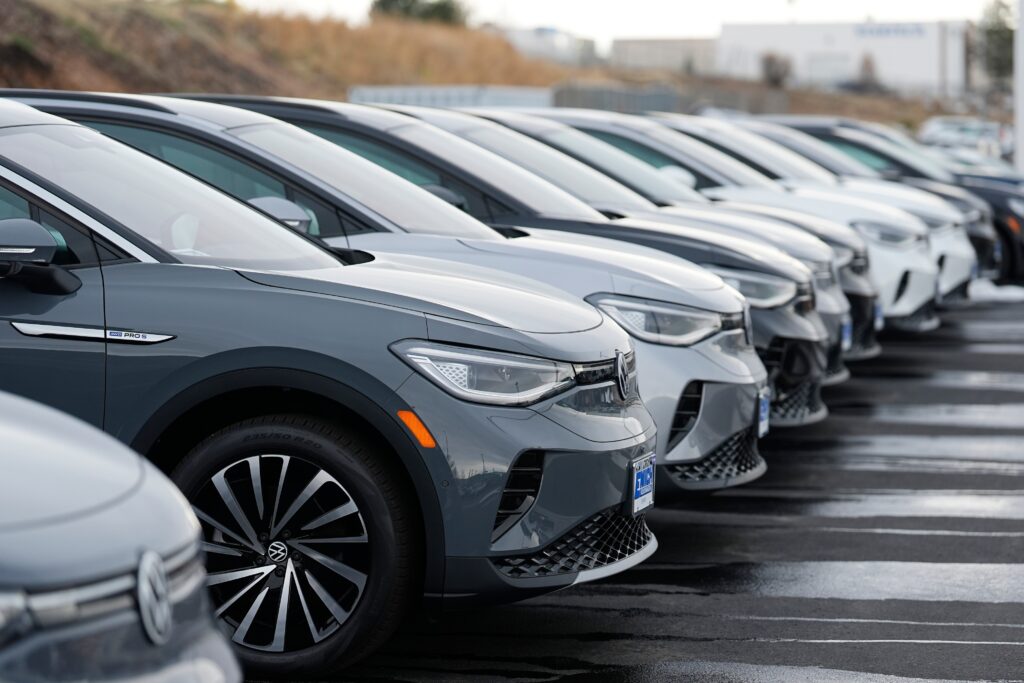
Take automobile safety. You’ve probably read about how the average price of a new vehicle is more than $50,000. If you’re of a certain age, that number seems insane. In 1990, the average new vehicle price was $15,000, which would be about $38,000 in today’s dollars. A car is a major and unavoidable purchase for most families — it’s something they pay a lot of attention to when they think about how well they’re doing. Doesn’t that huge number mean we’re worse off?
Well, no. One reason cars are more expensive is that as the economy grew, consumers decided to spend some of the surplus on larger, plusher vehicles — for one thing, we’re buying more SUVs and fewer sedans. Another reason is that cars today have more bells and whistles, including features that make them much safer, such as air bags, stability control and advanced driver-assist systems. We’re not buying the same vehicles we were 30 years ago; we’re buying much better ones, and that shows up in crash data: In 1995, we lost 1.7 American lives for every 100 million vehicle miles traveled, but only 1.2 in 2024.
Compared with the value of a human life, a few grand more for a car seems like a bargain. But that doesn’t mean it feels like a bargain when you’re at the dealership. Sure, your chance of dying in a crash has been reduced significantly, but that chance was small to begin with. You’ve entered the stochastic economy, paying a significant sum to prevent an accident that is statistically likely to happen to someone but not particularly likely to happen to you.
Many things we now spend money on have this quality, such as car and homeowner’s insurance. That’s particularly true when it comes to health care, which accounts for almost a fifth of the U.S. gross domestic product.
Nowhere is the improvement in our quality of life more apparent: a cure for hepatitis C, treatments for cystic fibrosis, immunotherapies for cancer, retroviral medications that turned HIV into a manageable disease rather than a death sentence, much better treatments for cardiovascular disease, and mRNA vaccines that stopped a pandemic in its tracks. Yet nowhere is that improvement more debated.
Vaccines create a particular kind of dissonance, because if they work, you’ll never know whether you benefited from taking them. But a milder disconnect pervades almost all health care spending, because the improvements are invisible to most consumers. Unlike the consumer-goods bonanza that drove the mid-century economic boom, or the internet revolution of the 2000s, these gains become clearer only when you get sick.
Odds are you will end up with a condition for which medical treatment has greatly improved over the past three decades. But you probably don’t realize how much they’ve improved, and you also don’t know which treatment you’ll need, so you pay a bit for each of them every year through insurance premiums. Until you’re struck down with some illness, it’s hard to see what you’re getting for your money. All you see is your premiums marching upward.
Stochasticity helps explain the mystery of good economic data and bad economic vibes. It might also explain another mystery: why so many seemingly normal people cheered the assassination of UnitedHealthcare chief executive Brian Thompson. People absolutely hate health insurers, because it feels as though they take your money and give you nothing back.
That’s not true — insurers are legally required to spend most of our premiums on care, and their profit margins averaged under 1 percent in 2024. But most people don’t know that. All they know is they’re paying a lot for what feels like nothing. Our brains just aren’t adept at parsing those sorts of unknowns. Sadly, they may be better able to process stochastic terrorism than to handle stochastic economics.
The post Why our brains can’t handle a modern economy appeared first on Washington Post.