For members of Minnesota’s close-knit Somali community, many of whom are Muslim, Ramadan is typically a time of reflection, with a renewed focus on community and helping others.
This year, however, the weekslong presence of Immigration and Customs Enforcement agents in the Twin Cities of Minneapolis and St. Paul has created an atmosphere of fear and apprehension that remains even after the Trump administration said last week that immigration officers were, in large part, leaving the area.
“It’s a bit different from the previous years,” said Khalid Omar, a leader at the Dar Al Farooq mosque in Bloomington, Minn. “The energy is not how it was before.”
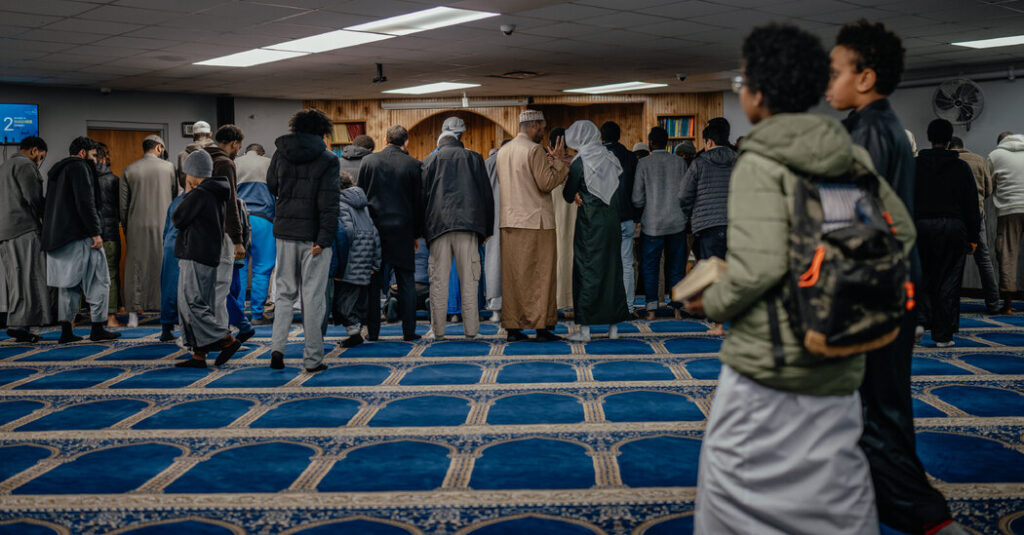
Many Somali people are still afraid to leave their homes. Others are working to build back businesses that suffered from a lack of foot traffic and employees feeling too scared to come to work. And mosques are continuing to organize people to stand watch for immigration officers who might be on patrol during prayer time.
These factors have upset the normal rhythms of a holiday month that is commemorated by fasting from dawn to dusk, heading to religious centers for prayers and gathering with family for nightly dinners.
Deqa Farah, of Eagan, Minn., said she usually looked forward to breaking her fast at restaurants with friends or at the homes of one of her 10 siblings living in the Twin Cities. But this year, though she and her husband are U.S. citizens, they have decided to forgo that tradition.
“For the foreseeable future, as it relates to Ramadan and Eid, it’s going to be hunkering down,” she said. “We’re going to pray at home.”
“You can’t go to the mosque and pray because you think, ‘Are you going to meet ICE?’” added Abdi Noor, a bus driver in Minneapolis, who said that praying at home wasn’t the same as praying alongside his community. “You can’t share the laughter or memories,” he said.
For worshipers who do venture out, mosques are increasing security measures, local leaders said.
“If federal officers come, how do we make sure that they don’t interrupt our gathering?” Mr. Omar said. The mosque has put up signs emphasizing that ICE agents can only enter with a judicial warrant, he added, and is keeping the lines of communication open with local police.
Abdulahi Farah, a Somali American community organizer, said that during the crackdown, volunteers who were tracking ICE sightings stationed themselves at mosques at peak prayer times. Those observers would be at mosques more frequently during Ramadan, he said.
He said he expected those observers, many of whom are not Muslim, to dine alongside those breaking their fasts at sunset, another symbol of unity for Minnesotans.
It is that unity that Imam Yusuf Abdulle, director of the Minneapolis-based Islamic Association of North America, hopes people reflect on during Ramadan.
“That was phenomenal, and that was something to celebrate,” he said, referring to how Minnesotans of all faiths and backgrounds kept watch for immigration agents. “That is where we want to focus in this Ramadan and beyond.”
But the immigration crackdown also “devastated” the Somali community economically, Mr. Abdulle said, pointing to families that were separated, businesses that were shuttered and people who were unable to pay rent, too afraid to leave their homes.
Abdiwali Abdulahi, the manager of the Somali restaurant and shop Halwo Kismayo and Grill, said that the number of customers decreased noticeably during the crackdown and that he even had to lay off some employees who were too scared to show up for work, despite having legal work permits.
“We’ve been through a lot,” he said.
Mr. Abdulahi said that he hoped his customers would feel more comfortable coming to dine and buy traditional sweets during Ramadan, usually the busiest month of the year for his restaurant, especially as immigration agents continued to leave.
Ramadan is also a month dedicated to charity, and some community members are spearheading rent assistance and halal food delivery programs for those who need it.
Fartun Weli, who coordinates several culturally sensitive halal food pantries in the Twin Cities through her nonprofit, Isuroon, said requests from families tripled during the immigration crackdown. Normally, she helps feed about 300 families per week. Now, it’s around 1,000.
Ms. Weli said her organization issued a new call for more donations before Ramadan, and was specifically looking for donations of dates, which are often eaten by Muslim people when they break their fasts.
“We’re focusing on making sure someone who has been fasting all day doesn’t worry, ‘What am I going to eat?’” she said.
Mr. Omar, the Bloomington mosque leader, said he hoped people would lean more into their faith and pray for Minnesotans of all religions who were affected during the past few weeks.
“This month on Ramadan, there are going to be people that used to pray at our mosque, that no longer are praying with us because they are either in a detention center or have been deported,” he said.
“We’re not going to stop praying.” Mr. Omar said. “We’re not going to stop going to mosques. Our community is going to be resilient.”
Sonia A. Rao reports on disability issues as a member of the 2025-26 Times Fellowship class, a program for early-career journalists.
The post Observing Ramadan Feels Different This Year for Minnesota’s Somali Community appeared first on New York Times.