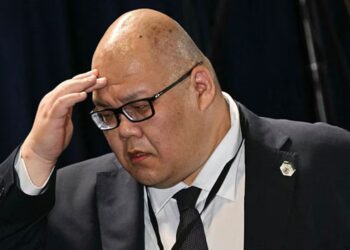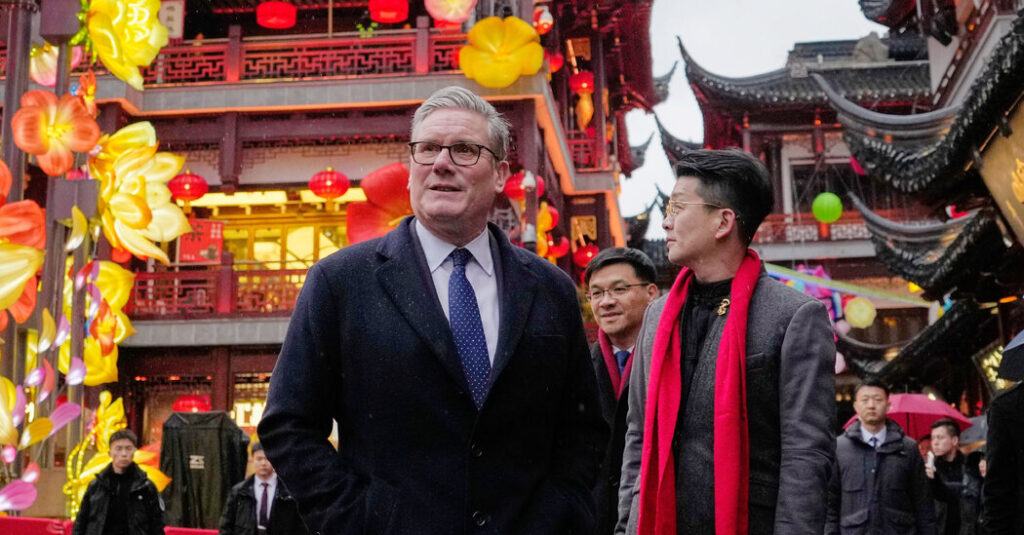
The procession of Western leaders flocking to Beijing in recent weeks has been impressive. Last month, Mark Carney went, the first Canadian leader to visit in almost a decade. He signed a strategic partnership with a country that has imprisoned Canadian nationals and was accused of meddling in Canada’s elections.
Next up was Keir Starmer, reversing years of frosty relations in the first visit by a British leader since 2018. This week, it’s the German chancellor’s turn. More than a million German jobs depend on exports to China.
Not so long ago, Western countries talked about diversifying away from China. Now the opposite is happening. I called my colleague David Pierson, who covers China, to understand why.
No longer distancing from China
David, Western leaders have always flocked to China with their C.E.O.s. What’s different about the current stream of visitors?
It’s the context, right? You’ve seen tensions grow between the United States and Europe. Not long ago, Western leaders were looking for ways to “de-risk,” or distance themselves from China to reduce their countries’ reliance on its supply chains and market. Now, they are moving back toward China again — because they’re de-risking from a more unreliable United States.
But how reliable a partner is China? There’s a reason people wanted to diversify away from China, right?
That’s the thing. As I wrote recently, China hasn’t changed. It still threatens to close its markets to imports or restrict the sale of valuable exports like critical minerals when it’s unhappy with another country. And China has done nothing to pull back its economic and diplomatic support for Russia and its war in Ukraine despite all the protestations from Europe.
The bottom line is, China doesn’t actually need to offer incentives to these Western leaders. It’s just an alternative to the U.S. at a time when countries are scrambling to rebalance.
What leverage do Western countries have left on things they care about? Like China dumping huge amounts of products on global markets?
Honestly, not a lot. Britain and Canada do not export many valuable things to China. They just don’t have the same leverage that they used to over China. Germany is in a very, very tough spot. Chancellor Friedrich Merz is going over there to preserve the business that still exists for German companies, but the reality is, there is very little he can do to slow Chinese firms from replacing German ones in the global market
Meanwhile, China has shown that it can go toe to toe with the most powerful country in the world. President Trump took the fight to China, and President Xi Jinping stood up to him and turned it around by using its trump card (no pun intended!): its monopoly over the supply and processing of rare earth minerals that are used in everything from computer chips and batteries to wind turbines and missiles. So China is emboldened on the world stage. Say what you will about Xi Jinping, he never underestimates his leverage. Many analysts think that he’s played this quite well.
So China looks strong. But China also has a lot of problems at home. How do these two things interact?
It’s a split screen. On foreign policy, China is in a pretty solid position. But domestically, they’re on very shaky ground. They’ve been dealing with a very sluggish economy, because of a collapsing property market. And there’s just no easy way out of it. And it’s having repercussions for the rest of the world, because the only thing that’s working for China right now economically is exports. They’re making all this stuff, but they don’t have enough money at home to buy it, and so they’re just dumping it on the rest the world.
The other thing is that they’ve had this far-reaching purge in the military hierarchy. All these generals have just been kicked out, and it’s unclear what this means for China’s ability to go to war. Is its ability to take Taiwan delayed by years — or somehow accelerated by getting rid of corrupt generals? It’s just so difficult to look into elite Chinese politics, and so we’re just kind of left guessing what that means.
Where does all this lead? Are these deals with China the beginning of a longer-term shift away from U.S. dominance?
Short-term, it’s more symbolic than real because, if you actually look at the meetings, there’s not that much substance. Britain allowing China to open an embassy in London? Not exactly a big deal. I mean, you could argue that there’s a security risk, but Britain’s own security service said it can be managed. On Canada, yes, they lowered the tariffs on Chinese electric vehicles, but there’s still a quota, and it’s a tiny quota.
The symbolism alone is of course a huge win for China. They can turn around to their people and say: “Look, we’re doing great. You get all these countries coming and paying their respects to us.” This helps to paper over domestic problems.
Long-term, it’s harder to say. One thing is clear: We’ve seen an erosion of American legitimacy in the last year. Everyone now has doubts about America as a reliable partner. You’ve seen how things just turn on a dime, depending on who enters the White House now.
Whether China can fill that vacuum in bigger ways is impossible to know. They’re trying very hard, but it’s unclear if they’re doing it for anything other than their own interests.
MORE TOP NEWS
Trump is still betting on tariffs
Trump said on Saturday that he would raise his new global tariff to 15 percent after the Supreme Court struck down many of his previous tariffs.
The court’s decision threw into doubt a series of trade deals that the administration has struck in recent months. But Trump seems as intent on tariffs as ever.
The new tariff announced by Trump may be kept in place for 150 days under a section of a U.S. trade law that has never been used in this way. The administration also plans to start investigations into unfair trade practices that may yield tariffs later.
Watch my colleague Ben Casselman, our chief economics correspondent, break down whether Trump’s tariff policies are having their intended impact.
OTHER NEWS
-
The Mexican government said it had killed the nation’s most wanted cartel boss, El Mencho, the leader of the Jalisco New Generation Cartel.
-
The Secret Service said that an armed man had been shot and killed at Trump’s Mar-a-Lago residence in Florida after an “unauthorized entry.” Trump was not there at the time.
-
Russia pounded Ukraine’s power grid with drones and missiles, killing at least one man in Kyiv.
-
Queen Elizabeth II stuck by her son Andrew Mountbatten-Windsor despite his ties to Jeffrey Epstein. King Charles is pulling away.
-
Arab leaders condemned remarks by the U.S. ambassador to Israel, who seemed to endorse Israeli control of lands from Egypt to Iraq. He said his comments were taken out of context.
IRAN
-
U.S. and other Western security officials are monitoring signs that Iran could direct its proxies to carry out attacks against U.S. targets in Europe and the Middle East if Trump orders large-scale strikes against Iran.
-
A top Iranian national security official responsible for crushing recent antigovernment protests is in charge of preparing the country for a potential U.S. attack.
-
University students in Iran’s two largest cities held a second day of antigovernment protests.
WHAT ELSE IS HAPPENING
-
“One Battle After Another” won best film at this year’s BAFTAs.
-
“Yellow Letters,” a drama about political repression in Turkey, won the top prize at the Berlin International Film Festival. Here are the other winners.
-
Top of The World: The most clicked link in your newsletter on Friday was about a Norwegian surfer’s renovated home by the North Sea.
WINTER OLYMPICS
Hockey: The U.S. men’s team beat Canada to win its first Olympic gold in hockey since 1980.
Skiing: Eileen Gu of Team China won gold in women’s freestyle skiing halfpipe. It’s her sixth Olympic medal.
Takeaways: Which country won the Olympics? We (over)analyzed the medal standing.
Follow live updates from the final day of the Games and the closing ceremony.
DADS OF THE DAY
— Gen X and millennial fathers are participating in their children’s lives more than dads of previous generations did. They’re donning sparkly blazers and purple wigs to bond with their kids over music from the Eras Tour or “KPop Demon Hunters.”
MORNING READ
One of the biggest stories out of Japan’s recent election was the rise of Team Mirai, or Team Future, a newish political party made up of software engineers and led by Takahiro Anno, a 35-year-old pony-tailed engineer and lawmaker. The party won 11 seats, beating out long-established rivals.
On the campaign trail, Team Mirai’s candidates made A.I. a central theme, promising to use technology to make government more responsive. They pitched A.I. as a tool to help reinvigorate Japan’s economy and to lift wages for working-class families. Read more.
AROUND THE WORLD
Small-town Canada goes big to recruit doctors
An acute shortage of family doctors in Canada has forced some rural communities to make extraordinary efforts to attract new physicians.
The Alberta town of Stettler paid hefty signing bonuses and worked to woo prospective doctors, introducing them to store owners on the main street, taking them to schools and churches, leading their children to a skate park and water slides, and organizing a lunch attended by community leaders.
Recruitment campaigns like this one pit town against town, province against province. The competition reverberates internationally, especially in developing nations where many of Canada’s new physicians come from. Stettler’s seven new arrivals are all West African. Read about the foreign doctors now working in Alberta.
RECOMMENDATIONS
Travel: Guadeloupe is a land of volcanoes, rainforests and hot springs, and one of the Caribbean’s best-kept secrets.
Watch: These films in the awards season conversation center Palestinian stories.
Say “no”: These expert-recommended books will help you set better boundaries.
Exercise: Here are seven moves to improve your balance and overall strength.
RECIPE
Eggs nestled in a spicy black bean sauce, or huevos enfrijolados, are a staple of Mexican home cooking and make for a meal ready in under 45 minutes. In this version, eggs cook in canned beans, chipotle chiles and garlic, and then are topped with crunchy tostadas, queso fresco and avocado.
WHERE IS THIS?
Where is this beach scene?
TIME TO PLAY
Here are today’s Spelling Bee, Mini Crossword, Wordle and Sudoku. Find all our games here.
You’re done for today. See you tomorrow! — Katrin
We welcome your feedback. Send us your suggestions at [email protected].
Katrin Bennhold is the host of The World, the flagship global newsletter of The New York Times.
The post Courting China Again appeared first on New York Times.