After President Donald Trump launched a military operation that captured Venezuelan leader Nicolas Maduro, he announced that America planned to take control of its oil revenue. More specifically, one American.
“This Oil will be sold at its Market Price, and that money will be controlled by me, as President of the United States of America, to ensure it is used to benefit the people of Venezuela and the United States!” he proclaimed in a statement.
This wasn’t the first time he’d used that kind of language. Earlier, he announced “deals” with allies Japan and South Korea, in which the countries received tariff relief in exchange for pledging massive investments in the United States that Trump himself would allegedly oversee.
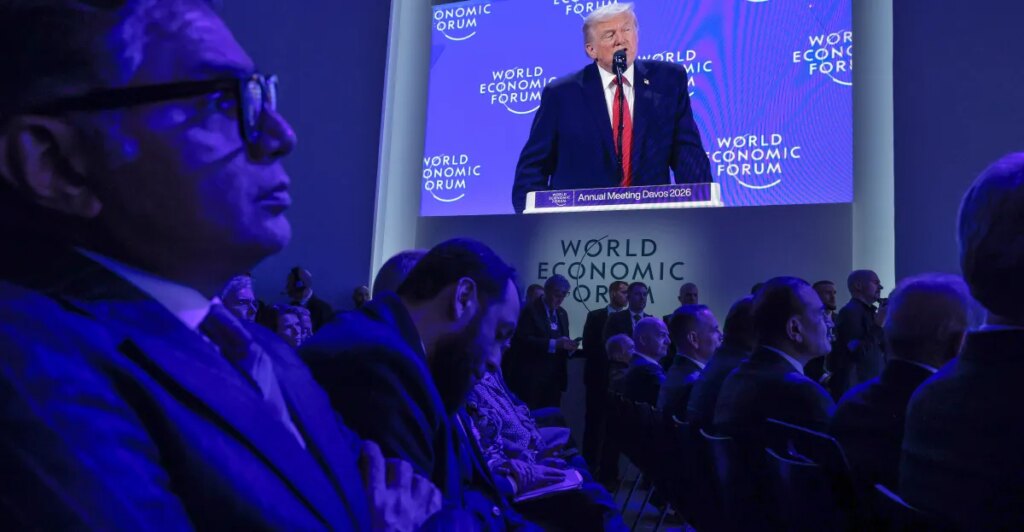
And in Davos, Switzerland, Trump unveiled a new international initiative called the “Board of Peace.” It’s being pitched by the White House as a global problem solver, starting with Gaza.
According to an alleged draft charter, countries would serve limited terms unless they pay $1 billion to fund the board. And, not coincidentally, the chairman (Trump) would have substantial control over its operations. Many American allies quickly balked at the arrangement, with France’s foreign minister citing the “very extensive powers” granted to the board’s chairman.
These recent episodes are all part of a broader story of Trump’s second term: his endless quest to secure a slush fund that he can use to personally control large sums of money.
The slush fund, explained
To say that Trump is in an endless quest for a slush fund is not to suggest that there’s to be a literal White House bank account with his name on it (he’d love that, though).
Rather, it’s a description of a disturbing approach to governing: a relentless push to create discretionary pools of money and leverage points of control that can be used to reward, punish, and command, all while trying to dodge legal and constitutional constraints.
When convenient, he’s gone through Congress, whose decision to grant him a massive $170 billion immigration enforcement fund in a party-line vote outside the normal appropriations process is now central to policy arguments about Immigration and Customs Enforcement after Minneapolis. Of that, ICE is slated to receive $75 billion — tripling its annual budget.
But he’s also looked for ways to find control over investments through the levers of foreign policy — tariffs, trade deals, foreign mergers, military seizures, diplomatic programs — that were never intended to be used this way.
If you’re thinking, “Okay, but governments negotiate deals all the time,” that’s true to a point. What’s striking is that the tariffs Trump unilaterally imposed are being used as leverage to shake down allied countries to feed his insatiable appetite for grandiose headlines about alleged incoming investments.
Instead of enforceable trade agreements, these deals are more like political commitments. Locking in binding obligations and durable tariff changes typically requires congressional action. The enforcement mechanism for these deals is basically his never-ending threat of higher tariffs. For example, the administration reached a trade deal with Europe in July, but the truce didn’t last. After Trump escalated pressure over his demand for Greenland, he revived tariff threats against several European countries.
The concessions Trump announces in these deals are also sometimes less than they seem when the countries fill in the details. Trump claimed: “I got [a] signing bonus from Japan of $550 billion. That’s our money. It’s our money to invest, as we like.” But Japanese investments are being structured as equity, loans, and guarantees routed through Japanese public finance institutions and an investment committee, not a $550 billion pot of cash that Trump can simply steer at will.
These “deals” are built to generate headlines, not binding obligations that would survive courts, Congress, and the next administration. And if the administration tries to treat these foreign pledges as money it can direct, it would be attempting an end around Congress’s power of the purse and laws meant to prevent exactly that. (More on that later.)
Trump’s dream job: investor-in-chief
None of this came out of nowhere. The slush-fund instinct was hiding in plain sight months before the administration started dangling tariff relief in exchange for headline-grabbing “investment packages.”
The seed was planted weeks into Trump’s second term, when he ordered his administration to plan for a United States sovereign wealth fund (SWF), a government-owned investment fund.
The idea was that the federal government should be in the business of assembling a portfolio of “strategic” assets and directing capital flows, with the president at the center of the decision making. It’s a bad idea — and one more commonly associated with socialist thinkers, who see it as a way to disperse economic gains in the private sector broadly to the public. To Trump, though, the irresistible appeal was that it would put him in the position of dealmaker, developer, and CEO.
The White House eventually realized that a formal SWF would require legislation, which would entail governance rules, statutory limits, and congressional oversight. It would thus be slower, more constrained, and harder for Trump to control. Tellingly, plans for the formal SWF were subsequently shelved.
Treasury Secretary Scott Bessent confirmed the pivot away from a formal SWF when, in reference to the aforementioned shakedowns of allied countries, he stated in August, “Other countries, in essence, are providing us with a sovereign wealth fund.” The revealing phrase is “in essence,” because there’s no actual fund; there’s just the executive branch attempting to leverage tariffs and dealmaking to finance projects “owned and controlled by the United States” that would be selected by Trump.

What emerged was the beginning of an improvisational workaround, a series of ad hoc arrangements meant to mimic a fund but without the guardrails.
In June, the White House pressured Japan’s Nippon Steel into giving the president a “golden share” — a non-monetary stake that comes with substantial control over its business decisions — as part of its purchase of U.S. Steel in order to secure a deal approving the sale.
Following Trump’s public humiliation of Intel CEO Lip-Bu Tan in August, the government acquired a 10 percent equity stake in the storied, but troubled, semiconductor company. The acquisition was funded by previously awarded — but not yet fully paid — grants to Intel under the Biden administration’s CHIPS and Science Act, plus additional money tied to a program to produce chips for the Pentagon. The arrangement wasn’t presented as a temporary emergency tool, as had been the case with past government equity acquisitions; instead, it was portrayed as an indefinite strategic ownership position.
Other equity deals have drawn on different justifications and funding streams. The Pentagon’s recent equity stake in defense contractor L3Harris is a perfect illustration of how the administration makes it up as it goes, deal by deal. On January 13, the Department of Defense announced a $1 billion investment structured to give the government an equity stake in a rocket motor company that L3Harris will spin off later in 2026. The Pentagon framed it as the first “direct to supplier” deal of its kind, tied to multi-year procurement and speeding the production of rocket motors needed for missiles. But the equity stake was unnecessary, as the Pentagon could have achieved its goals with the procurement tools it already has.
That matters, because it creates an obvious conflict of interest. The government becomes the customer, regulator, and partial owner of a firm that will compete for government business. The incentive problem should be obvious: When Washington owns part of a company, it has a stake in the company’s success, and a political stake in ensuring it doesn’t fail. That’s one reason federal equity stakes were historically associated with emergencies rather than peacetime political dealmaking.
As it stands, the administration has acquired equity stakes in 12 private companies, including several mineral producers and an energy company. The administration has made clear its intention to consider acquiring equity stakes in additional companies and industries.
Then, there’s the administration’s “pay-to-play” chip export scheme that takes the slush fund mentality and dispenses with the pretense that the primary motivation is the US’s industrial capacity. In December, the administration said it would allow Nvidia and AMD to export particular chips to China — overruling criticswho worried the move would cut into America’s lead on a key technology with security implications — in exchange for a 25 percent cut of the sales. Observers noted that the Constitution bars taxes on exports.
Cue the improvisation. Trump ultimately imposed a narrowly targeted 25 percent tariff on certain advanced chips, including the ones Nvidia and AMD could sell to China, using a national security order tied to a Section 232 investigation under the Trade Expansion Act of 1962. As global technology expert Paul Triolo explained, “There is no precedent for this type of approach to tariffs and semiconductor policy. This is a policy designed specifically for Nvidia and AMD to be able to ship advanced GPUs to China and for the US government to attach a ‘chip tax’ to this process in a way that does not violate existing laws.”
It’s a clear example of the administration’s governing style: constantly rejiggering the legal structure of a scheme to preserve the underlying goal — money and control — while avoiding the most obvious legal obstacles. With the direct cut of export sales initially touted by Trump looking constitutionally dicey, the White House shifted to an import tariff ploy that could be framed as the president merely exercising trade powers delegated to him by Congress.
The deeper problem is what this kind of improvisation invites. Even when Congress doesn’t get a vote on an export decision, the system ordinarily runs through agencies, written standards, and a paper trail. Those guardrails exist to make conflicts of interest easier to spot and harder to exploit. That concern reared its head in late January, when the Wall Street Journal reported that a United Arab Emirates-backed entity linked to an Emirati royal purchased 49% of the Trump family’s crypto venture, World Liberty Financial, for $500 million, with roughly half paid up front. The report connects the investment timeline to subsequent US-UAE negotiations and, ultimately, to an agreement allowing the export of tightly controlled advanced AI chips.
If accurate, a foreign interest looking to obtain advanced American chips placed a large bet on a fledgling business tied directly to the incoming president, his family, and close associates. Even if no quid pro quo can be proven, the mere appearance of a “pay for play” scheme involving a national security matter is disturbing. And it lands amid broader concerns that the Trump family and associates have been monetizing proximity to presidential power.
Okay, but is any of this legal?
The Constitution gives Congress the power of the purse, stating that “no money shall be drawn from the Treasury” unless the legislative branch formally allows it. It’s the central guardrail against Trump’s mentality that money can be raised and deployed based on presidential discretion rather than congressional authorization.
Federal budget law reinforces this principle.
The Antideficiency Act bars agencies from obligating or spending federal funds in advance of, or beyond, a congressional appropriation. And the Miscellaneous Receipts statute generally requires that money received by the government be deposited in the Treasury as miscellaneous receipts unless specifically authorized for deposit elsewhere. Again, these rules exist to prevent agencies — and presidents — from creating their own pots of money outside of Congress’s control.
The revenue from Trump’s tariffs goes to the Treasury, for example, and turning it into spending requires congressional action. That hasn’t stopped the president from wildly claiming he can use tariff revenues to pay for everything from a “Dream Military,” to replacing the federal income tax, to $2,000 stimulus checks. But he’s made no progress on actually advancing these priorities using the money in question.
These constraints don’t automatically resolve every questionable action. Over time, Congress has delegated substantial power to the executive branch. Whether the executive branch has misused that delegated power is a question for the courts. In the meantime, Congress can — and should — conduct oversight of the administration’s maneuvering.
For equity acquisitions, the administration is relying on existing Pentagon industrial base authorities and repurposed funds to acquire stakes in companies. Unresolved issues include whether those statutes and appropriations clearly authorize equity ownership and, if the government later receives dividends or sells the stake, whether congressional budget rules, such as the MRA, require the funds to be returned to the Treasury rather than reused by the agencies.
The legal and constitutional restraints explain why Trump’s slush-fund hunt keeps producing more questions than answers. The schemes are hard to square with the fundamental separation of powers, so creative legal justifications and improvisation are required.

The Venezuelan oil proceeds saga shows how Trump’s abrupt public decrees can turn into complicated schemes after they force his apparatchiks to act. Trump initially said he would control the money, declaring that “I don’t have to consult with anybody” to take control of the oil.
After Trump’s initial claim, the White House issued an executive order invoking emergency powers to keep courts from steering Venezuelan oil revenue to the country’s creditors. It creates “Foreign Government Deposit Funds,” meaning proceeds held in designated Treasury accounts. Treasury’s Office of Foreign Assets Control then issued a general license permitting certain Venezuelan oil transactions but requiring payments that would otherwise go to sanctioned Venezuelan entities to be routed first into Treasury accounts.
The order says the money remains Venezuela’s sovereign property, yet the Treasury may release it only at the Secretary of State’s direction. The administration says, “It’s not our money,” but it nevertheless controls the spigot.
Confusion deepened when reports said $500 million from the first sales sat in a US-controlled account in Qatar before being returned to Venezuela. Reuters quoted an administration official saying the Qatar fund is temporary and future proceeds are expected to go into a US-based account.
Secretary of State Marco Rubio told the Senate that the US controls only the disbursement of funds, that Venezuela will submit monthly budget requests for administration approval, and that audits will ensure the funds benefit Venezuelans. But a Treasury-held, State-directed custodial fund that effectively governs a foreign government’s money is unusual, and the administration hasn’t clearly identified the statute authorizing this structure or explained how it can realistically audit and enforce spending inside Venezuela.
The ongoing murkiness blurs who controls what, where, and under what legal authority.
The administration’s Board of Peace initiative holds similar concerns. According to the draft charter, a country’s membership would be limited to a three-year term unless it contributes $1 billion “in cash funds” to extend it. Even if the White House claims this isn’t a “fee,” the obvious questions remain. Where would the money go? Who would control it? What is the legal authority for the president to solicit contributions from foreign governments? What about Congress?
On Thursday, Trump announced that the US will contribute $10 billion to his board. That, once again, immediately raised the question of how the president can do it if Congress hasn’t appropriated the money. As CNN reporter Aaron Blake noted, “critics have likened [the Board] to a giant slush fund Trump will control.” Another day, more questions.
This is not a stable way to govern
A reason why these “deals” keep generating questions is that the administration is dancing around the federal government’s core design. Congress is supposed to control the purse, and presidents aren’t supposed to create their own financing mechanisms.
Even if you assume the administration is acting in good faith — an unwarranted assumption — its approach erodes the idea that federal power should be exercised through general rules rather than personalized deals. Trade policy shouldn’t be a means for the president to shake down allies. Export controls are supposed to be about security, not revenue generation. Subsidy programs are supposed to be debated and authorized by Congress, not converted into partial government ownership of private companies. And emergency powers are supposed to be extraordinary, not an excuse to act on autocratic instincts.
The question, “Is this legal?” therefore can’t be answered with a simple yes or no. As the Supreme Court’s looming ruling on Trump’s “emergency” tariffs portends, some actions may survive judicial review; others may not.
But the long-term risk is not just that Trump might be doing something illegal. The long-term risk is that his presidency is normalizing treating the receipt and disbursement of money as instruments of personal power. Were this happening under a Democratic administration, congressional Republicans would be outraged. Instead, they’ve collectively buried their heads in the sand. If and when a future Democratic administration takes advantage of the precedents being set by Trump, they’ll have only their own willful cowardice to blame.
The post Trump’s dream is a giant slush fund Congress can’t touch appeared first on Vox.