Nuno Castel-Branco is a historian of science at the University of Oxford and writes the Stories of Science newsletter.
Last month, a bipartisan congressional spending bill cut funds for NASA’s Mars Sample Return mission. The move stops a project that could have confirmed past microbial life on Mars and delivered detailed analysis of Martian soil, clarifying biological and environmental uncertainties ahead of future space exploration. For the moment, however, there is no way to know.
Roadblocks in promising research are all too common in science. Katalin Karikó, a young Hungarian immigrant who in the 1990s started studying messenger RNA molecules for gene therapy, knows it well. After failing to attract necessary funding for her mRNA research, Karikó was evicted from her laboratory at the University of Pennsylvania.
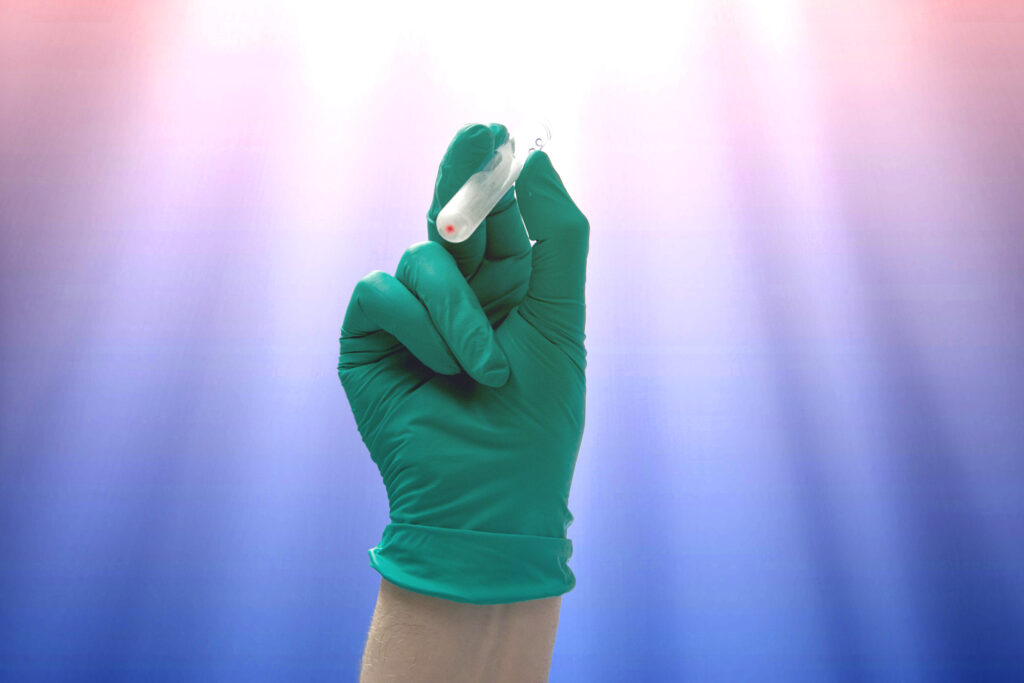
Yet, unlike with the now-unplugged Mars mission, Karikó — struggling and unsupported at Penn — found a fresh avenue for her research by going to work at the firm BioNTech in 2013. This turned out to be providential because Karikó was on the right path. With fellow researcher Drew Weissman — one of the few at Penn who believed in her — she developed new techniques to safely insert mRNA molecules into humans. This procedure made covid-19 vaccines possible, earning them the Nobel Prize in medicine in 2023.
Karikó is one of the many protagonists of “I Told You So!,” a new and highly compelling account of scientists’ hard way to success. Author Matt Kaplan, science correspondent for the Economist, shows that “rather than being immune to the passions and politics of the outside world,” science is increasingly threatened and “shaped by these influences.”
Though Kaplan covers famous stories of scientists ignored or obstructed going back to Galileo, his greatest contribution is in skillfully weaving together stories of modern-day scientists whose underappreciated work might otherwise remain little known.
One such scientist is Elizabeth Repasky, a biologist at the Roswell Park Cancer Center in Buffalo. Years ago, she wondered if the typically cool temperatures in laboratories affected the way cancer developed in mice. Indeed, it did — cancer grows more slowly in mice housed at warmer temperatures, as Repasky found and Kaplan reported in 2013. “I recently called Betsy,” he writes in the book, “to find out about her progress on spreading the word that running experiments on chilled mice is a mistake, and I was simultaneously stunned and unsurprised that very little has happened.”
So far, it seems, concern about the cost and trouble of altering mice enclosures in laboratories worldwide has overridden a potentially significant development affecting cancer research.
Repasky’s story reminds me of a colleague of mine at University of Oxford who recently demonstrated that the reliance on a few model species to study embryo development is significantly outdated. Thankfully, my friend knows that science takes time to change.
This changing process often involves searching for new ways of funding and the influence of leaders in the field. Kaplan tells the story of Mary Schweitzer, a young paleontologist in the 1990s who showed that soft tissue can survive within dinosaur bones. Had Schweitzer not been supported by Jack Horner — the same fossil scientist who served as a consultant for the movie “Jurassic Park” and was the inspiration for the main character — her research would never have been published in the first place.
When Kaplan looks into the past, he can sometimes be too dismissive of old scientific ideas, as with what was known as natural astrology. Hippocrates in ancient Greece and early modern physicians such as Thomas Sydenham in 17th-century England “looked to the sun” for prognoses not because they were delusional but because they were trying to find their way in the absence of adequate knowledge. They observed accurately that the seasons — determined by the relative position of the sun to the Earth — played a role in ailments such as flu in winter or heat exhaustion in summer.
The author is also too black-and-white in discussing Galileo. True, the 17th-century Italian astronomer was wronged by the Inquisition. But saying that he was condemned for being right misses the full significance — and complexity — of this episode. Galileo never had a scientific proof that the Earth moves around the sun. His main adversaries were natural philosophers (i.e., scientists), not theologians. More important, he was wrong in the debate that Kaplan uses to introduce him to his readers. Galileo mistakenly thought that comets were atmospheric rather than astronomic phenomena. In the end, it was only under house arrest in his Italian villa that Galileo published his main scientific legacy: the law of free fall and the parabolic trajectory of projectiles.
Science is a human enterprise by nature — and it will always be so. In the end, Congress’s canceling of the Mars Sample Return project opened more funds to other NASA endeavors and discoveries yet to come. Whether, and how, the discoverers will go down in history is another question.
The post The sweet scientific vindication of ‘I told you so’ appeared first on Washington Post.