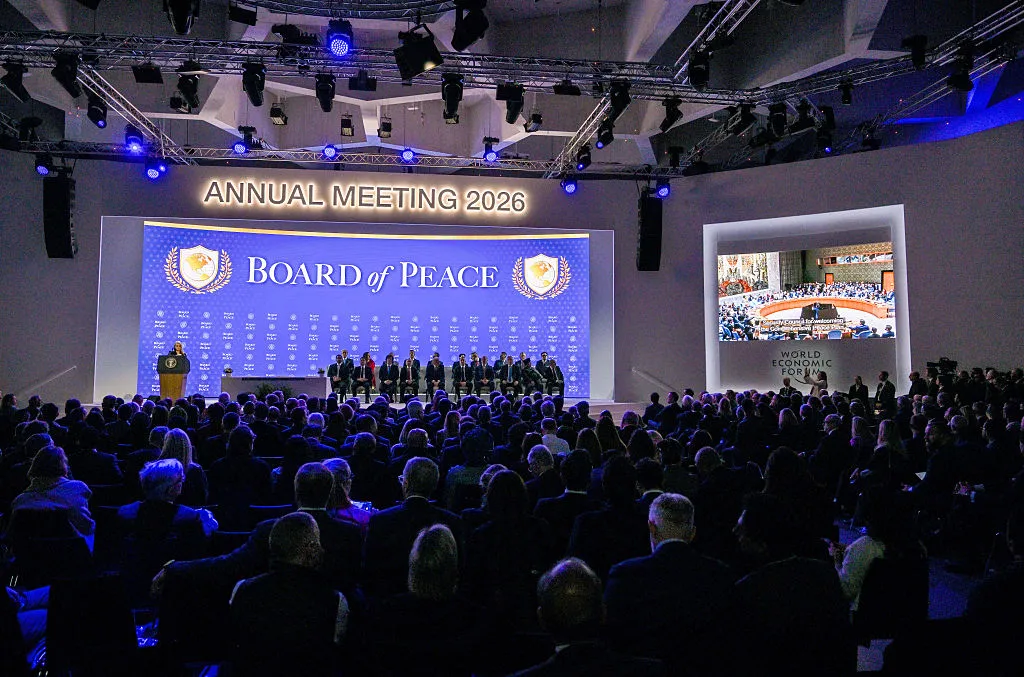
Donald Trump’s Gaza Board of Peace is meeting for the first time on Thursday even as more leaders across Europe reject the U.S. President’s invitation to join over objections to its potential undermining of the United Nations.
Trump extended invitations to dozens of countries to join the board last month as part of Phase Two of his 20-point peace plan for Gaza. The U.N. Security Council endorsed the plan in November—a month after the Israel-Hamas cease-fire—with a mandate that covers the board’s involvement in Gaza through the end of 2027.
[time-brightcove not-tgx=”true”]
But Trump appears to have a bigger vision for the board, potentially signalling an aim to create an alternative to the global body formed at the end of World War II after withdrawing the U.S. from a slew of U.N. agencies.
“We have the greatest leaders in the world joining the Board of Peace,” Trump told reporters earlier this week. “I think it has the chance to be the most consequential board ever assembled of any kind.”
In a Jan. 16 invitation letter to Argentinian President Javier Milei that was shared on X, Trump said the board was an opportunity “to embark on a bold new approach to resolving Global Conflict!” Trump, who will chair the board, had teased in an interview with Reuters last week that the board would “start with Gaza and then do conflicts as they arise.”
As part of this longer-term vision, Trump has offered permanent membership on the board to anyone who pays a $1 billion fee within its first year. Invited leaders who do not pay the fee can serve on the board for a three-year term.
At least 27 countries have joined the Board of Peace and will send representatives to its inaugural meeting. Some countries, including Italy, Greece, and South Korea, as well as the European Union will attend as “observers.” In a Sunday Truth Social post, Trump said member states have pledged more than $5 billion towards humanitarian aid for and reconstruction of Gaza.
Some have criticized that Trump sent invitations to Russian President Vladimir Putin and Israeli Prime Minister Benjamin Netanyahu, both of whom have arrest warrants from the International Criminal Court for alleged war crimes.
Trump has also appeared to wield invites to the Board of Peace for political reasons. After Canada’s Prime Minister Mark Carney denounced “American hegemony” in his speech at the World Economic Forum in Davos, Switzerland, Trump revoked the invitation to Canada despite Carney announcing his intent to join.
Here’s the latest on how various countries have responded to their invitation to join the Board of Peace.
Accepted
Albania
Albanian Prime Minister Edi Rama indicated his intention to accept Trump’s invitation in a FaceBook post on Jan. 18. “Very honored by President Trump’s personal invitation, to represent Albania on the Board of Peace, a new international organization conceived by him, where Albania is invited as a founding member, internationally climbing another peak unimaginable only a few years ago,” Rama wrote.
Argentina
“It is an honor for me to have received tonight the invitation for Argentina to join, as a Founding Member, the Board of Peace, an organization created by President Trump to promote lasting peace in regions affected by conflict, starting with the Gaza Strip,” Milei posted on X on Jan. 17, alongside a copy of the invitation. “Argentina will always stand with the countries that confront terrorism head-on, that defend life and property, and that promote peace and freedom. It is an honor for us to share in such a great responsibility.”
Armenia
Armenian Prime Minister Nikol Pashinyan accepted Trump’s invitation, “reaffirming Armenia’s commitment to promoting peace,” his press secretary Nazeli Baghdasaryan posted on FaceBook on Jan. 20, alongside a copy of the invitation.
Azerbaijan
President of Azerbaijan Ilham Aliyev officially accepted Trump’s invitation on Jan. 21, calling the Board “an effective international organization” and thanking Trump for his “visionary leadership and peace-building efforts.”
Bahrain
Bahrain’s King Hamad bin Isa Al Khalifa accepted an invitation to join the board on Jan. 20, according to Bahrain News Agency. The country’s foreign ministry previously said in a statement acknowledging the invitation that it appreciates “the efforts of President Trump to achieve a just and lasting peace in the region.”
Belarus
Belarusian President Alexander Lukashenko signed an agreement on Jan. 20 to join the board, according to a video published on a presidential Telegram channel. The Belarusian foreign ministry said on Jan. 19 that the country is “ready to take part in the work of the Board of Peace in the hopes that this organization will expand its authority far beyond the frames of its initially suggested mandate,” according to Russian news agency TASS.
Bulgaria
Bulgarian Prime Minister Rossen Jeliazkov announced that he would join the Board of Peace on Jan. 22 after the signing ceremony in Davos, adding that Bulgaria would not make a financial commitment to the Board.
Cambodia
Cambodia’s Prime Minister Hun Manet said on Jan. 26 that he would join the Board to demonstrate his country’s “goodwill and strong commitment to global peace.”
Egypt
Egyptian President Abdel Fattah al-Sisi will join the Board of Peace, Egypt’s foreign ministry announced on Jan. 21. The ministry said in a statement that it would continue to seek a lasting cease-fire in Gaza, the delivery of humanitarian aid “without restrictions,” as well as “the right of the Palestinian people to self-determination and the establishment of an independent state.”
El Salvador
El Salvador officially joined the Board of Peace on Jan. 27, drawing its President Nayib Bukele closer to Trump shortly before the two countries reached an agreement to bring Trump’s reciprocal tariffs on El Salvador down to 0%.
Hungary
Hungarian Prime Minister Viktor Orban will join the board, Foreign Minister Peter Szijjarto told state-owned Kossuth Radio on Jan. 18, adding that Orban was “honored” to be invited.
Indonesia
Indonesia’s Ministry of Foreign Affairs said in a joint announcement on Jan. 22 with Egypt, Jordan, Turkey, Pakistan, Qatar, Saudi Arabia, and the U.A.E. that Indonesia is joining the Board of Peace while affirming its support for “the Palestinian right to self-determination and statehood in according with international law.” The move divided some of the country’s largest Islamic organizations which initially remonstrated President Prabowo Subianto’s decision to join “a real form of neocolonialism” before later reportedly softening their criticisms.
Indonesia has also committed around 8,000 troops to the International Stabilization Force—another part of Trump’s peace plan—in Gaza.
Israel
Netanyahu said on Jan. 21 that he would join Trump’s Board of Peace despite previously raising objections to the inclusion of Turkey and Qatar on the “executive board,” which he said “was not coordinated with Israel.”
Jordan
Jordan’s King Abdullah II will join Trump’s Board, according to the Jan. 22 joint announcement.
Kazakhstan
Kazakh President Kassym-Jomart Tokayev accepted Trump’s offer, spokesperson Ruslan Zheldibay announced on Jan. 19, adding that Tokayev was one of the first leaders to receive an invitation.
Kuwait
Kuwait’s foreign ministry announced on Jan. 21 that Sheikh Meshal Al-Ahmad Al-Jaber Al-Sabah would join Trump’s Board of Peace.
Kosovo
Kosovo announced on Jan. 21 that it accepted Trump’s invitation to join the board, with the country’s President Vjosa Osmani posting on X, “America helped bring peace to Kosovo. Today, Kosovo stands firmly as America’s ally, ready to help carry that peace forward.”
Morocco
Morocco’s King Mohammed VI “graciously accepted” a spot on Trump’s board on Jan. 19, according to the country’s foreign ministry.
Mongolia
Mongolian Prime Minister Zandanshatar Gombojav signed onto the Board of Peace at the Jan. 22 Davos ceremony. “The Board of Peace is not a military alliance but a voluntary cooperation platform based on respect for national sovereignty, fully consistent with Mongolia’s independent, peace-centered and multi-pillared foreign policy,” Mongolia’s government said in a statement after the ceremony.
Pakistan
Islamabad announced on Jan. 21 that Prime Minister Muhammad Shehbaz Sharif will join the Board of Peace. In its statement, the country’s foreign ministry said it “hopes that these efforts will lead to the realization of the right to self-determination of the people of Palestine, through a credible, time-bound political process, consistent with international legitimacy and relevant U.N. resolutions.”
Paraguay
Paraguay’s President Santiago Peña announced his intention to accept Trump’s invitation in a Jan. 17 post on X, noting that “we proudly assume the responsibility of working alongside the United States for lasting peace for all,” alongside a copy of the invitation.
Qatar
Qatari leader Tamim bin Hamad Al Thani will have a seat on the Board of Peace, according to the Jan. 22 joint announcement.
Saudi Arabia
Saudi Arabia accepted a spot on Trump’s board after the country’s foreign minister Prince Faisal bin Farhan signed the founding charter of the Board at Davos on Jan. 22.
Turkey
Turkish President Recep Tayyip Erdogan accepted Trump’s invitation to join the Board, with the country’s foreign minister attending its first meeting in his place, according to Turkey’s foreign ministry. Foreign Minister Hakan Fidan is reportedly expected to call for Israel to end alleged cease-fire violations and underscore the need for Palestinian self-determination.
United Arab Emirates
U.A.E. President Sheikh Mohamed bin Zayed Al Nahyan has accepted Trump’s invitation to join the Board of Peace, the country’s Deputy Prime Minister and Minister of Foreign Affairs Sheikh Abdullah bin Zayed Al Nahyan announced on Jan. 20. Sheikh Abdullah bin Zayed stressed that the decision “reflects the importance of fully implementing” Trump’s peace plan, “which is critical for the realization of the legitimate rights of the Palestinian people.”
Al-Hashimy, an Emirati official, was also appointed to the Gaza Executive Board.
Uzbekistan
Spokesperson Sherzod Asadov reportedly said on Telegram on Jan. 19 that Uzbek President Shavkat Mirziyoyev sent a reply to Trump’s invitation expressing “Uzbekistan’s readiness to join the Board of Peace as a founding member state.”
Vietnam
Vietnam’s Communist Party General Secretary Tô Lâm accepted Trump’s invitation on Jan. 18, according to the country’s official news agency.
Rejected
Austria
A foreign policy spokesperson for Austrian Chancellor Christian Stocker said on Feb. 17 that Austria will not participate in the Board of Peace “due to concerns regarding the charter.”
France
France was the first country to reject Trump’s invitation. French President Emmanuel Macron’s office said on Jan. 19 that the decision was made based on concerns that the board’s charter “goes beyond the framework of Gaza and raises serious questions, in particular with respect to the principles and structure of the United Nations, which cannot be called into question.”
Trump floated the possibility of imposing a “200% tariff on his wines and champagnes” in apparent retaliation for Macron’s rejection.
Germany
German Chancellor Friedrich Merz said at a Jan. 23 press conference that he would not join the Board of Peace for now “on constitutional grounds.” He added that he is open to “new forms of cooperation” with the U.S.
Greece
Greek Prime Minister Kyriakos Mitsotakis will not join Trump’s Board of Peace, a spokesperson told reporters on Feb. 12. Foreign Minister George Gerapetritis told private broadcaster Action 24 in January that Athens planned to follow the E.U.’s lead when it came to the board. “The reality is that the Board of Peace, which was proposed by President Trump, has a specific structure, legal characteristics, which need to be further explored,” he said.
Ireland
Irish Deputy Prime Minister Simon Harris said on Jan. 22 that there is no scenario in which Ireland would join the board “as currently constructed,” noting that the board raises “very serious red flags” and that “anything that Putin is considering joining with the word peace in it, doesn’t sit well.”
Italy
Italian Prime Minister Giorgia Meloni said on Jan. 21 that she will not immediately join the board, after signaling at an earlier press conference that Italy was “ready to do our part.” She told Italian state television that “some elements” of the board’s charter “are incompatible with our constitution and this prevents us from signing” in Davos, although she stressed that her “position is still one of openness.”
Nevertheless, Rome is sending a delegation to Washington to act as an observer of the board’s first meeting on Thursday, a move that has raised criticisms from Italian opposition parties.
New Zealand
New Zealand Prime Minister Christopher Luxon said on Jan. 30 that he would not join the board “in its current form.” Foreign Minister Winston Peters said in a post on X that “New Zealand would not add significant further value” to the board given that several other countries have already joined, and that the country needs clarification on the board’s scope given its position as “a leading founder and longstanding supporter” of the U.N.
Norway
Norway will not participate in Trump’s Board of Peace in its current form, Norwegian Deputy Foreign Minister Andreas Motzfeldt Kravik told local daily Aftenposten on Jan. 20. “What is absolutely clear is that we cannot be part of a structure that challenges the role of the U.N. and existing international law. That would be absolutely impossible for us,” he said.
A spokesperson for the Prime Minister’s office told TIME that Norway will not attend the signing ceremony for the board in Davos. “The American proposal raises a number of questions that requires further dialogue with the United States,” the spokesperson said. “For Norway, it is important how this proposal is linked to established structures as the U.N., and to our international commitments.”
Poland
Polish Prime Minister Donald Tusk declined to join Trump’s board due to concerns over its “principles, legal status and primary aims,” he said on Feb. 11.
Slovenia
Slovenian Prime Minister Robert Golob said in a Jan. 21 statement that “it is not yet time” for Slovenia to join the Board of Peace. “This invitation seriously encroaches on the broader international order, not just the appeasement in Gaza,” Golob said, adding he would abide by a “uniform and common response” among Europe that would prioritize “the right to territorial integrity, sovereignty and the inviolability of borders.”
“The risk of the disintegration of such a structure of the United Nations is what is really the most worrying,” Golob said. “The main concern is that the Board’s mandate is simply too broad and could seriously undermine the international order based on the Charter of the United Nations.”
Sweden
Swedish Prime Minister Ulf Kristersson told reporters in Davos on Jan. 21 that he would not participate in the Board of Peace under its current charter.
United Kingdom
The U.K. will not join Trump’s board over concerns about potential Russian involvement, British Foreign Secretary Yvette Cooper said on Jan. 22. Trump said at Davos that Putin had accepted his invitation, although Russia has not yet announced a decision. The U.K. has “concerns about President Putin being part of something which is talking about peace, when we have still not seen any signs from Putin that there will be a commitment to peace in Ukraine,” Cooper said.
Ukraine
Ukrainian President Volodymyr Zelensky rejected Trump’s invitation to join the Board of Peace, as the country’s Foreign Affairs Committee Chair Oleksandr Merezhko told the Kyiv Independent earlier this month that “the very idea of inviting to this board of ‘peace’ the biggest violator of peace and international law, Russia and Belarus, complicit in the crime of aggression, is absurd.” The country has been embattled by nearly four years of war with Russia and renewed peace talks have dragged on without resolution, while Zelensky accused Trump of pressuring him to accept concessions in order to reach a cease-fire.
Vatican
Pope Leo, who has criticized the Trump Administration’s immigration and foreign policy, became the latest world leader to reject an invitation to join the Board.
“One concern is that at the international level it should above all be the U.N. that manages these crisis situations,” Vatican Secretary of State Pietro Parolin said on Feb. 17. “This is one of the points on which we have insisted.”
Deliberating
More than a dozen other countries confirmed to local media outlets or to TIME that they received invitations from Trump, although their decisions on joining have not been announced. These include Australia, Austria, Brazil, China, Cyprus, the European Commission, Finland, India, Japan, the Netherlands, Oman, Portugal, Romania, Russia, Singapore, South Korea, Switzerland, and Thailand.
The post Who’s Accepted and Who’s Rejected Invites to Join Trump’s Board of Peace appeared first on TIME.