Peter Steinberger spent 13 years building a company that formatted PDFs. It took him only one hour to build the model that would eventually kill that app. Steinberger, the founder of OpenClaw, the open-source agentic website that took the world by storm, told podcaster Lex Friedman that he first created the prototype because he “was annoyed that it didn’t exist, so I just prompted it into existence.” Nothing unusual for him–it was the 44th AI-related projecthe’s completed since 2009, a decades-long toil that he told Friedman left him drained of “mojo”: “I couldn’t get code out anymore. I was just, like, staring and feeling empty.” So he booked a one-way ticket to Madrid and disappeared from space, “catching up on life stuff.” But as he relaxed, Steinberger watched the AI frenzy begin without him. The desire for the autonomous assistant dragged Steinberger out of retirement “to mess with AI.” Three months later, the millennial has received international recognition, what’s likely a six-figure-plus offer from OpenAI, and praise from its founder, Sam Altman, who called him a “genius with a lot of amazing ideas.”
Who is Peter Steinberger?
Steinberger’s return to the AI space is as much a story of personal reinvention as it is a professional achievement. Born and raised in rural Austria, he developed an obsession with computers at age 14 when a summer guest introduced him to a PC. That sparked his interest, leading him to study software engineering at the Vienna University of Technology. Before becoming a founder, he worked as a senior iOS engineer in Silicon Valley and taught mobile development at his alma mater. He used to split his time between London and Vienna, although he recently announced he was moving to the United States (he didn’t specify where). Steinberger is quiet about his personal life, though he’s mentioned he’s a Doctor Who fan.
His first major success, PSPDFKit, was apparently bootstrapped in 2011 while he waited six months for a U.S. work visa; he filled the idle time by solving the “simple yet incredibly difficult” problem of PDF rendering on iPads. Over the next 13 years, he grew the company into the gold star of PDF management, with its code powering PDF functionality on over a billion devices for companies like Apple and Dropbox, he told Friedman. Eventually, however, he became bogged down by the “people stuff” required of a CEO: board meetings, conflicts with founders, relentless customer demands, and his battery drained to zero.
“I felt like Austin Powers where they suck the mojo out,” he told Lex Fridman in a recent, sprawling interview. “I couldn’t get code out anymore. I was just, like, staring and feeling empty.”
Despite the professional triumph of a reported €100 million exit in 2023, and the relief of being done, the years of crushing and pushing left Steinberger profoundly hollow. He described the period following his retirement as a search for meaning that no amount of travel, parties, or therapy could resolve. “If you wake up in the morning and you have nothing to look forward to, you have no real challenge, that gets very boring, very fast,” Steinberger told Friedman.
It wasn’t until April 2025 that he felt the spark return, realized through a relatively simple attempt to build a Twitter analysis tool. He discovered that AI had undergone a “paradigm shift” and could now handle the repetitive plumbing of code, allowing him to return to the more high-minded act of building. Now, Steinberger, who recently said he’s moving to the U.S. after being bogged down by pesky European regulations, is defining himself not as a traditional CEO, but a “full-time open-sourcerer” of the agentic revolution.
What is OpenClaw?
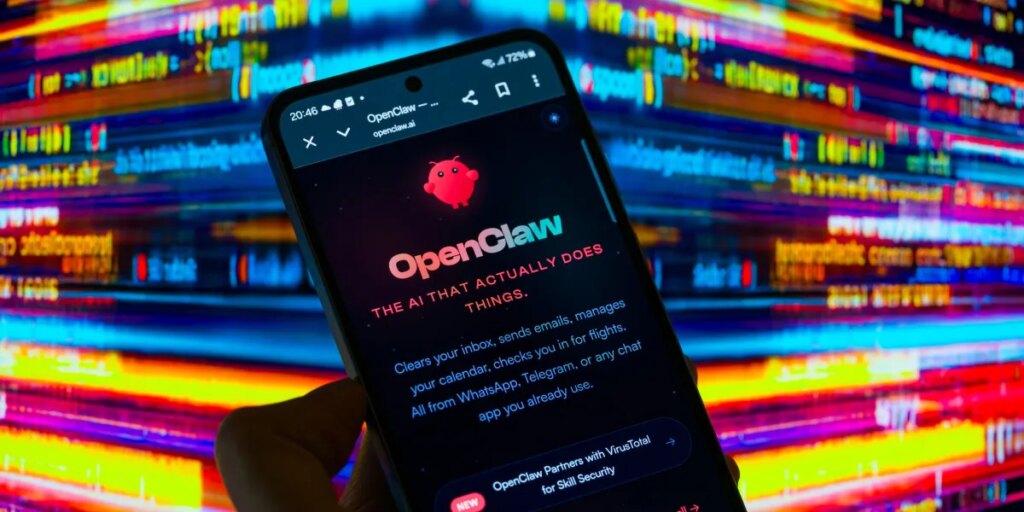
At its core, OpenClaw is an autonomous AI agent that acts as a digital employee, running on a user’s local machine. Unlike standard models that wait for a prompt to respond to, OpenClaw is “always-on,” capable of managing emails and controlling web browsers to complete workflows, especially through messaging apps like WhatsApp or Telegram. This autonomy gained popularity with the launch of Moltbook, a Reddit-style social network designed exclusively for AI agents, filled with posts about manifestos, consciousness, and other agent-related topics.
Yet, despite the levity, experts have warned that autonomous agents carry multiple risks: their margin of error is too high, they could go rogue, or they’re susceptible to malware.
The project, which Steinberger has rebranded multiple times—evolving from Clawdbot to Moltbot and finally to OpenClaw —largely due to politics—has expanded at a pace that startles even seasoned AI experts. By early February, the framework had surpassed 145,000 GitHub stars, a record, and recorded peak traffic of two million visitors in just one week.
But that rapid ascent has also brought significant challenges for Steinberger. He said he navigated a very high-profile disagreement with Anthropic over the project’s original name, and his attempts to transition his digital handles were complicated by bad actors associated with cryptocurrency who briefly hijacked his accounts.
“I was close to crying,” he admitted to Friedman, saying that he was close to deleting the project while exhausted from managing the viral sensation and serving as his own legal and security team. ” I was like, ‘I did show you the future, you build it.’”
But Steinberger persevered and built it himself, motivated by the “magic” he saw when the agents began solving problems he hadn’t explicitly programmed them for, such as transcribing voice messages or even proactively checking on his well-being after surgery.
The decision to join OpenAI,announced on February 15, marks the conclusion of his period as a solo builder. Steinberger said he was losing up to 10k a month on the server, and he had multiple opportunities—including personal outreach from Meta’s Mark Zuckerberg. However, he ultimately chose OpenAI to gain access to the “latest toys” required to scale his vision.
But the move has drawn controversy. OpenClaw, an open-source model, became something of a philosophical challenge to an AI status quo dominated by a few, centralized, and massive players. Steinberger said he built it around a “local-first” architecture, allowing users to run their assistants on their own hardware and maintain their memories in simple Markdown files, rather than locking personal data in a corporate cloud. Critics questioned whether the company was selling out by ceding to OpenAI so quickly.
Steinberger said that to preserve the project’s community-driven roots, OpenClaw will now move into an independent, open-source foundation supported by OpenAI.
“I told them, I don’t do this for the money,” he told Friedman. “I want to have fun and have impact, and that’s ultimately what made my decision.”
The post Who is OpenClaw creator Peter Steinberger? The millennial developer caught the attention of Sam Altman and Mark Zuckerberg appeared first on Fortune.