At least eight skiers were killed and one is missing and presumed dead after they were overcome by an avalanche in the mountains near Lake Tahoe on Tuesday — the deadliest in modern California history.
They had been part of a group of 15, including four guides, on a three-day backcountry expedition near Castle Peak, a popular recreation area in the Sierra Nevada. Six others from the group were rescued late Tuesday night, one of whom remained in the hospital on Wednesday with injuries that were not life-threatening.
The high death toll raised questions about why the group was on a mountain after forecasters issued avalanche warnings for the region, though locals stressed that conditions in the region can shift quickly.
Here’s what to know about the avalanche:
Eight people were killed, and one remains missing and presumed dead.
The group of skiers and guides were returning to the trailhead at the end of their trip on Tuesday when they were overcome by the avalanche, according to a statement from Blackbird Mountain Guides, the company running the tour. Officials said at a news conference on Wednesday that the group consisted of four guides and 11 clients.
The authorities said that the avalanche occurred around 11:30 a.m., and that the six survivors had managed to build a makeshift shelter. Rescuers using specialized snow equipment braved treacherous conditions to reach the group after nightfall.
Four men and two women survived, officials said. Only one of the survivors is a guide, officials said.
Little is publicly known about the identity of the victims, though the authorities said one person who died was the spouse of a member of the Tahoe Nordic Search and Rescue team. Officials said the victims were seven women and two men.
As of midday on Wednesday, rescue teams had not been able to return to the mountain to retrieve the bodies of the eight skiers, the authorities said.
Survivors managed to contact rescuers using emergency beacons and iPhone S.O.S. functions.
A beacon is an electronic device that skiers keep with them, either in a special pocket or strapped to their bodies, and turned on while in the backcountry.
Beacons have a “send” mode that emits a continuous radio signal and is activated when the device is initially turned on, and a “search” mode that receives the signal and translates it into beeps or, in newer beacons, a voice command.
For example, if an avalanche were to bury a person skiing in a group, everyone else would immediately switch their beacons to “search” to pick up the signal.
It’s also important that skiers carry a small shovel and probe with them in the backcountry to help dig out anyone who is trapped.
Survivors were also able to communicate with emergency responders by texting through their iPhone’s S.O.S. feature, which uses a satellite connection to send texts or make phone calls. No cellular service or Wi-Fi connection is necessary.
The feature is available on the iPhone 14 and later models, according to Apple’s website. The phone must have the correct operating system installed to connect with local emergency services.
The avalanche occurred in a popular recreational area near Lake Tahoe.
The Castle Peak region, site of the avalanche, is a backcountry area in the Sierra Nevada, popular year-round and easily accessible from the interstate that connects the San Francisco Bay Area to the Lake Tahoe region.
Castle Peak is a sought-after winter destination for those with advanced skills, and the Frog Lake Backcountry Huts, where the missing and rescued skiers stayed this week, is especially popular.
The avalanche hit as the group was returning to a trailhead near the Boreal Mountain Resort, which serves as a landmark for many travelers crossing Donner Summit. The area is about 20 miles northwest from Lake Tahoe itself.
The Tahoe region, including the area at Castle Peak, draws skiers, snowboarders and other winter sports enthusiasts this time of year, and is a popular weekend destination for many in the Bay Area and Sacramento.
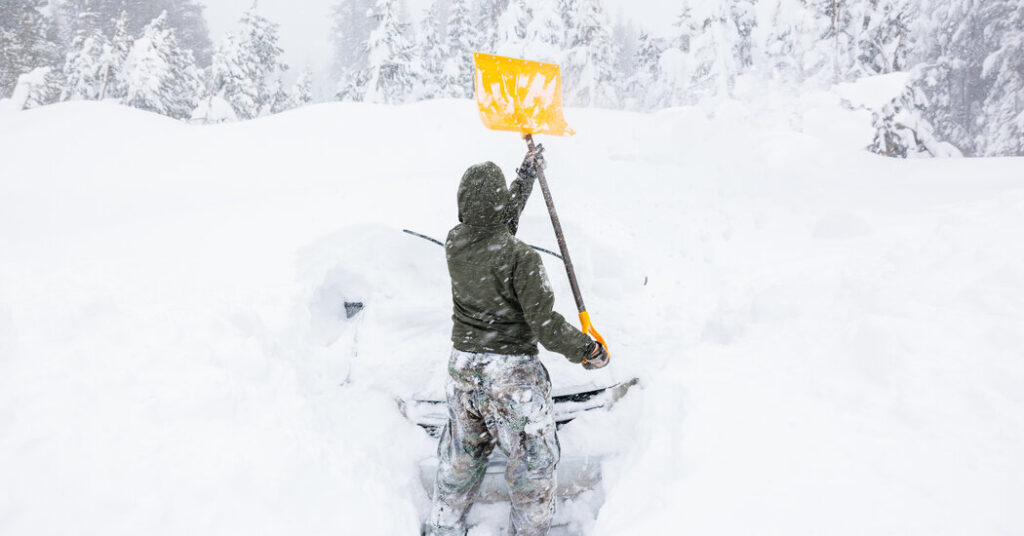
A weekend of severe storms and heavy snowfall preceded the avalanche.
Two powerful storms slammed California early this week, with Northern California experiencing the most severe impacts, where snowfall rates in excess of three inches an hour were forecast for the central and southern Sierra Nevada.
By early Tuesday, nearly three feet of snow had accumulated at Donner Peak, not far from the avalanche site, over a 48-hour period. High winds accompanied the snowfall, leading to low visibility.
Officials said that crews continued to battle dangerous weather conditions, which made it difficult to recover the remains of the eight victims and to continue searching for the ninth victim. An avalanche warning issued by the Sierra Avalanche Center on Tuesday for a broad stretch of the Sierra Nevada, urging people to stay away, was in place through Thursday morning.
Livia Albeck-Ripka is a Times reporter based in Los Angeles, covering breaking news, California and other subjects.
The post What to Know About the Sierra Nevada Avalanche appeared first on New York Times.