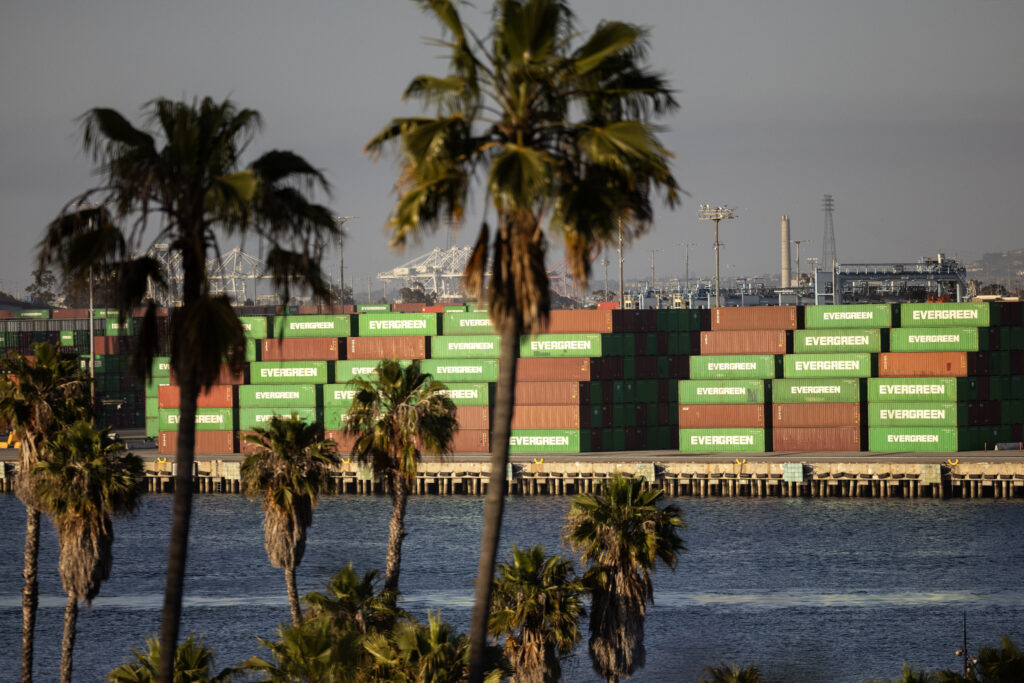
The U.S. trade deficit for goods hit a record 1.2 trillion last year, even as the Trump administration pursued a trade agenda with aggressive tariffs and a staunch “America First” approach.
Fresh data released by the Commerce Department on Thursday morning showed the full-year total deficit combining goods and services was $901.5 billion, down a smidgen from 2024 but still one of the largest levels in decades. Exports of goods and services rose 6.2 percent to a record $3.4 trillion. Imports rose nearly 5 percent to a record $4.3 trillion.
Goods exports were driven partly by items like computers and aircraft, along with other industrial supplies. Imports drew heavily from computer accessories, telecommunications equipment and auto parts.
There’s major uncertainty for the U.S. and global economies about what comes next, in part because the Supreme Court has yet to rule on whether the majority of President Donald Trump’s tariffs are legal. But the data offered the latest snapshot of a historic overhaul of the economy and old global order.
Trump’s return to the White House brought sprawling tariffs, a giant tax and spending bill and threats to central bank independence.
The cost of some goods such as used cars and electronics rose on the heels of the new levies, and the job market cooled significantly last year. Still, the economy continued to grow, consumers kept spending and overall inflation did not climb as high as some economists expected at the start of the new tariff regime.
The post U.S. trade deficits remain high in 2025, despite Trump’s tariff policy appeared first on Washington Post.