The U.S. merchandise trade deficit hit a record $1.2 trillion last year, despite President Donald Trump’s promise to eliminate it by imposing the highest tariffs in eight decades on foreign-made products.
Thursday’s Commerce Department report represents the first full-year assessment of the president’s ambitious reordering of global trade. The persistence of the deficit in the face of steep new taxes on imports from China, the European Union and scores of other nations reflects the limits of Trump’s preferred policy tool, economists said.
The president has described the trade deficit in goods, which the U.S. has run every year since 1975, as a “national emergency” resulting from unfair trade practices on the part of foreign nations.
A broader measure of the nation’s trade balance — including services such as travel, education and financial management — showed a full-year deficit of $901.5 billion, down slightly from the previous year, the Commerce Department said Thursday.
Exports of goods and services rose 6.2 percent to a record $3.4 trillion. Imports rose nearly 5 percent to a record $4.3 trillion.
The goods and services deficit for the month of December widened more than Wall Street analysts had expected, reaching $70.3 billion, up from $53 billion in November.
The trade deficit — reflecting the gap between the amount of goods Americans buy from abroad and the value of U.S. goods sold overseas — is driven largely by domestic economic policies, in the view of mainstream economists. The sizable U.S. budget deficit, a sign of a nation living beyond its means, inevitably draws in large amounts of foreign goods, despite tariffs, they note.
“Tariffs are not the dial to turn if you want to change the overall balance of trade,” said Erica York, vice president of federal tax policy with the nonpartisan Tax Foundation.
Although the president has failed thus far in his bid to shrink — let alone eliminate — the trade deficit, he has set in motion a fundamental reordering of global trade flows.
U.S. imports of Chinese goods fell by nearly 30 percent last year, marking a sharp break from decades of economic integration between the world’s two largest economies.
China, which accounted for more than 13 percent of all U.S. merchandise imports in 2024, provided just 9 percent last year, according to economist Chad Bown of the Peterson Institute for International Economics.
As corporations tried to escape Trump’s steep tariffs on Chinese goods, they found new suppliers of products such as laptops and video game consoles in places like Vietnam.
Taiwanese companies also assumed a larger role in U.S. supply lines as demand increased for technology needed to assemble new data centers amid a boom in artificial intelligence investments.
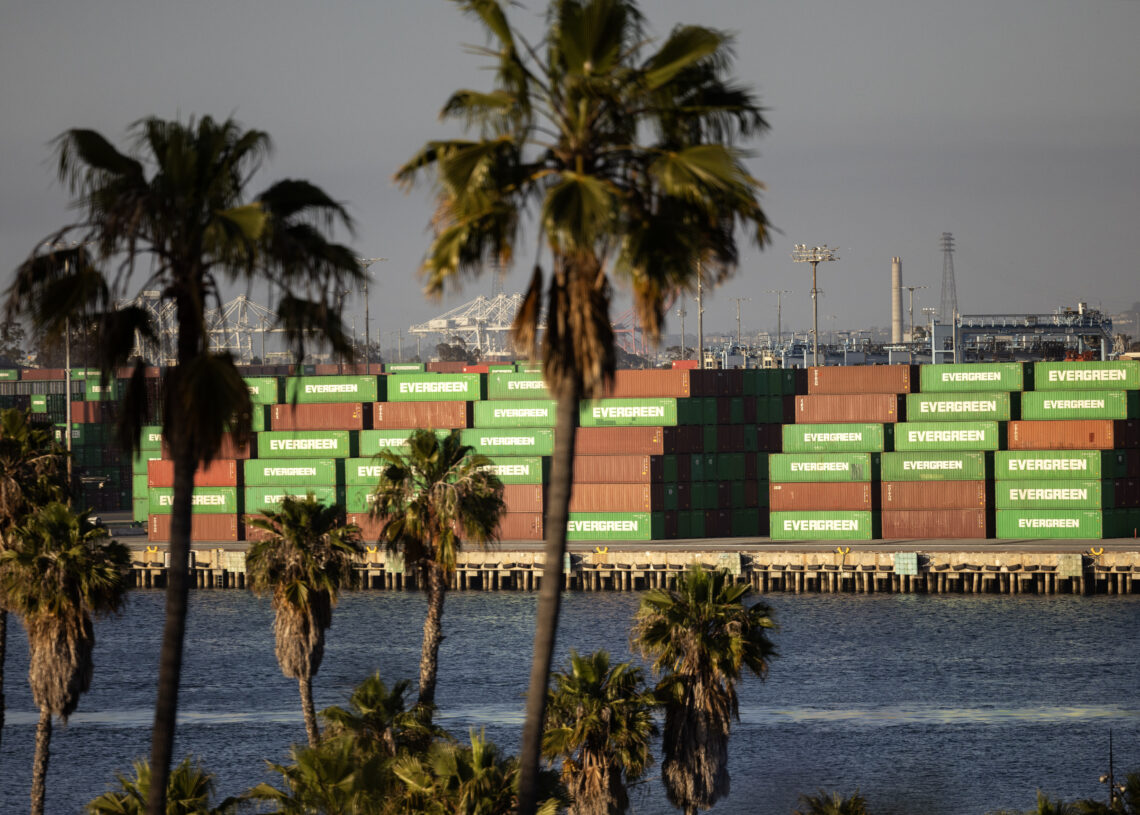
Goods exports were driven partly by items like computers and aircraft, along with other industrial supplies. Imports drew heavily from computer accessories, telecommunications equipment and auto parts.
There’s major uncertainty for the U.S. and global economies about what comes next, in part because the Supreme Court has yet to rule on whether the majority of President Donald Trump’s tariffs are legal. But the data offered the latest snapshot of a historic overhaul of the economy and old global order.
Trump’s return to the White House brought sprawling tariffs, a giant tax and spending bill and threats to central bank independence.
The cost of some goods such as used cars and electronics rose on the heels of the new levies, and the job market cooled significantly last year. Still, the economy continued to grow, consumers kept spending and overall inflation did not climb as high as some economists expected at the start of the new tariff regime.
The post U.S. trade deficit remains high in 2025, despite Trump’s tariff policy appeared first on Washington Post.