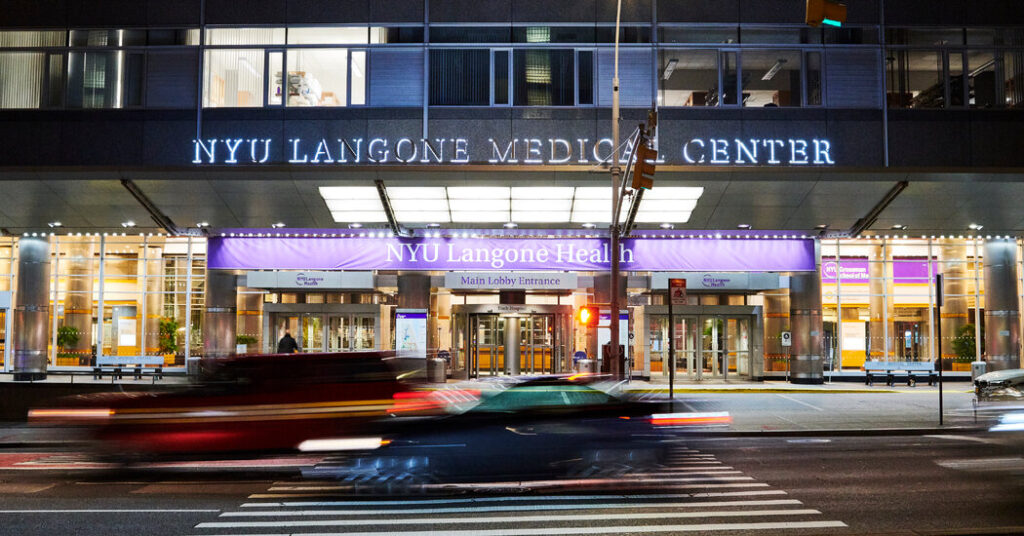
In phone call after call, doctors and nurses from NYU Langone Health delivered the news to the parents: The hospital was no longer providing gender-related care to transgender adolescents. That meant no more prescriptions for hormones or for puberty blockers. Their children needed to find new doctors.
On the other end of the line, the parents listened in shock, even though they had figured that this day would eventually come. Still, they felt stunned that one of the city’s leading medical institutions had decided to abruptly stop their children’s treatment, under pressure from the federal government. In some cases, their children had been patients there for years, ever since they were 10 or 11.
It was only after the phone calls ended that a couple of parents said that they realized they had forgotten to ask an obvious question: What about the device that had been placed in their child’s arm?
The small rod-shaped implant emits puberty-blocking medicine. It was good for about a year. Eventually, it would need to come out, which would require a minor surgical procedure. Who would do that? They would cross that bridge when they got there, two parents recounted in interviews on Wednesday.
The parents said that other concerns about their child’s health were more pressing: Would they be able to find a new doctor for their children? Would that new doctor eventually, like NYU Langone, fold under pressure and stop providing gender related care to adolescents?
But the issue of what to do about the device in their child’s arm underscored how suddenly their relationship with the hospital was being severed.
The call did not come as a complete surprise. For more than a year, President Trump has made it clear that he wanted to end gender-related treatments for adolescents who say their gender identity does not align with their sex at birth. Mr. Trump had threatened hospitals that provide such treatments — including puberty blockers, hormone therapy and surgeries — with a loss of federal funding and had deployed federal agencies to investigate pediatric transgender medicine.
NYU Langone is one of more than 20 hospitals and clinics nationwide to receive subpoenas from federal agencies as part of those investigations. In December, the Department of Health and Human Services proposed rules that would prevent any federal funding from going to hospitals that provide gender treatments to adolescents — though such rules are not yet in effect.
Given all this, some parents — but not all — had been trying to line up other doctors as a backup, according to interviews on Wednesday with parents of four adolescent transgender patients at NYU Langone. All spoke on the condition of anonymity to shield their child’s privacy.
For years, NYU Langone and some other major hospitals in New York and across the country developed significant programs for transgender youth and promoted them on their websites. Some hospitals are now shutting down those programs. The University of Michigan Health and Children’s Hospital Los Angeles are among the many health care institutions that have closed clinics for transgender youth or stopped providing puberty blockers and hormone therapies to minors.
Trump Administration: Live Updates
Updated
- Refugees without green cards could be arrested under a new Trump administration policy.
- A panel packed with Trump’s allies unanimously approves his ballroom project.
- A Trump order aims to boost a weedkiller targeted in health lawsuits.
The call that came Tuesday was both shocking and not shocking at all, said one mother who lives in Queens and who said that her teenage daughter was receiving treatment at NYU Langone. By chance, she said, her daughter had on Monday gone in for a procedure: to receive an implant of the puberty-blocking medicine in her arm. When the mother received a call from NYU Langone on Tuesday, she assumed it was her daughter’s medical team checking up on her — not dropping her.
The mother had already lined up a doctor outside NYU Langone to continue her daughter’s treatment. That new doctor was Plan B. The family also had a Plan C, she said: move out of the country.
One mother said that her daughter, now 14, had been receiving care at NYU Langone for four years, beginning with counseling and later including puberty blockers and hormone treatment. She said that she was disappointed in NYU Langone for, in her view, capitulating. She noted that the proposed federal rule regarding funding had yet to be implemented. She said that it felt like NYU Langone was “obeying in advance.”
A spokesman for NYU Langone, Steve Ritea, declined to comment beyond the statement he released on Tuesday, which cited “the current regulatory environment” as among the reasons the hospital had decided to eliminate its program for gender-related care for youth.
“Given the recent departure of our medical director, coupled with the current regulatory environment, we made the difficult decision to discontinue our Transgender Youth Health Program,” the hospital said. “We are committed to helping patients in our care manage this change.”
The hospital said that patients could continue to receive mental health care at NYU Langone, as before.
On Wednesday, the parents said that the hospital had sent them a list of endocrinologists and other doctors they should try calling for appointments.
The Trump administration’s efforts to end gender-related treatments for adolescents have largely — but not entirely — focused on hospitals and clinics that receive federal funding. In interviews, health care administrators and doctors who treat transgender adolescents have said that they expect many patients to end up continuing treatment with doctors in private practices that are unaffiliated with major hospitals.
Joseph Goldstein covers health care in New York for The Times, following years of criminal justice and police reporting.
The post Their Transgender Child’s Health Care Had Ended. What Now? appeared first on New York Times.