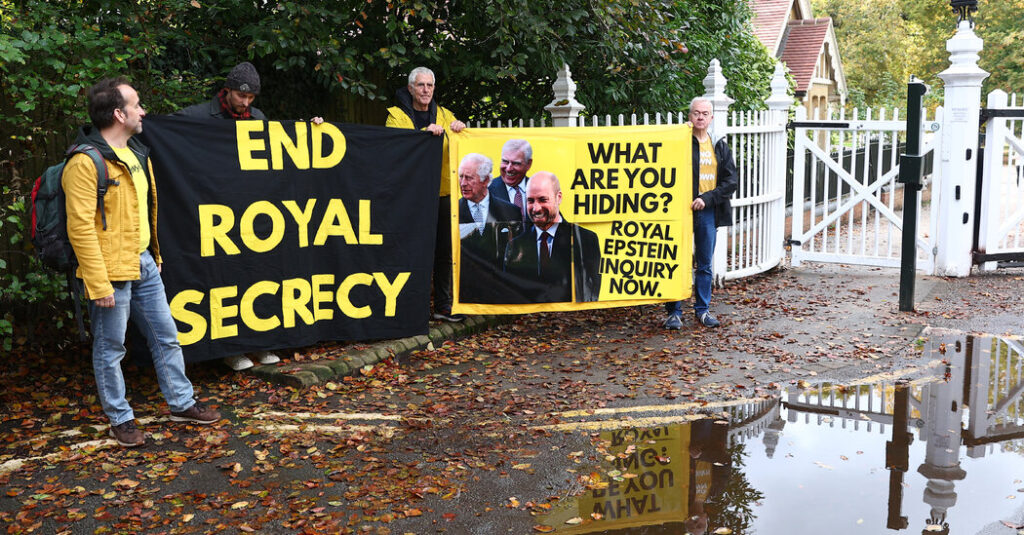
Days before the arrest of Andrew Mountbatten-Windsor on Thursday, a British anti-monarchy group filed a report with the Thames Valley Police in England sounding the alarm about possible criminal activity by the former prince.
Graham Smith, the chief executive of the group, Republic, said in an interview with The New York Times that he filed the complaint on Feb. 9, a day after the BBC reported that Mr. Mountbatten-Windsor may have shared confidential information with the convicted sex trafficker Jeffrey Epstein while working as a British trade envoy.
Days later, the police said they were considering a formal investigation into Mr. Mountbatten-Windsor, formerly Prince Andrew, over the accusations. On Thursday morning, the former prince was arrested, held for several hours and then released in the evening. He remains under investigation, according to a statement from the police.
Mr. Smith runs the most prominent anti-monarchist movement in Britain. Founded in 1983, Republic has 7,000 to 8,000 paying members, plus 140,000 registered supporters, he said. They post billboards with messages against the monarchy across the country, like “Make Elizabeth the Last” and “#NotMyKing” with a photo of King Charles III. They also hold anti-monarchy protests and sell merchandise like coffee mugs and T-shirts with anti-royal slogans.
The movement has swelled in size since Queen Elizabeth II died in 2022 and King Charles, far less popular than his mother, ascended the throne.
Republic’s subscribing membership base has increased by at least 40 percent since then, it says. Donations have also risen, Mr. Smith said, allowing the group to invest more in advertising and other actions.
“The coronation was a game changer,” Mr. Smith said. He says he believes that Mr. Mountbatten-Windsor’s arrest and the investigation of other members of the British elite who were named in the Epstein files will also boost the group’s membership.
He said there has always been an “implicit trust” among British residents that the royal family was still valuable to the state. “But that implicit trust is under huge strain, because the question about what the other royals knew and when, and why they kept on protecting Andrew, is not going away,” he added.
Support for the royal family has declined in the past decades, dropping to 51 percent in 2024 from 86 percent in 1983, according to polling from The National Center for Social Research.
King Charles last year stripped his brother of his royal titles, after separate accusations emerged from one of Mr. Epstein’s victims, Virginia Roberts Giuffre, who said he had trafficked her to Mr. Mountbatten-Windsor for sex around 2001, when she was still a teenager. The police statement on Thursday did not address those claims. Mr. Mountbatten-Windsor has long denied he did anything wrong.
Mr. Smith called for more accountability.
“We’re crossing the Rubicon,” he said. “The public attitude toward the monarchy is fundamentally shifting.”
Ashley Ahn covers breaking news for The Times from New York.
The post Complaint About Andrew’s Conduct Came From an Anti-Monarchy Group appeared first on New York Times.