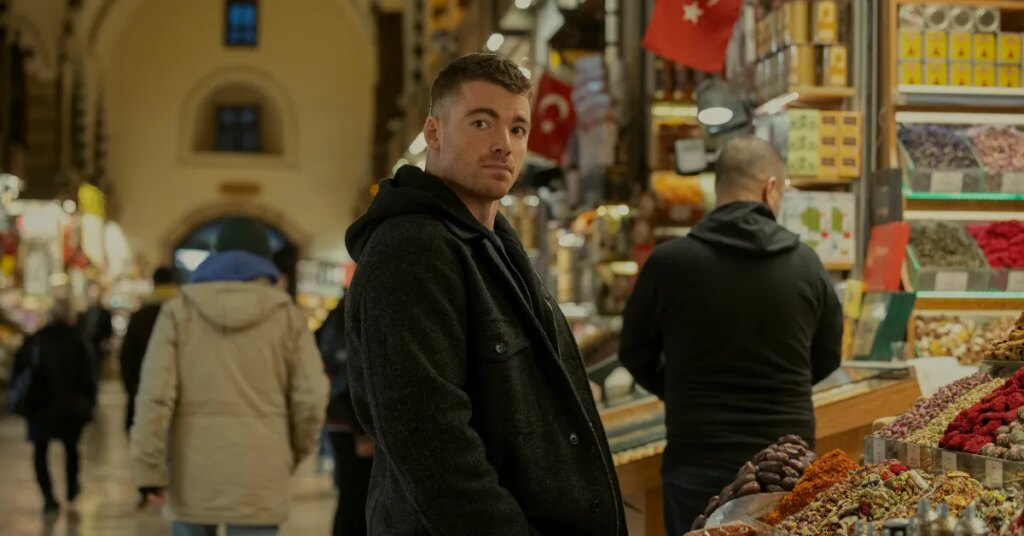
Warning: Spoilers ahead for The Night Agent
At the end of The Night Agent’s second season, Peter Sutherland (Gabriel Basso) stops a catastrophic chemical attack at the United Nations by crossing an ethical boundary. To get the terrorists’ location, he cuts a deal with Jacob Monroe (Louis Herthum), a shadowy information broker, stealing classified documents that allow Monroe to manipulate a presidential election and help install Governor Richard Hagan into the Oval Office. The cost is permanent: Peter avoids prison only by agreeing to work with the FBI as a covert mole inside Monroe’s operation, a hero reckoning with the cost of his heroism.
[time-brightcove not-tgx=”true”]
“We liked the idea at the end of Season 2 that Jacob’s unaccounted for and he’s still out there in the world,” says showrunner Shawn Ryan. “We thought there was a lot more to explore in terms of who he was.”
Indeed, throughout the third season of the hit Netflix show, Peter must find and confront Jacob again, only to learn there’s more to his story—and that he may be a symptom of something much larger. The intrigue detonates immediately with a commercial flight taken down by a missile strike, setting off a widening conspiracy. When a young Treasury agent uncovers a trail linking American companies to a crypto wallet used by the terrorist group claiming responsibility, Peter begins an investigation with a dogged financial reporter, Isabel (Genesis Rodriguez), navigates a suspicious White House-assigned handler, and races to uncover a dark-money network while staying one step ahead of a hired assassin.
It all comes to a head in the Season 3 finale, “Razzmatazz,” when Peter and Isabel expose Walcott Capital, the shadow bank quietly underwriting chaos, in a live interview with its owner. The reveal is damning: Walcott helped bankroll the terrorist organization. Even worse, it served as the financial back channel for the President and First Lady’s campaign, laundering Jacob’s illicit donation into a stack of clean cash built to win an election. The campaign finance transgression spurs on a senate conviction, then a disgraced White House exit, leading to another regime change in Washington.
Here, Ryan breaks down the ending of the show’s latest chapter, sharing the thinking behind a few key plotlines, and teasing a small detail about Season 4, which is currently being written.
How Walcott Capital became an unlikely villain
In order for the White House to cover up their involvement with Jacob and Walcott Capital, President Hagan enlists Adam (David Lyons), the partner he assigned to watch Peter, to eliminate everyone with knowledge of their criminal activity. That started with killing Jacob, but now it means betraying both Peter and Chelsea Arrington (Fola Evans-Akingbola), the First Lady’s ex-Secret Service detail, as they drive up to New York City.
Though the pair manage to give Adam the slip, Hagan quickly escalates things, dispatching two hired guns to the condo of Freya (Michaela Watkins), the icy head of Walcott Capital, where Isabel has been pressing her for a public interview after obtaining a damning list of her clients’ illegal transactions. Freya initially dismisses her questions as journalistic theater, but that calculation changes the moment she realizes she’s also landed on the President’s hit list. Her reputation means nothing if she doesn’t survive the night, forcing both Freya and Isabel to make separate, desperate escapes as the government goons tear through her condo.
According to Ryan, the idea to make a shadow bank one of the show’s villains initially came to him in 2016, when the Panama Papers were released, exposing a global network of offshore entities used by politicians, celebrities, and criminals to evade taxes. “We live in a world where money rules and sometimes, people choose money over ethics. Our theme here is that those people are just as bad as the people committing the crimes,” he says. “We wanted to shine a light that this is going on in the world, that there are institutions that aren’t living up to their civic responsibilities.”
Peter’s purity keeps him and Freya alive
“Promise you’ll do the right thing, even if it’s hard,” Peter’s mother tells him at the beginning of Season 3.
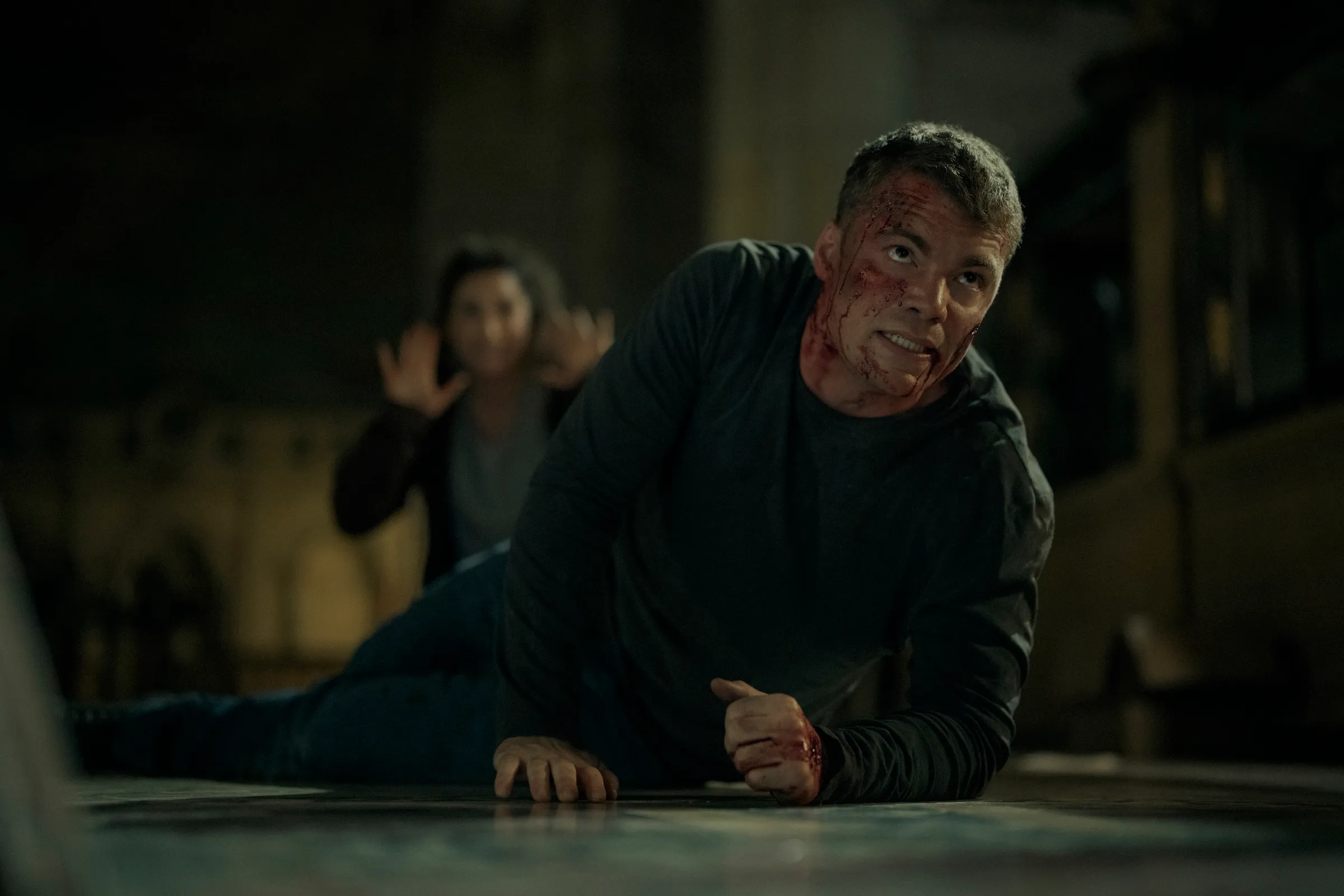
It’s a line that might as well reverberate throughout the entire season, but especially after Peter races to New York to help Freya to safety. On their way to The Financial Register offices, Peter runs into one of Hagan’s assassins and nearly gets beaten to death inside the subway (Ryan notes that Basso wanted Peter to “get his ass kicked” by a bigger, tougher guy), at least until Freya helps Peter discharge a well-placed nail gun.
Outside the subway station, Peter still has one more foe to take down once Adam reappears with a gun pointed at him. This time, instead of pulling out another clever weapon, Peter walks straight towards his partner, insisting that Hagan has co-opted him for a dirty cause. “Are you willing to die for this?” Adam asks. As Peter continues to walk past him, Adam can only appreciate his partner’s integrity and must reconsider Hagan’s illicit actions.
“Adam was a soldier that believed in following orders and believed in doing the right thing. And he’d been led astray by his Commander in Chief,” Ryan says. “Peter doesn’t triumph because he wins the fight. He wins because of character—and because, ultimately, Adam wants to be a better person than he’s been at this moment.”
Isabel’s interview exposes presidential corruption
Once Freya makes it inside The Register, she agrees to go on record during a live video interview with Isabel in exchange for specific protections. The breaking news—and Isabel’s subsequent stories exposing more of Freya’s clients—eventually leads to the Hagans’s conviction and exit from the White House. After two seasons of Peter chasing around Rose Larkin, Isabel proves to be more than a distressed damsel, solidifying journalism’s crucial place in holding power accountable and aiding governmental investigations at large.
The decision to platform a high-profile journalist came from Ryan’s own love for journalism movies, but also his belief that the enterprise can still have significance in 2026. “It takes a combination of what Peter does and what Isabel does to kind of wrap things up satisfactorily,” he says. “To me, journalists are stand-ins for the audience who want questions answered. They want to know what’s really going on in the world and they want to feel like people who are doing bad things are being exposed and people who are doing good things are being celebrated.”
How Jacob Monroe became a tragic figure
In some ways, the President’s downfall can be traced back to Jacob’s decades-long obsession with Raul Zapata, a Mexican businessman and the covert leader of the LFS terrorist organization. Throughout the third season, it’s revealed that Zapata murdered Jacob’s romantic partner, Sofia, after a business transaction went wrong—an act that spurs Jacob’s transformation into a ruthless foreign operator, using secrets and leverage against the American government for the ultimate revenge (which just happened to include working alongside various terrorist groups and making improper campaign contributions through illegal backchannels).
But Ryan argues that the sequence of events doesn’t take into account Jacob’s unwillingness to save Sofia when given the chance. “He didn’t stand up for her in a crucial moment. He didn’t sacrifice himself for her,” he says. “The secret sauce of that revenge is his guilt over not being the man that he would have liked to be. And it sort of ruins him and turns him to the dark side. It’s a sort of Darth Vader storyline.
“He was blackmailed and used,” Ryan adds. “And the lesson he learned from that is it’s better to be on the other side of that, and that’s how you get people to do what you want—and he took it to the logical extremes over the course of the next 30 years.”
What’s next for Peter, the Hagans, and Freya?
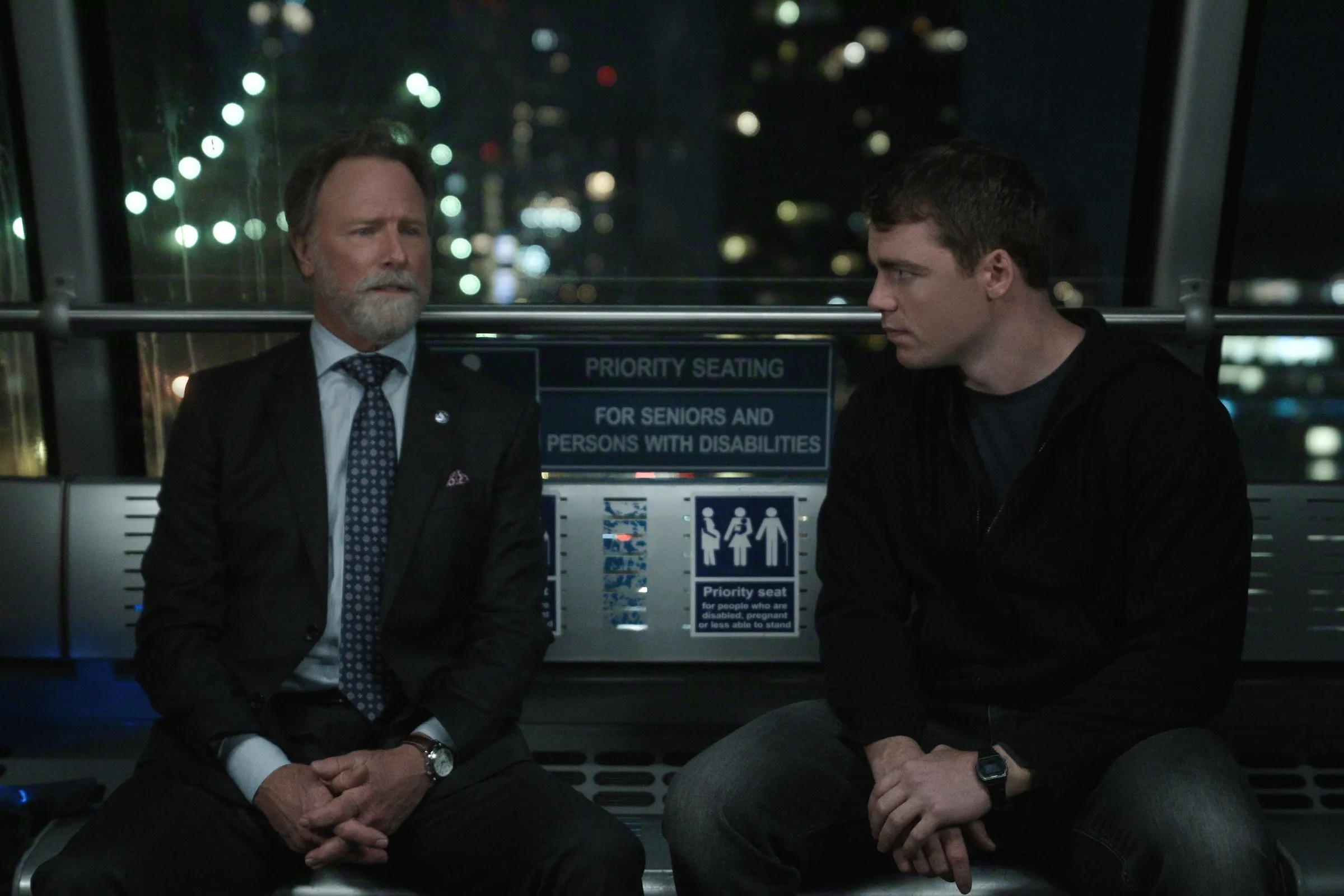
Despite losing his FBI handler Catherine, Peter is finally in a good place at the end of Season 3. He’s earned some well-deserved time off, finds his favorite ice-cream in Central Park, and might even have a familiar partner waiting for him when he returns to action.
The Hagans on the other hand? They’re only shown briefly departing the White House, giving a Nixon-esque wave goodbye before airlifting out of Washington in a helicopter. But that won’t be the end of their public life, as a news ribbon indicates they’ve already signed a media deal, the kind of realistic headline we’ve come to expect in today’s political climate. Ryan thought it was a fitting button that resembles the times we’re living in. “There’s a feeling that people who have power and money and wealth and influence don’t pay the price that they should for the crimes they commit—and because they don’t, they’re sort of more incentivized to commit those crimes,” he says. “It does feel like there’s a lot less shame in the world today for this behavior, and that a lot of people are on the grift.”
Of course, Freya doesn’t get off so easily, either. After threatening to kill her hired assassin (Stephen Moyer) after he abruptly retires, he reappears with his revenge on his mind, poisoning her drink at a beachside resort without her noticing. It only underscores the importance of knowing exactly who you’re getting into business with—an idea that causes Ryan to perk up when I raise it: “You may have touched on something we’re already planning for Season 4,” he says.
The post Breaking Down the Ending of The Night Agent Season 3 appeared first on TIME.