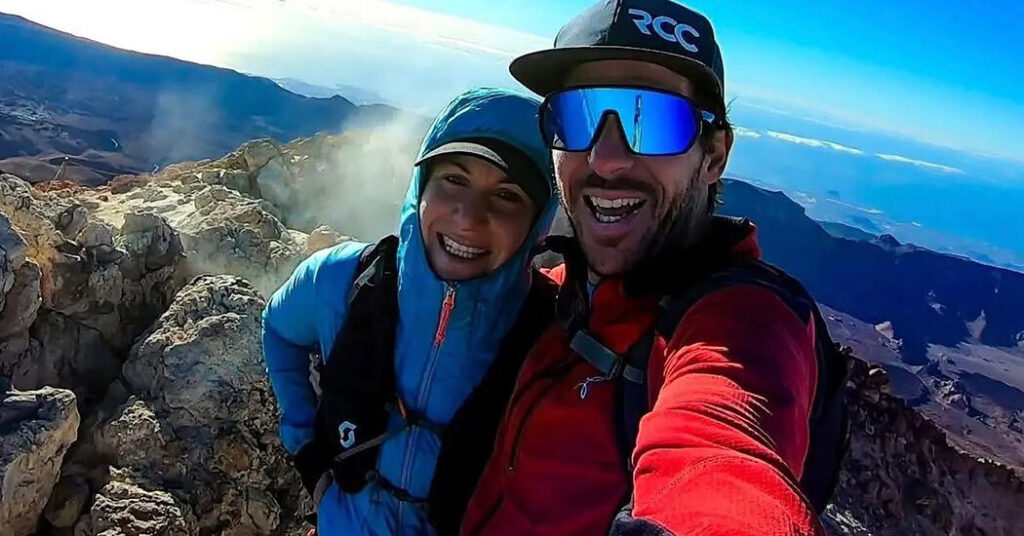
An Austrian man was found guilty on Thursday of gross negligent manslaughter after he left his girlfriend behind on a mountain hike and she froze to death, in a case that prompted an international debate over personal responsibility in mountaineering.
The man, Thomas Plamberger, 37, was given a suspended prison sentence of five months in prison in the Innsbruck courtroom and fined 9,600 euros (about $11,300) over the death of his 33-year-old girlfriend, Kerstin Gurtner. Her body was discovered the morning after the couple set out on a hike in January 2025, just a few meters below the summit of Grossglockner, Austria’s tallest mountain.
Mr. Plamberger had said through his lawyer, Kurt Jelinek, before the trial that his girlfriend had become exhausted near the summit on their hike, and that the couple had decided he would descend the mountain to get help while she stayed.
Judge Norbert Hofer, who presided over the trial, which did not have a jury, expressed sympathy for Mr. Plamberger, but also condemned him for his actions.
“Mr. Plemberger, you have borne an incredible burden — you lost a person,” he said. “You are an excellent alpinist, but someone who finds it very difficult to make the switch between your own limits and those of others.”
During the trial, Mr. Plamberger apologized and said he had he lost the most beloved person in his life.
“I am infinitely sorry for what happened,” he said, adding: “I loved Kerstin — we always made decisions together on the mountain.”
Around 15 witnesses and experts were called during the trial, including members of Mr. Plamberger’s family, rescue workers, law enforcement officers, and Ms. Gurtner’s mother, Gertraud Gurtner, who said she did not believe Mr. Plamberger was responsible for her daughter’s death.
The trial was seen as a test of an Austrian legal tradition that requires people who have a “duty of care” to protect others and avert danger. The verdict could also have ramifications for Austria’s large alpine tourism industry, adding more legal responsibility for individuals engaging in potentially dangerous excursions.
Before the trial, Mr. Plamberger and prosecutors laid out their separate versions of what happened during the climb in January 2025, in what experts said was an unusually public approach for both sides in a case against a private individual.
Mr. Plamberger, a professional chef, described through his lawyer an expedition plunged into turmoil by his girlfriend’s sudden exhaustion, while the authorities listed a slew of what they said were missteps by Mr. Plamberger.
On the hike, Ms. Gurtner suddenly showed signs of exhaustion around midnight, according to Mr. Plamberger. He called the police to request a rescue helicopter, but the police said that Mr. Plamberger had told them that “everything was fine.”
After the call, Ms. Gurtner could no longer continue, Mr. Plamberger said, and they decided he would descend alone to find help. He called the police again around 3:30 a.m. and requested a helicopter. Ms. Gurtner’s body was discovered the next morning.
Prosecutors had detailed nine errors they said Mr. Plamberger made that led to Ms. Gurtner’s death, including failing to bring sufficient emergency equipment and not turning around when conditions worsened.
The case hinged on a concept in Germanic law known as Garantenstellung. It establishes a responsibility to intervene for people who have a duty of care in a range of situations, including parents caring for children or a driver who hits a pedestrian — and can put liability on those people.
The prosecution argued that Mr. Plamberger was more experienced than Ms. Gurtner, whom he had been dating for about a year, and was therefore responsible for her on the trip. The defense argued that they were both experienced and had both planned the trip.
During the trial on Thursday, Judge Hofer, who is also an emergency mountain rescuer, criticized Mr. Plamberger for not communicating with the police that his girlfriend could no longer continue, and for not taking steps to protect her.
“‘My partner can’t continue’ was not communicated — that is the most fundamental information,” Judge Hofer said. “Then the strategy changes — a position sheltered from wind, take out blankets — as a mountaineer you must know that.”
A dramatic turn came late in the trial when a surprise witness, Andrea Bergener, an ex-girlfriend of Mr. Plamberger’s, testified that Mr. Plamberger had left her alone on a night hike on Grossglockner a few years earlier.
“Once we descended the Glockner at night, and suddenly he was gone,” she said. “I felt dizzy, I screamed, and I was completely alone. From then on, we didn’t go on any more hikes together.”
At its core, the case examined how much responsibility can be put on a private individual when they are engaging in risky or dangerous behavior with others. The question has become increasingly relevant in Austria, where more and more less-experienced visitors have visited the mountains in recent years, leading to an uptick in accidents.
Severin Glaser, a professor of criminal law at the University of Innsbruck in Austria, said the guilty verdict could alter mountaineering in Austria, as people consider their liability on personal tours.
“This could shift the responsibility for yourself if you’re doing something dangerous,” he said. “The costs of mountaineering, the costs of expressing your freedom might rise, and maybe some people are not willing anymore to pay this higher price.”
Jonathan Wolfe is a Times reporter based in London, covering breaking news.
The post Austrian Man Found Guilty in Girlfriend’s Death on Mountain Hike appeared first on New York Times.