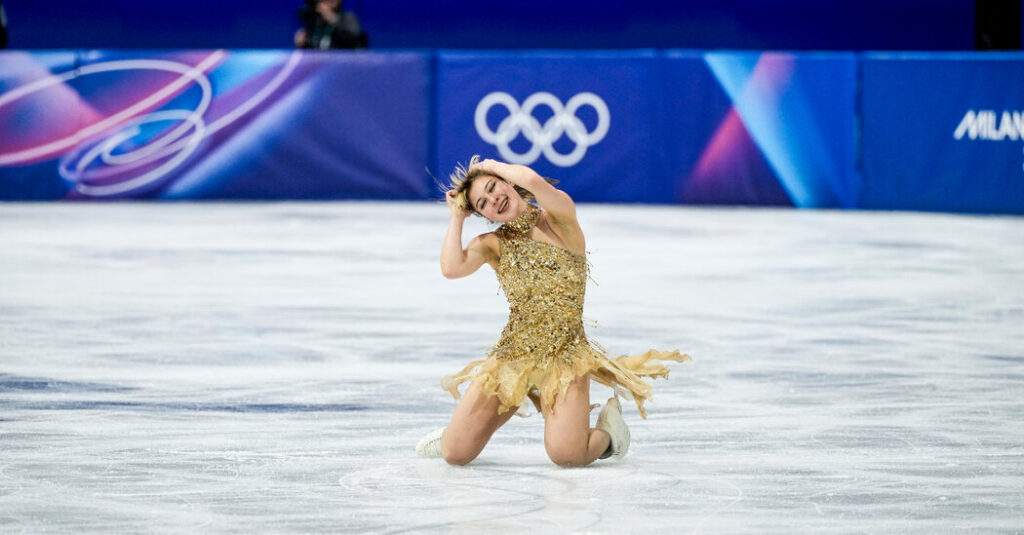
One night every quadrennium. That’s it. One night for the best female skaters to nail their jumps, skate with grace and joie de vivre, and add that little something extra that elevates them from mere greatness to figure skating immortality.
In 2026, winning the women’s Olympic figure skating means completing triples, many of them, and maybe even the supremely difficult triple Axel. And in the end, the queen of the triples was the American Alysa Liu, who hit seven of them to win the gold medal, the Americans’ first Olympic medal of any color in this event since 2006.
A national champion at just 13, Liu retired at 16, spent two and a half years away from the sport, and then remarkably returned to win a world championship. Now 20, she skated a mistake-free program that mirrored the music, “MacArthur Park,” first graceful, then lively, and powerful throughout.
Japan’s Kaori Sakamoto, skating in what she has said will be her final season, has been the best skater in the world, with three world championships. Skating to songs made famous by Edith Piaf, she mixed speed and elegance for the silver after dropping a couple of jumps from her program. Ami Nakai of Japan, 17, the youngest skater in the field, had won the short program with the supremely difficult triple Axel. Her free skate included the triple Axel again but she under-rotated a few jumps, the judges decided. She wound up with the bronze.
Amber Glenn of the U.S. had missed on a triple and finished a heart-breaking 13th place in the short program, leaving her in tears. Looking for redemption on Thursday, she went for the triple Axel again, landed it again, and avoided mistakes, improving to fifth overall.
In the end, there was joy and relief for these skaters after the biggest skate of their lives. Some will find this stage again in four years.
Victor Mather, who has been a reporter and editor at The Times for 25 years, covers sports and breaking news.
The post Alysa Liu’s comeback ends in gold. appeared first on New York Times.