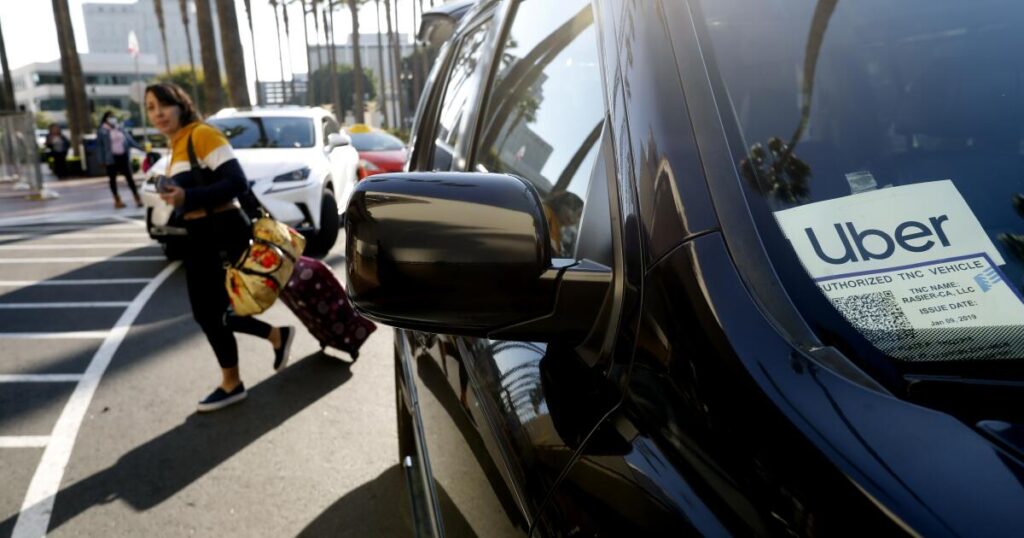
Uber Technologies Inc. is planning to spend more than $100 million to build fast-charging, autonomous-vehicle charging stations in the US, the latest move to establish itself as a critical player in the robotaxi industry.
The company said in a statement on Wednesday that it will focus on building the new high-capacity charging hubs starting in the San Francisco Bay Area, Los Angeles and Dallas — markets where it also plans to launch public robotaxi services with technology partners to compete with Alphabet Inc.’s Waymo. The amount will cover site development costs, equipment, grid connection and associated capital expenditure for developing the charging infrastructure, a spokesperson said.
Owning some chargers “improves efficiency, lowers costs and keeps vehicles on the road longer, maximizing utilization and uptime,” Uber said in the statement.
The rideshare giant is battling Wall Street skeptics who have doubts about the future of its human-driven ride-hailing platform as autonomous vehicles become more commonplace. It is spending on a growing number of items to establish itself as the leading robotaxi provider and operations partner for companies that develop the self-driving technology.
San Francisco-based Uber has invested hundreds of millions of dollars in autonomous-vehicle companies like Lucid Group Inc., Nuro Inc. and Wayve Technologies Inc., as well as fleet management companies like Moove and Avomo. Part of those deals also include commitments from Uber to purchase fleets of robotaxis, which it plans to eventually launch at scale on its popular ride-hailing platform.
Uber’s autonomous strategy has been met with mixed reactions from investors, as shares of the company have declined 14% so far this year. More bearish analysts continue to believe Uber and peer Lyft Inc. will continue to shrink in value as Waymo and other operators expand their services to the public this year.
The company, for its part, is bullish. It has said it expects to offer autonomous vehicles on the Uber app in at least 10 cities by the end of 2026. In particular, it plans to launch Lucid and Nuro’s robotaxis on its platform in the Bay Area and Volkswagen AG’s autonomous vans in Los Angeles this year.
In Austin and Atlanta, Uber works with Waymo to offer driverless rides, and is also responsible for the on-the-ground management of the cars, including charging, cleaning and inspecting the vehicles through third-party firms it has invested in.
The Uber spokesperson declined to comment on whether Waymo may use the new chargers it plans to build in the Bay Area, LA and Dallas, saying those sites are designed for cars that are on the Uber network. (Waymo offers rides in the Bay and LA on its own app and not Uber’s.)
On Wednesday, Uber also announced it has reached new deals with charger operators to make charging more accessible to its rideshare drivers in electric vehicles. It will guarantee usage to these partners — meaning, it will pay fines if Uber drivers don’t reach certain utilization levels. This, in turn, will help would help operators justify rolling out more than 1,000 new chargers globally, the spokesperson said.
The new deals include those with charging companies EVgo Inc. in New York, LA, San Francisco and Boston; Hubber Ltd. and Ionity GmbH in London; and Electra in Paris and Madrid. Uber has had a similar agreement with Revel Transit Inc. in New York, where Revel is incentivizing usage by offering discounts to Uber drivers at its charging stations.
The move signals a shift in Uber’s EV-related investments as it tries to catch up on ambitious green goals where it is falling behind. The company began tweaking its spending strategy after it found in a survey last year that driver concerns about access to charging have overtaken worries about the cost of owning an EV as vehicle prices fall. Last December, Uber discontinued monthly bonuses to EV drivers and instead began offering one-time grants to those who switch from non-electric cars.
Lung writes for Bloomberg.
The post Uber to spend $100 million on robotaxi charging stations in Los Angeles, Bay Area and Dallas appeared first on Los Angeles Times.