The Biden administration’s carrots-and-sticks campaign to try to ramp up the sales of electric vehicles found little traction with the car-buying American public. That’s the lesson from a series of recent announcements by Detroit’s “Big Three” automakers — General Motors, Ford and Stellantis — that all are shifting production away from electric vehicles and back to gas-powered cars and hybrids.
By pulling EV models from their lineups, repurposing EV battery plants and laying off workers in some EV factories, the automakers are taking $50 billion in combined write-downs on their EV investments. The electric-vehicle investment bubble egged on by the Biden administration reflected a classic disconnect between a government’s lofty policy goals and a public that wasn’t convinced. Biden set the fantastical goal that half of all new vehicles sold by 2030 should be EVs. Currently that number is just six percent and dropping.
The Biden administration tried to juice demand for EVs with a $7,500 credit on new EV purchases. It also imposed tough new tailpipe emission standards that the carmakers would be mathematically unable to meet without shifting half their future production to EVs. The subsidies ran out Sept. 30, and demand for EVs flagged. This month the Trump administration effectively ended the emissions mandate by revoking the legal authority the Environmental Protection Agency used to regulate carbon dioxide.
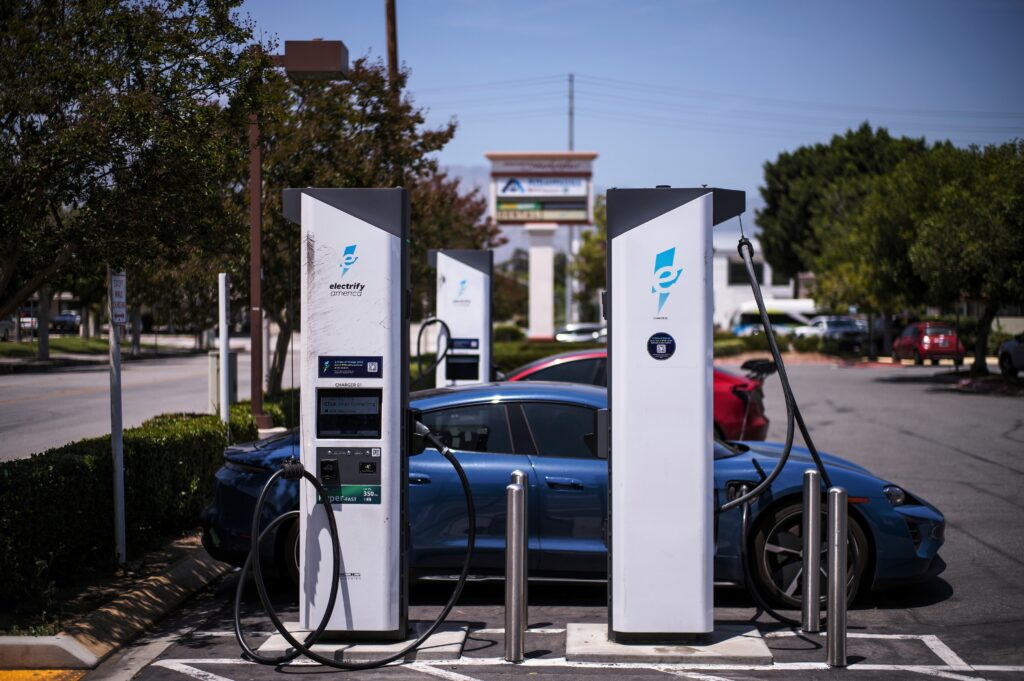
The car-buying public already had plenty of reasons to be skeptical of junking gas-engine cars and trucks. Outside of the major coastal cities, America just doesn’t have the charging infrastructure in place to sustain a massive EV shift. Who wants to be driving an electric car on an isolated interstate in the Midwest or the Rocky Mountains as the battery approaches zero? The Biden administration spent billions to build out EV-charging infrastructure; fewer than 1,000 federally funded chargers are available.
Biden tried to sell his EV shift as part of U.S.-China competition. Beijing has already met Biden’s goal for Americans; 55 to 60 percent of all new car purchases in China are EVs. The government has built out a vast charging infrastructure, made gas cars far more difficult to register and showered EV companies with massive subsidies. But the United States can’t ape China’s command-and-control economic model, which is inseparable from its system of one-party rule. If Washington outcompetes Beijing, it will be by leveraging America’s free market strengths.
The market demand for EVs is limited among American consumers — and judging by the 2024 election results, voters are not clamoring for perpetual government intervention to prop it up. Detroit’s Big Three have adapted, reasoning correctly that consumer demand is the most reliable guide for what kinds of cars to build.
The post The lesson of Biden’s failed electric-vehicle push appeared first on Washington Post.