The conditions that set off Tuesday’s avalanche were put in motion weeks ago.
The same weather pattern that plunged the Eastern United States into a bitter chill at the end of January caused a snow drought in California and much of the West.
Despite an active start to the winter storm season, with heavy doses of snow in late December and early January, the mountains around Lake Tahoe went weeks without significant accumulation.
During the dry spell, the snow that was already on the ground began to transform. Fluctuating temperatures forced water vapor to migrate through the snowpack, and that created “facets” — tiny, angular snow crystals that look and act like a haphazard structure of dominoes. It set a dangerous stage for what came next.
On Feb. 10, that dry streak ended. A fresh coating of snow arrived, followed by freezing rain in some areas. That ice added immediate weight to the fragile “domino” layer buried beneath.
By Monday, as powerful storms slammed into California, avalanche experts surveying the region — working near the site of Tuesday’s slide — began digging pits to examine these layers. They were even able to set off small avalanches intentionally to test the snow. These sorts of man-made avalanches are a common testing technique.
Their findings were a clear warning: With more snow and powerful winds in the forecast, Tuesday was shaping up to be a tipping point.
“The winds would have weakened the top layer of snowfall in the mountains,” said Scott Kleebauer, a meteorologist at the Weather Prediction Center. “They can kind of knock things loose, and then you get a large chunk of snow and ice that breaks off the slopes and then, of course with gravity, it just comes down the side of the mountain.”
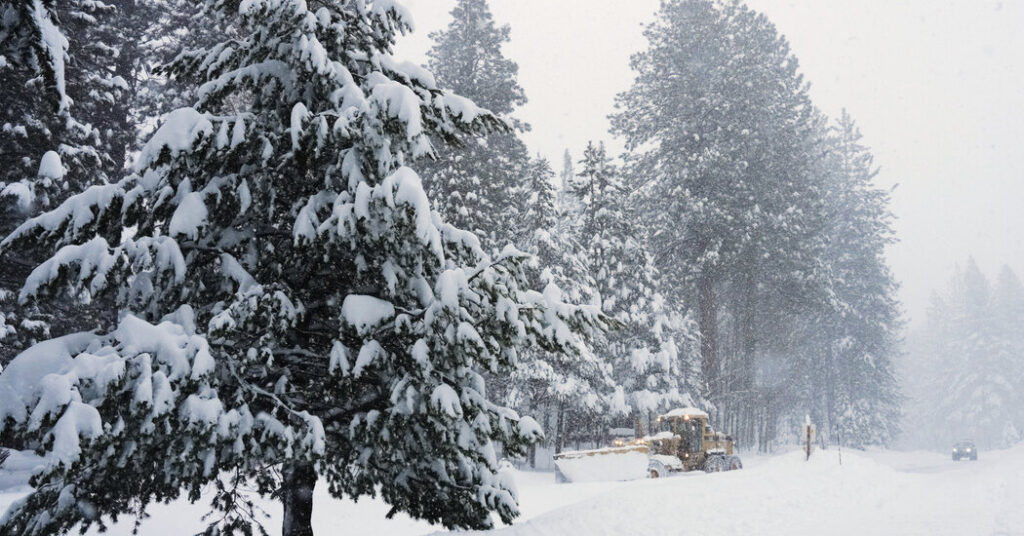
Since Sunday, the Weather Prediction Center had warned of heavy snowfall to the state. The heaviest was expected over the central and southern Sierra Nevada, where rates in excess of three inches per hour were forecast. By early Tuesday, nearly three feet of snow had accumulated at Donner Peak, not far from the avalanche site, over a 48 hour period, with 27 inches of that falling in just 24 hours.
In addition to the heavy snowfall, forecasters had also warned of strong winds. The Reno office of the National Weather Service said on Sunday that wind gusts in excess of 100 miles per hour were expected across the ridge tops of the Sierras on Tuesday through Wednesday morning.
As the storms intensified Monday night into Tuesday morning, a heavy “slab” of deep powder piled up on top of those weak layers. Forecasters warned that the entire region was primed for a slide because that consistent, crumbling foundation of dominoes stretched across the landscape.
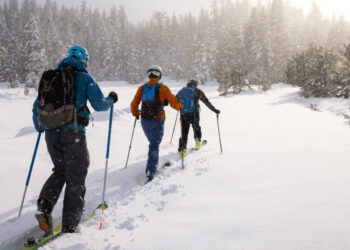
Under these conditions, it doesn’t take much to set off an avalanche. A skier, a snowboarder or a passing snowmobile can disrupt that lower snowpack. When those dominoes collapse, the top layer loses its grip on the slope and slides away — much like a heavy book sliding off a tilted table.
The result is a dangerous physics problem: heavy, new snow sitting on a structural failure. Once it goes, it sends a massive cloud of white down the mountainside, dragging with it trees, rocks and other debris in its path.
Around Tahoe, avalanche officials put out warnings about the dangerous conditions.
On Sunday, the Sierra Avalanche Center issued a Backcountry Avalanche Watch for the Greater Tahoe region through Tuesday.
As snowfall continued to build, officials warned again on Monday that the avalanche danger was rising and likely to remain high through Tuesday. Backcountry travelers were cautioned that large avalanches could easily be set off.
More avalanche warnings were issued on Tuesday morning across the region, including in the greater Lake Tahoe area. Officials warned that rapidly accumulating snow, weak layers within the existing snowpack and gale-force winds had created conditions capable of burying or injuring people.
Nazaneen Ghaffar is a Times reporter on the Weather team.
The post Snow Conditions Around Tahoe Were Ripe for an Avalanche appeared first on New York Times.