The extreme heat, high winds, and severe dry conditions that produce towering, fast-moving flames that advance by the acre are not just becoming more common; new research shows that these factors are increasingly arising in multiple regions at the same time, creating the conditions for simultaneous wildfires around the world.
In a study published today in the journal Science, researchers reported that the ideal conditions for major wildfires are now aligning across different parts of the world at more than double the rate they did nearly 50 years ago. Climate change is a major driver, accounting for about half of this increase. It’s the latest example of how humans are reshaping the nature of wildfires.
These changes have led to periods of inescapable smoke from blazes and more stress on firefighters, expanding the public health, economic, and social costs of infernos. As the climate continues to warm, these trends are likely to continue to worsen.
Wildfire smoke is already linked to tens of thousands of premature deaths in the US, and recent years have shown how this smoke can cross continents and oceans, polluting the air for people far away from the flames. East Coasters might remember how Canadian wildfires a few years ago bathed cities like New York and Philadelphia in an amber haze, triggering air quality warnings. One study found that the smoke from those fires contributed to 82,000 deaths.
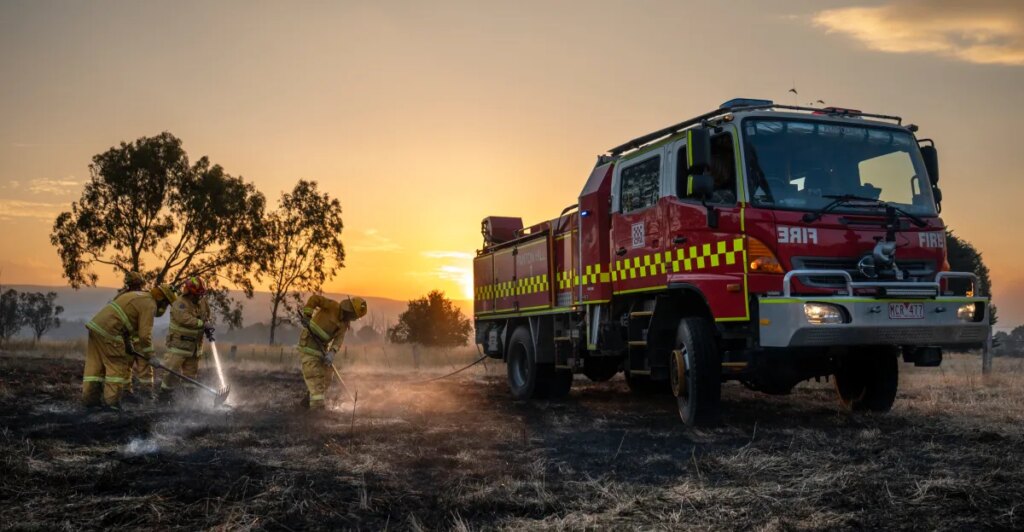
Meanwhile, the efforts to contain these devastating blazes are devouring money, time, engines, tankers, and firefighters, often beyond what local fire departments can muster on their own.
But with more wildfires burning in different parts of the world at the same time, countries will have their own blazes to deal with and less outside help will be available.
The result is that we may see more years with multiple major blazes at the same time, and you might find it harder to find clear air to breathe for growing swaths of the year.
How more of the world is getting primed to burn at the same time
Cong Yin, the lead author of the study and a scientist at the University of California Merced, explained that research has been piling up showing that the weather conditions that favor major wildfires are becoming more common in different regions. Yin wanted to take a step back to see if there was a pattern that would emerge when he looked at the world as a whole.
Yin and his colleagues analyzed global climate and fire data between 1979 and 2024 and traced the fire weather index, a measure of fire dangers based on meteorological traits like temperature, wind, and moisture. The higher the index reaches, the greater the chances of a dangerous wildfire. The team drew on fire activity records from the Global Fire Emissions Database, which uses satellite data and ground-based measurements to track burned areas around the world. The team then counted the number of days where the fire weather index was in the 90th percentile in more than one region.
The results showed that over the study period, days with extreme fire weather conditions were increasing in places inside regions like North America, but also seeing severe fire weather line up across far-flung areas like North America and Europe. That makes it harder to coordinate firefighting efforts across borders.
We’ve seen in recent years that countries with major fires have received needed help from neighbors, and from farther away. Teams from Canada and Mexico joined the fight against the Los Angeles wildfires last year, even bringing equipment like tanker aircraft. During the wildfires in Spain last summer, the Netherlands, France, and Italy also sent firefighting aircraft. In past fire seasons, South Africa has sent firefighters to Canada. The US, Australia, and New Zealand have a standing firefighting cooperation agreement to share personnel and equipment between the countries.
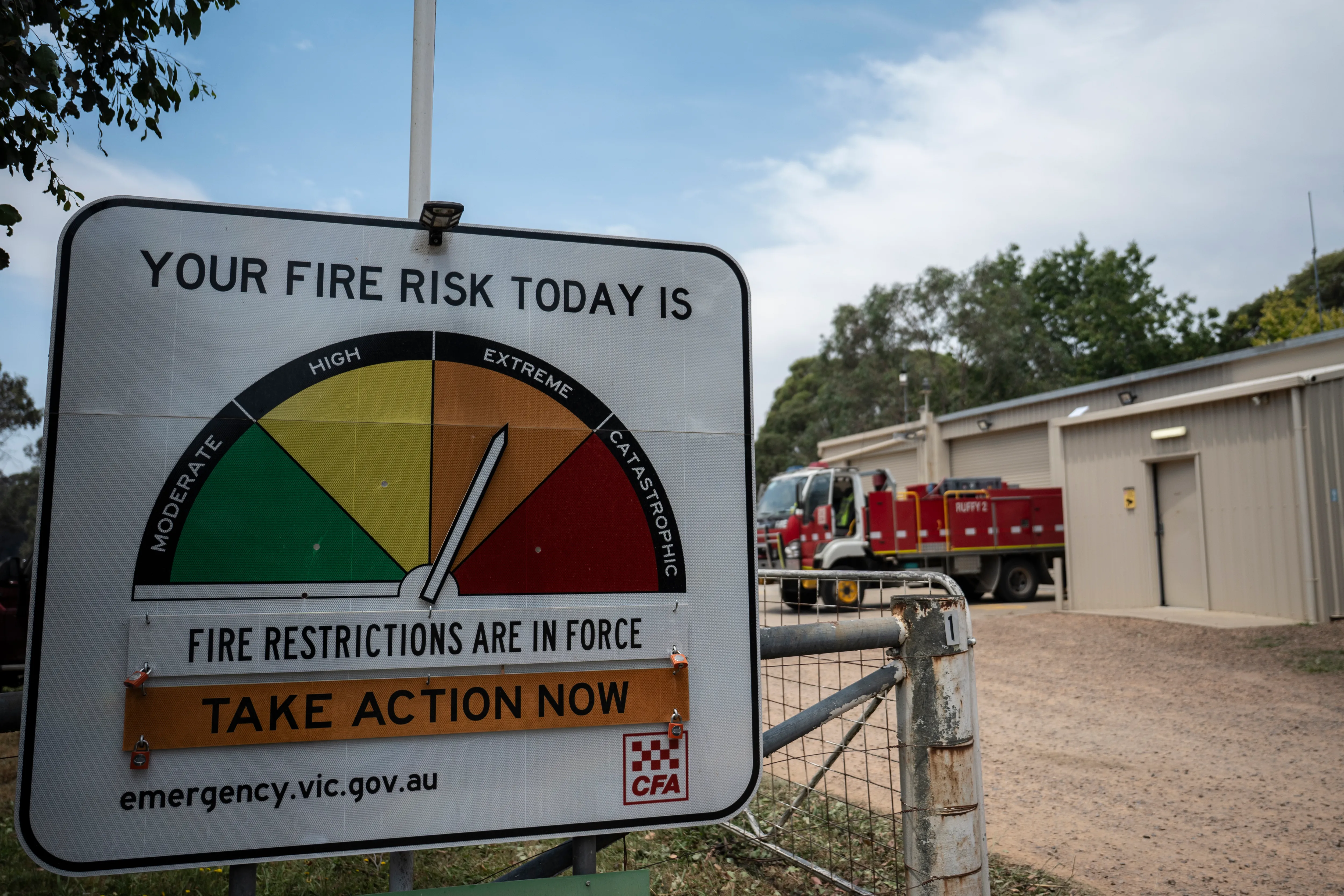
The fire risk rating chart outside the Country Fire Authority (CFA) in the bushfire-affected town of Ruffy in Australia.
| Jay Kogler/SOPA Images/LightRocket via Getty Images
However, worldwide, the number of days where severe fire weather has occurred in multiple places at the same time has more than doubled over the majority of fire-prone landscapes. With more fire weather occurring at the same time, countries may not be able to lend out tools and personnel as much because they’ll need everyone on deck at home.
When Yin and his team looked closer at regions like North America, climate variability drivers like the El Niño–Southern Oscillation, the periodic warming and cooling of the Pacific Ocean, tended to create fire weather conditions across the continent. The planet’s boreal regions — forested areas in northern latitudes — showed the highest levels of synchronized fire weather. They tend to experience extreme heat, little rain, and high winds at the same time more often. At the same time, the research identified areas where fire conditions are becoming less aligned, like Southeast Asia. The researchers think this is likely due to increasing humidity in tropical regions as temperatures rise. That can make it harder to achieve the ideal conditions for a major fire.
To figure out the role of climate change, the researchers constructed a model of a world where the climate hasn’t changed and compared it to the observed results of the world we’re currently in. They also calculated the role of natural climate drivers like the El Niño–Southern Oscillation. When they looked at the difference between the scenarios with and without warming, they found that climate change driven by humans has led to about half of the observed increase in synchronized fire weather since 1979.
Yin cautioned that there are some caveats to consider. Even when weather conditions are favorable to fire, they aren’t a guarantee that one will ignite. Fires also need fuel and a source of ignition. Without these two ingredients, even the most severe hot, dry, and windy conditions won’t lead to a blaze. “They are more difficult to predict or measure,” Yin said. “If we want to do a better job, we need to measure all these three dimensions.”
Where there’s fire, there’s smoke
You may have already experienced how wildfires have become impossible to ignore, even when they’re far away, whether you’re breathing their smoke or paying for their damages. These results show that millions more people will likely be breathing dirty air with you when a major fire season gets underway.
Robert Field, a fire researcher at Columbia University, observed that when so many fires burn at the same time, the smoke can pose an even bigger public danger than the flames. Thousands of homes may burn, but millions of people end up breathing dirty air that takes years off their lives. And when these blazes ignite, the resources for containing wildfires may end up spread thin. That could lead to longer stretches of dirty air as well as more costly damages to property, which end up getting passed onto you through higher taxes and insurance rates.
The increasing threat from wildfires is also taxing for firefighters, who are not just facing more dangers to their lives and limbs, but also to their mental health. Field said the study shows that everyone should start preparing for the threat of simultaneous severe fire. “I really haven’t seen a paper like this on a global scale,” said Field, who was not involved in the study. “I think it’s a prelude to what’s coming.”
It’s clear then that we can’t simply rely on firefighting to cope with this problem.
Many of the ways we measure fire risk today systematically underrate the actual threats that you might face, especially as average temperatures continue to rise and as communities sprawl into fire-prone landscapes.
Getting an accurate assessment of wildfire risk is critical, even if it is inconvenient for your property values. We also need to invest more in managing the landscape through measures like controlled burns, which can worsen air quality but prevent even worse breathing problems down the line.
And of course, we need to reduce our impact on the global climate by curbing our emissions of greenhouse gases. But until then, keep an eye on the forecast and the air-quality index, and keep an N95 mask close.
The post Scientists have found another alarming pattern in wildfires appeared first on Vox.