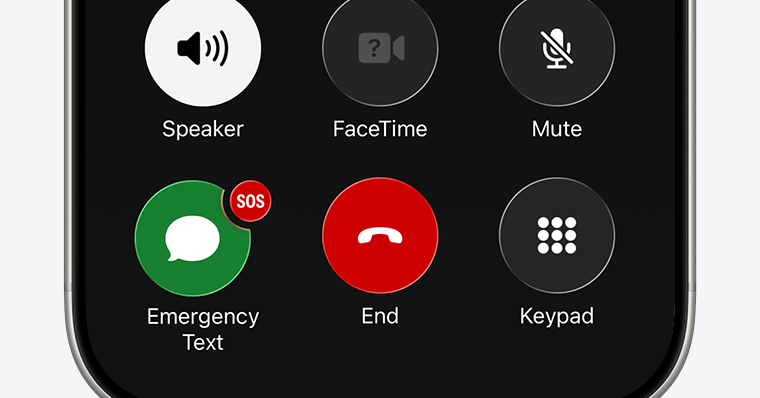
The six survivors of Tuesday’s avalanche near Lake Tahoe communicated with emergency responders using the Emergency SOS feature on the iPhone and an emergency beacon, said Don O’Keefe, the law enforcement chief for California’s Office of Emergency Services.
The Emergency SOS feature on Apple’s iPhones allows users to text emergency services, even when they don’t have cellular service or Wi-Fi, by connecting the phone to a satellite.
In this case, the feature allowed the group to stay in touch with the Nevada County Sheriff’s Office, which was coordinating the rescue efforts.
“One of my personnel was communicating with one of the guides over a four-hour period, giving information back to the Nevada sheriff’s office and coordinating what rescues could be permitted,” Mr. O’Keefe said.
Apple instructs users to try to call an emergency number, like 911, first. If that call doesn’t connect, they can use Emergency SOS to send a text message to emergency services via satellite.
For an iPhone to reach a satellite, the user should be outside, with a clear view of the sky and horizon. When the phone connects, it sends the text to emergency responders, who will ask for information like location, emergency contacts and the remaining battery life on the phone.
All models of the iPhone 14, 15, 16 and 17 have Emergency SOS. In the United States, the feature requires the phone to have an operating system of iOS 16.1 or newer. Emergency SOS is free for two years after an iPhone is activated. A similar feature allows iPhone users to text their friends and family when they have no cellular service or Wi-Fi.
Android users with some versions of Google’s Pixel 9 and all versions of its Pixel 10 can also text emergency services via satellite.
Kalley Huang is a Times reporter in San Francisco, covering Apple and the technology industry.
The post Satellite Feature on iPhone Allowed Skiers to Seek Help After Avalanche appeared first on New York Times.