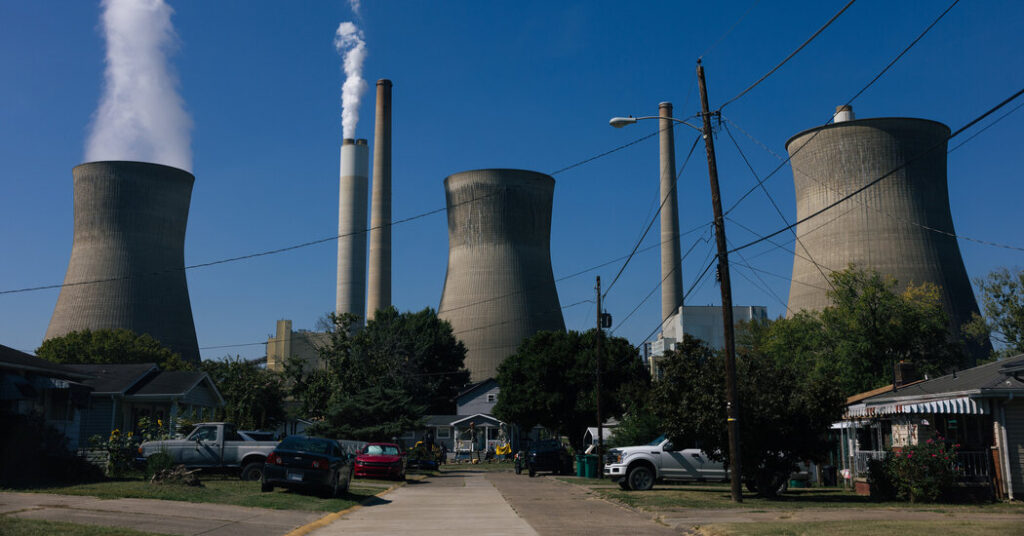
The Environmental Protection Agency plans this week to loosen restrictions on coal-burning power plants, allowing them to emit more hazardous pollutants including mercury, a powerful neurotoxin that can impair babies’ brain development, internal agency documents show.
Senior E.P.A. officials are expected to announce the move during a trip to Louisville, Ky., on Friday, according to two people briefed on the matter who spoke on the condition of anonymity because they were not authorized to comment publicly.
The move is one of many efforts by the Trump administration to make it easier and cheaper to produce and use fossil fuels, despite the overwhelming scientific evidence that pollution from burning oil, gas and coal is harming public health and dangerously warming the planet.
In particular, the administration is taking steps to improve the economics of coal, the most polluting fossil fuel, by rolling back several regulations that would have made it much more expensive, if not impossible, for many coal plants to keep operating.
Over the past nine months, the Energy Department has taken the extraordinary step of ordering eight coal-burning units that had been headed for retirement to stay open and keep running. Administration officials say they plan to stop the closure of as many additional coal plants as possible over the next three years.
In loosening the mercury limits, the E.P.A. is arguing that it would reduce “unwarranted costs” for utilities that own and operate coal plants across the country, according to the documents reviewed by The Times. The E.P.A. estimates that the change would save companies as much as $670 million between 2028 and 2037, the documents show. It was not immediately clear how the agency arrived at that number.
In response to questions, Brigit Hirsch, an E.P.A. spokeswoman, said in an email that the Biden-era standards would “result in coal-fired power plants having to shut down.” She said the agency was not eliminating mercury limits but returning to the Obama-era mercury restrictions that took effect in 2012.
“The Trump E.P.A. is committed to fulfilling President Trump’s promise to unleash American energy, lowering costs for families, ensuring clean air for ALL Americans and fulfilling the agency’s core mission of protecting human health and the environment,” Ms. Hirsch said.
The E.P.A. has already exempted 47 companies from regulations to curb mercury and other toxic pollutants from coal plants for two years.
When coal is burned, it releases mercury into Earth’s atmosphere. Rain, snow and fog can carry the mercury to the ground, where it can settle in soil as well as in lakes and streams and can accumulate in fish.
Trump Administration: Live Updates
Updated
- The minutes from the last Fed meeting show no rush to restart rate cuts.
- In a leadership shake-up, Kennedy names a new acting C.D.C. director.
- Democrats plan to counter Trump’s State of the Union speech with a rally.
Most people are exposed to mercury pollution by eating contaminated fish and shellfish. High levels of exposure can cause severe damage to the nervous system, brain and kidneys and can threaten the development of fetuses, babies and young children.
Coal plants are responsible for nearly half of all mercury emissions in the United States, according to the E.P.A.
In addition to mercury, the move this week would relax limits on other pollutants released by burning coal, including arsenic, cadmium, chromium, lead and nickel. Lead in particular is another potent neurotoxin linked to developmental delays in children.
Environmental and public health groups have criticized the Trump administration’s plan to weaken the restrictions, saying it would threaten the health of communities across the country. Coal-industry groups have argued that the Biden-era standards imposed burdensome costs on utilities, forcing coal plants to close and eroding the reliability of the nation’s electric grid.
According to America’s Power, a trade group for the coal industry, utilities have invested $2.5 billion to install pollution-control technology such as “scrubbers,” which capture mercury and other pollutants from smokestacks before they can enter the atmosphere.
The E.P.A. began regulating mercury emissions from coal plants in 2011 under President Barack Obama. At the time, the Obama administration estimated that the rule would cost the industry $9.6 billion a year, making it the most expensive clean-air regulation to date. It valued the public health benefits of reducing mercury at $6 million a year.
The rule took effect in 2012, and by 2017, mercury emissions from the power sector had fallen 86 percent, according to the E.P.A.
Then came the regulatory whiplash. The first Trump administration weakened the rule, only for the Biden administration to significantly strengthen the standards while also requiring coal plants to release fewer water pollutants and planet-warming greenhouse gases.
The Biden administration had predicted that the stronger mercury limits would lead to a reduction in other harmful pollutants like sulfur dioxide and fine particulate matter. It had estimated that those related benefits would be worth $80 billion over five years and would prevent up to 4,700 heart attacks, 130,000 asthma attacks and 11,000 premature deaths annually.
Under the Trump administration, the E.P.A. has stopped assigning a dollar value to the health benefits of reducing air pollution.
Lisa Friedman is a Times reporter who writes about how governments are addressing climate change and the effects of those policies on communities.
The post E.P.A. Plans to Loosen Mercury Rules for Coal Plants, Documents Show appeared first on New York Times.