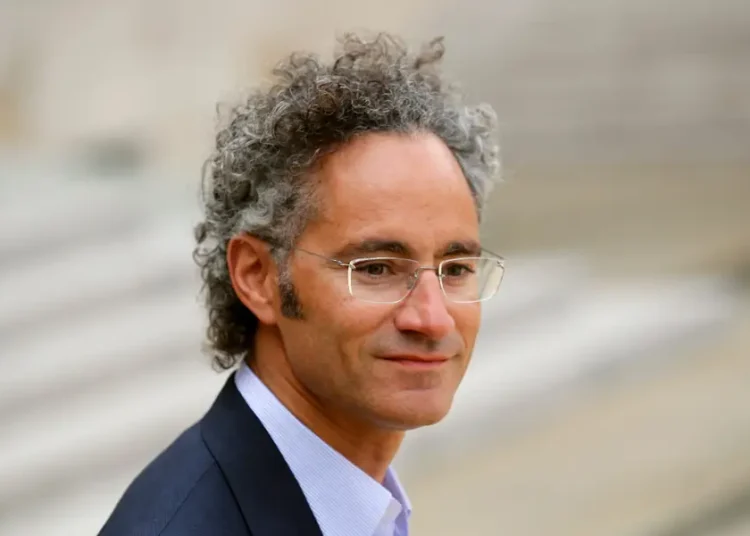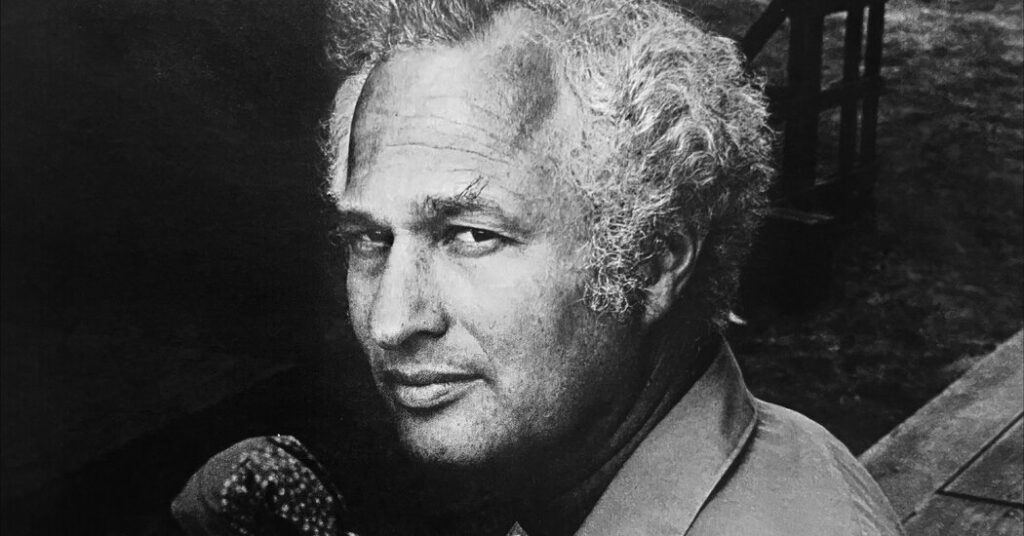
David Hays, an esteemed set and lighting designer for theater who also became an innovative impresario as the founding artistic director of the National Theater of the Deaf, which performed in a hybrid of American Sign Language and spoken English, died on Tuesday at his home in Essex, Conn. He was 95.
His death was confirmed by his wife, Nancy Varga.
Mr. Hays’ career began auspiciously. His first job in New York after graduate school was designing productions for the influential director José Quintero, including epochal stagings, in 1956, of two Eugene O’Neill plays: “The Iceman Cometh,” at Quintero’s Circle in the Square Theater, and “Long Day’s Journey Into Night,” for its New York premiere, on Broadway.
He went on to design sets and lights for more than 50 plays on Broadway, working with the directors Arthur Penn, Elia Kazan and Tyrone Guthrie, among others. He was nominated for three Tony Awards. He also designed more than 30 ballets for George Balanchine.
“He was one of the last of the ‘double threats’ — those who design in more than one discipline,” the lighting designer Stephen Strawbridge wrote in an email.
Mr. Hays helped start the National Theater of the Deaf as its artistic director in 1967. It grew to perform works in all 50 states and on all seven continents, including Antarctica, and received a special Tony Award in 1977.
“David was a torchbearer who used his position to uplift and develop a field that, until then, had few champions in the mainstream,” DJ Kurs, the artistic director of Deaf West Theater, a company that emerged in the early 1990s, wrote in an email. “His vision proved that American Sign Language possessed a profound, inherent theatricality that belonged in the canon of great art.”
David Arthur Hays was born on June 2, 1930, in Far Rockaway, Queens, the younger of two sons of Mortimer and Sara (Reich) Hays.
His father was a trial lawyer, and his mother was an amateur pianist. Mr. Hays grew up Jewish, though he was not particularly devout: His 2000 memoir, “Today I Am a Boy,” recounts his rediscovery of Judaism and his decision to finally become a bar mitzvah at the age of 66.
After a football injury sidelined him at 17, David volunteered to design the sets for a theatrical production at his high school, Woodmere Academy, on Long Island. Since childhood, he had loved to paint, draw and build models, and he found that stage design allowed him to combine those interests.
He wrote for advice to Robert Edmund Jones, the pioneering American designer, who wrote back: “Never mind the specific art training, you’ll learn to draw well enough. Just get as good a background in history and literature as you can.”
Mr. Hays went to Harvard, graduating in 1952, and honed his chops as an apprentice at the Brattle Theater in Cambridge, Mass. He received a Fulbright fellowship to study in London; the playwright Thornton Wilder, teaching at Harvard at the time and living across the hall from Mr. Hays, wrote him a recommendation letter.
In London, Mr. Hays worked on productions at the Old Vic directed by Laurence Olivier and John Gielgud. While assisting the designer Robert Furse, Mr. Hays also created the original working drawings for “The Mousetrap,” the Agatha Christie murder mystery, which holds the Guinness World Record for the longest-running play.
Back in the United States, Mr. Hays enrolled in graduate school at the Yale School of Drama. While working as a set designer at a summer resort in upstate New York, he met Leonora Landau, a dancer and actress. They married in 1954.
When Mr. Hays was offered a teaching fellowship at Boston University, he left Yale to complete his studies at B.U., graduating with a Master of Fine Arts degree in 1955.
His O’Neill productions with Quintero led to an invitation for Mr. Hays to work at the Eugene O’Neill Theater Center in Waterford, Conn. It was where the National Theater of the Deaf was founded.
The idea for the company emerged out of conversations between Mr. Hays and the actress Anne Bancroft when both were working on the 1959 Broadway premiere production of “The Miracle Worker,” William Gibson’s play based on Helen Keller’s autobiography. (Ms. Bancroft played Helen’s teacher, Anne Sullivan.) The National Theater of the Deaf started off with federal funding, a home base at the O’Neill and Mr. Hays as artistic director.
“I was attracted to deaf theater as an art form, one of the only new theatrical forms to emerge in the last quarter century,” he told Harvard Magazine in 1998. “Its social significance is wonderful, but our first goal has always been to produce great theater.”
Made up of mostly deaf and a few hearing actors, the troupe was credited with increasing the visibility of sign language and using it as a new means of theatrical expression. The company also started a training academy and the Little Theater of the Deaf, aimed at young audiences.
Mr. Hays insisted that the group’s productions were meant for deaf and hearing audiences alike. “We are Theater of the Deaf, but not for the Deaf,” he said. “In our productions the hearing actors deliver the text, and often the signing enriches what is being said. The range of literature we can do — poetry, essays — is unlimited because of the visual quality of the production.”
Reviewing the troupe’s production of “The Dybbuk” at the Brooklyn Academy of Music in 1975 for The New York Times, Mel Gussow praised “the company’s talent for antic comedy and improvisation” and noted that the combination of spoken and signed language resulted in “a doubling and, in some cases, a deepening of performance.”
The organization struggled financially starting in the mid-1990s, when its executive director was found to have embezzled funds to cover personal expenses, and the company has been less productive in recent years than in its heyday. Mr. Hays stepped down as artistic director in 1996, in the midst of the embezzlement crisis, to devote more time to writing.
His book “Light on the Subject: Stage Lighting for Directors and Actors and the Rest of Us” (1988), remains a respected teaching text. In 2017, he published “Setting the Stage,” a memoir and how-to book with anecdotes and advice from his career. Mr. Hays also taught and lectured at Harvard and Columbia, Wesleyan and New York universities.
His first wife died in 2000. A second marriage, in 2001, to Elaine Coleman, ended in divorce in 2004. He married Nancy Varga in 2014. She survives him, as do his children from his first marriage, Julia and Daniel; four grandchildren; and three great-grandchildren.
A devoted seafarer, Mr. Hays began sailing from a young age. In the early 1980s, he and his son built a 25-foot sloop and embarked on a trip around Cape Horn, the southernmost tip of South America, without an engine or navigation devices other than a sextant. They were together on the boat for five months, at times withstanding gale-force winds and 35-foot waves, becoming the first Americans to round the Cape in a vessel that small.
The Hayses collaborated on a book about the experience, “My Old Man and the Sea,” which was published in 1995. In a review on the cover of The New York Times Book Review, William F. Buckley Jr., himself a lifelong sailor, called it “an engrossingly beautiful tale of adventure of the spirit,” and added that it “will be read with delight 100 years from now.”
Mr. Hays, known for his acerbic wit, told a friend: “I don’t want people to read it in 100 years. They should read it now!”
The book became a New York Times best seller.
The post David Hays, 95, Dies; Top Broadway Designer and Theater of Deaf Founder appeared first on New York Times.