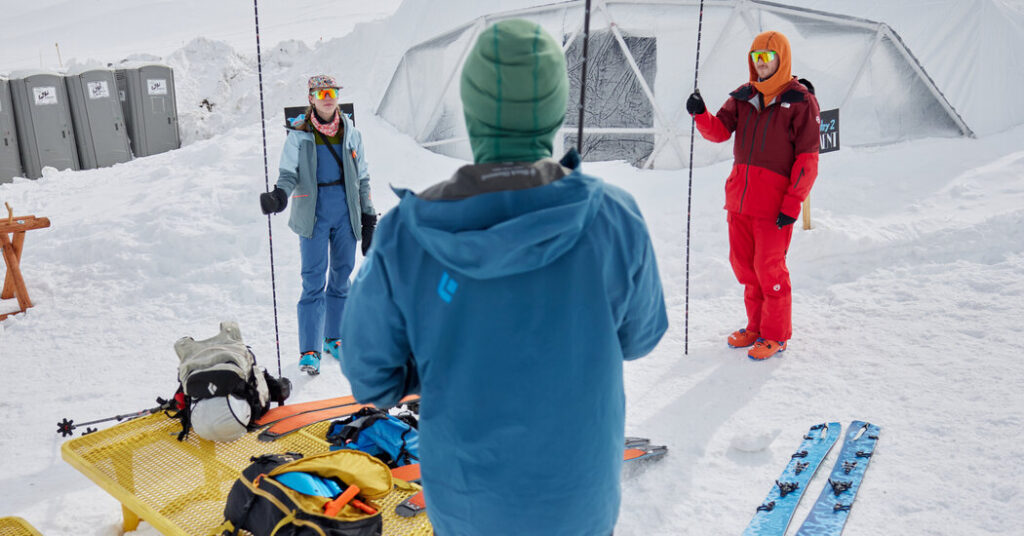
Backcountry skiing requires not only different equipment and skills than downhill or cross-country skiing, it also requires an array of safety gear not typically scene on manicured slopes.
The most important items are a beacon, shovel and probe.
A beacon, slightly larger than a smartphone, is an electronic device that skiers strap to their upper bodies under their jackets or sometimes put in a dedicated pocket. It is kept on while in the backcountry.
Beacons have two modes, send and search. “Send” emits a continuous radio signal and is activated when the device is initially turned on; “search” receives that signal and translates it into beeps or, in newer beacons, a voice command.
For example, if an avalanche buries a person skiing in a group, everyone else would immediately switch their beacons to “search” to pick up the signal.
Once the person is found, it can be difficult to dig them out of avalanche debris, which sets up like concrete. And time is of the essence.
That’s where a small shovel and probe come in, which skiers carry in their backpacks. A specialized avalanche rescue shovel is lightweight yet strong. A probe pole folds up for carrying and quickly unfolds when needed, allowing rescuers to poke through feet of snow, hoping to feel a human body.
Backcountry skiers also generally carry a pack filled with food and water, extra clothing layers, a headlamp, a map, first-aid kit and, if they’re really prepared, emergency items like a small reflective blanket and fire starter.
Some advanced packs come with a potentially life-saving airbag. If a skier starts sliding in an avalanche, they can pull a handle on the pack’s shoulder strap to inflate the airbag, which is designed to help keep them afloat in the rush of snow.
The post Backcountry Skiers Carry a Variety of Safety Gear appeared first on New York Times.