Ukrainian and Russian officials planned to meet on Tuesday in Switzerland for a new round of U.S.-brokered peace talks, but hopes of a breakthrough to end the war were low. Fighting rages on, past negotiations have produced little, and major hurdles to a deal are unresolved.
The talks marked the third trilateral meeting between Ukrainian, Russian and American negotiators in roughly as many weeks.
Ukraine and Russia have described two previous rounds of discussions in the United Arab Emirates as productive. But those talks delivered scant progress beyond a prisoner-of-war exchange, as the conflict enters its fifth year later this month.
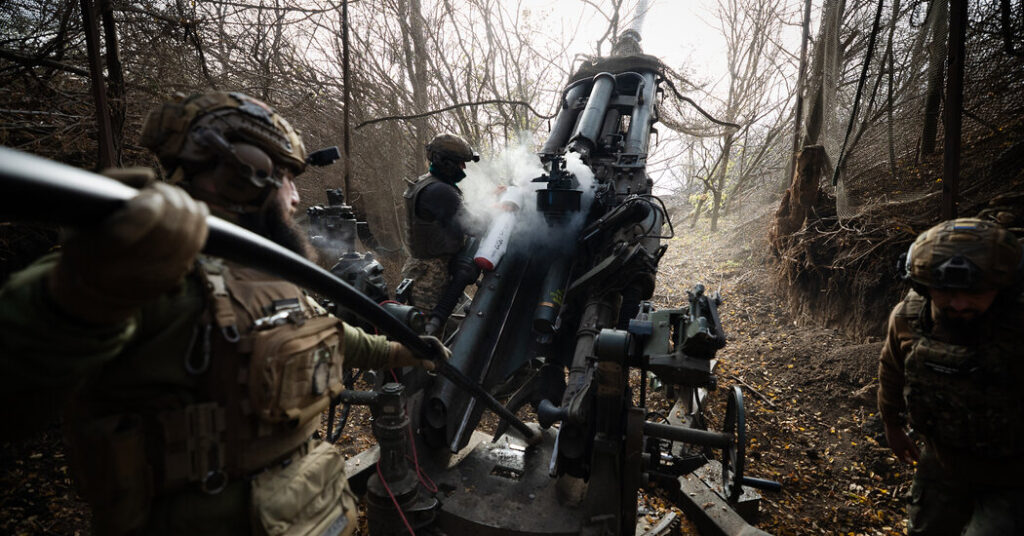
Kyiv and Moscow are still far apart on the core obstacles to a peace deal: the fate of Ukrainian-held territory in the east that Russia wants — an issue expected to dominate this week’s talks — and the question of postwar Western security guarantees to deter another Russian invasion.
President Volodymyr Zelensky of Ukraine underscored those differences in social media posts on Monday, warning it would be “a big mistake to allow the aggressor to take something” — an apparent reference to Russia’s demand for the eastern territories. He also urged the United States to advance work on security guarantees, which has been complicated by Moscow’s insistence that such guarantees must exclude Western troop deployments in Ukraine.
Steve Witkoff, President Trump’s special envoy, and Jared Kushner, the president’s son-in-law, will mediate this week’s talks, which will run Tuesday through Wednesday in Geneva. They will also participate in separate negotiations focused on Iran.
The Ukrainian delegation will include Rustem Umerov, the secretary of the country’s National Security Council, and Mr. Zelensky’s chief of staff, Kyrylo Budanov. Russia will be represented by Vladimir Medinsky, a top Kremlin aide, as well as military intelligence figures.
The presence of Mr. Medinsky, a former culture minister and amateur historian who led negotiations for Moscow last year, has been seen by some in Ukraine as a discouraging signal. In previous talks, Mr. Medinsky grated on his Ukrainian counterparts with lengthy historical lectures and a hard-line stance, warning that Russia was prepared to keep fighting indefinitely.
Mr. Medinsky was absent from the two trilateral meetings earlier this year in the United Arab Emirates, where Russia was represented by security and military intelligence officials — a shift that Ukrainian officials said helped improve the tone of the talks.
“These are different people, and there were no more pseudo-historical lectures,” Andrii Sybiha, Ukraine’s foreign minister, told Ukrainian media last month after the first trilateral meeting. “The conversations were very focused.”
Those meetings focused on the mechanics of a cease-fire and how it would be monitored by the United States, Mr. Zelensky told Bloomberg last week. They did not appear to address the bigger sticking points related to territorial issues and security guarantees — which analysts said may explain why the talks were described as constructive.
Mr. Zelensky told Bloomberg that this week’s negotiations would likely center on the territorial issue. Dmitry Peskov, the Kremlin spokesman, confirmed as much on Monday in a call with reporters, adding that the change in focus had prompted the return of Mr. Medinsky as “the chief negotiator.”
President Vladimir V. Putin of Russia has insisted that the war would not end unless Ukraine cedes the portion of the eastern Donetsk region it still controls — roughly 2,000 square miles of land, about the size of Delaware.
Mr. Zelensky has repeatedly said Russia’s territorial demand was a non-starter. But he has signaled openness to compromise, suggesting a demilitarized zone in Donetsk where both Ukrainian and Russian troops would pull back from an equal portion of territory. Polls in Ukraine also show a growing acceptance of territorial concessions among a war-weary public.
Russia has long asserted that its slow but steady advance on the battlefield means Ukraine would be better off agreeing to a deal that includes territorial concessions now, rather than having Kyiv lose land later in bloody fighting.
Ukraine, by contrast, has sought to maximize the cost of Russia’s advance by inflicting as many casualties on its troops as possible. But Ukrainian officials said this month that the Trump administration was ramping up pressure on them to make concessions, in a push to end the war by early summer.
Nataliya Vasilyeva contributed reporting.
Constant Méheut reports on the war in Ukraine, including battlefield developments, attacks on civilian centers and how the war is affecting its people.
The post Ukraine and Russia Hold Peace Talks, but Expectations Are Low appeared first on New York Times.