Indirect talks between American and Iranian officials in Switzerland ended on Tuesday with an agreement on a “set of guiding principles,” according to Iran’s foreign minister, who said both sides had agreed to exchange drafts on a potential deal.
The foreign minister, Abbas Araghchi, was as positive as he was vague, providing little clarity on what had been discussed or when the next round of discussions might be held.
American officials did not immediately comment publicly on the talks, but one U.S. official, speaking on the condition of anonymity to discuss private negotiations, said the two sides had made progress. The official said the Iranians would provide more detailed proposals in the next two weeks to address some of the gaps between the United States and Iran, but did not provide any specifics.
Mr. Araghchi told Iranian state television that the talks, which were held in Geneva and lasted about three hours, had been “more constructive” and had made “good progress” compared with a previous round of negotiations in Oman this month.
“We now have a clear path ahead, which in my view is positive,” he said.
But Mr. Araghchi said a deal was not imminent, as the Middle East remained on edge over the possibility of an American attack should negotiations collapse. Iran has insisted that the talks be strictly limited to its nuclear program, even as U.S. officials have said they would push to curb the range of Iran’s ballistic missiles and its support of militias across the region.
Mr. Araghchi did not address those points in his comments to Iranian state television, saying only that the two sides had reached a “general understanding on a set of guiding principles” to continue discussions and to “move toward drafting the text of a possible agreement.”
“This does not mean that we can reach an agreement quickly, but at least the path has begun,” he said.
Three Iranian officials familiar with the talks said that Iran had indicated a willingness to suspend nuclear enrichment for three to five years — which would cover the duration of Mr. Trump’s presidency — and then join a regional consortium for civilian grade enrichment. Iran would also dilute its stockpile of uranium on its own soil in the presence of international inspectors. In exchange, Iran has demanded that the United States lift financial and banking sanctions and the embargo on its oil sales.
The officials, who asked not to be identified to discuss sensitive negotiations, said Iran was also dangling financial incentives and opportunities for investments and trade with the United States, including in Iran’s oil and energy sectors.
The negotiations were hosted at the Omani ambassador’s residence by Oman’s foreign minister, Badr Albusaidi, who mediated the previous round of talks. A spokesman for Iran’s foreign ministry said ahead of the talks that Omani officials would shuttle between the two sides.
Mr. Albusaidi said on social media after the talks that they had concluded “with good progress towards identifying common goals and relevant technical issues.”
“Together we made serious efforts to define a number of guiding principles for a final deal,” he added. “Much work is yet to be done.”
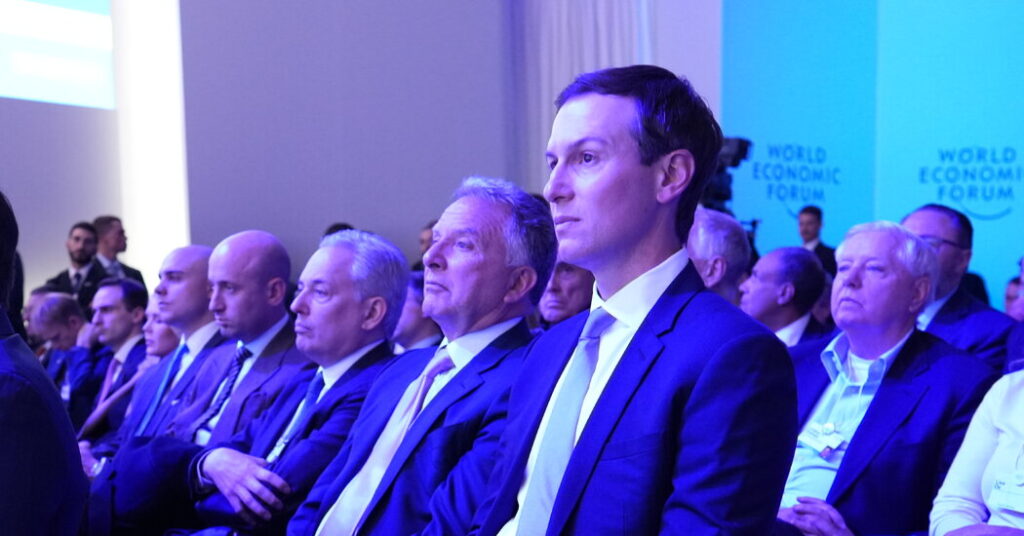
Steve Witkoff, the Middle East envoy, and Jared Kushner, President Trump’s son-in-law, had been expected to attend the negotiations, according to two U.S. officials who spoke on condition of anonymity to discuss sensitive diplomacy.
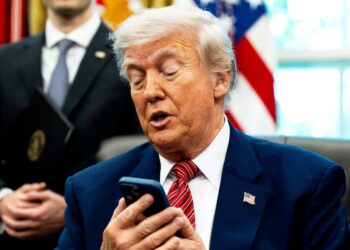
Mr. Trump, speaking on Monday on Air Force One, said he would be involved in the talks “indirectly” and that they would be “very important.” He said Iran wanted to make a deal.
The American president has ordered a buildup of U.S. forces in the region — including two aircraft carriers — after vowing last month to aid antigovernment demonstrators in Iran. The Iranian government quelled those protests in a bloody crackdown that killed thousands, according to rights groups.
Now, Mr. Trump is calling on Iran to reach a deal to limit its nuclear and military capabilities or face a possible attack. Last week, he wrote on social media that he preferred a deal with Iran, but that if one could not be brokered, “we will just have to see what the outcome will be.”
Countries in the region worry that a potential American strike, and an Iranian retaliation that could draw in Israel, could destabilize the Middle East and endanger U.S. allies in the Arab world that host American soldiers.
In a speech on Tuesday shortly after the talks began, Iran’s supreme leader, Ayatollah Ali Khamenei, responded defiantly to Mr. Trump’s orders to send a second aircraft carrier to the region.
“An aircraft carrier is certainly a dangerous piece of equipment,” the ayatollah said. “But more dangerous than the carrier is the weapon that can send it to the bottom of the sea.”
He also called demands to limit the range of Iran’s ballistic missiles “illogical,” arguing that such demands interfered with his nation’s right to possess weapons of self-defense.
“Any country without deterrent weapons will be crushed under the feet of its enemies,” he said.
On Tuesday, Iranian naval forces closed parts of the Strait of Hormuz, a key global shipping lane, for several hours to conduct a second day of naval “war games,” according to the semiofficial Tasnim news agency.
The Iranian government is under considerable pressure to agree to a deal. Iran’s economy has struggled under crippling international sanctions, which helped ignite the latest wave of protests against the country’s authoritarian government.
Iranian officials have argued they will not make concessions on nuclear enrichment without sanctions relief. Iran’s deputy foreign minister told state media that in return Tehran could offer Washington lucrative investment opportunities in sectors like oil, gas and mining.
Last year, U.S. and Iranian officials tried to negotiate a nuclear deal that would end the sanctions, but Israel launched a military campaign against the Iranian nuclear program as the talks were underway, leading to a 12-day war between the two countries.
U.S. stealth bombers joined the Israeli assault, attacking three Iranian nuclear sites. Mr. Trump initially said that the U.S. bombing had obliterated Iran’s nuclear program, but American intelligence later said that it had been badly damaged, not destroyed.
Prime Minister Benjamin Netanyahu of Israel, who met with Mr. Trump last week in Washington, said on Sunday that the American president believed that Iran “must surely understand that they missed out last time” by not showing more flexibility in the 2025 talks.
“He thinks there is a serious probability that they won’t miss out this time,” Mr. Netanyahu told a group of American Jewish leaders in Jerusalem, although he added that he was far more skeptical of “any deal with Iran.”
Tyler Pager contributed reporting from Washington. and Farnaz Fassihi from New York.
Aaron Boxerman is a Times reporter covering Israel and Gaza. He is based in Jerusalem.
The post U.S. and Iran Make ‘Good Progress’ in Geneva Talks, Foreign Minister Says appeared first on New York Times.