When Congress created the Commission of Fine Arts more than a century ago, its members were intended to be “well-qualified judges of the fine arts” who would review and advise on major design projects in the nation’s capital, lawmakers wrote. The initial slate of commissioners included Daniel Burnham and Frederick Law Olmsted Jr., architects and urban planners who designed much of Washington.
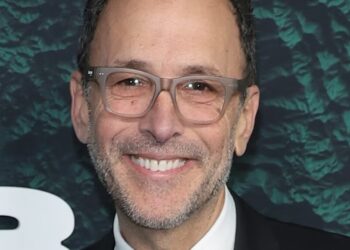
Now, the 126-year-old commission is set to include its newest, youngest member: Chamberlain Harris, a 26-year-old White House aide and a longtime executive assistant for President Donald Trump, who is slated to be sworn in at the panel’s next public meeting on Thursday.
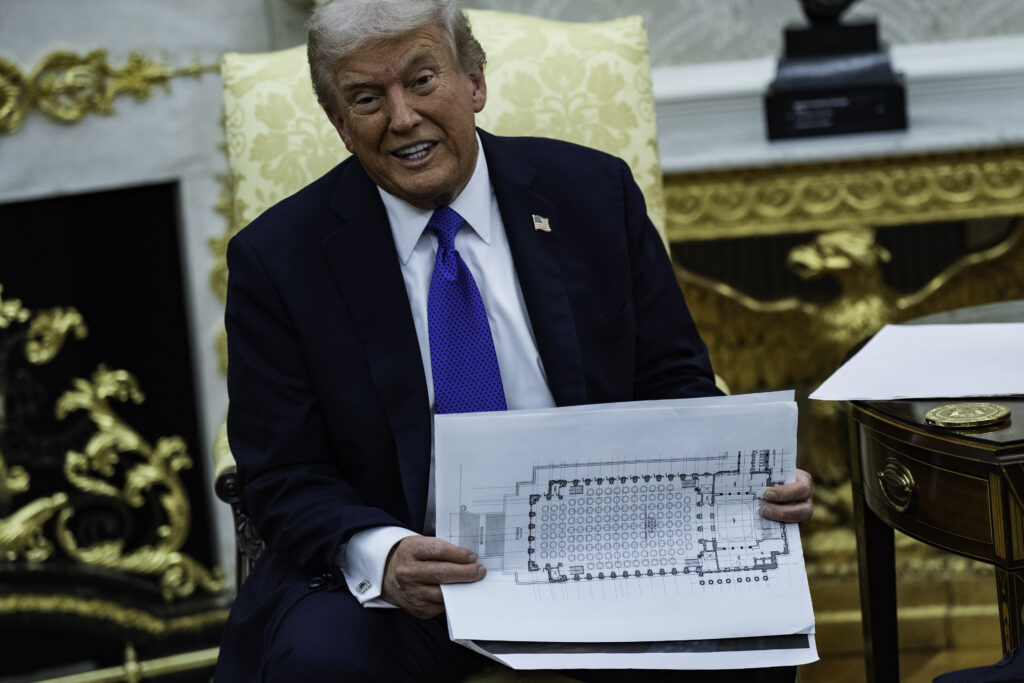
Trump’s selection of Harris — who was known as the “receptionist of the United States” during the president’s first term and has no notable arts expertise — comes amid the president’s push to install allies on the arts commission and another panel, the National Capital Planning Commission. Both commissions are reviewing Trump’s planned White House ballroom and are expected to review his other Washington-area construction projects, such as his desired 250-foot triumphal arch.
Trump has said he hopes to complete the projects as quickly as possible, despite complaints about their size, design and potential impact on Washington. A historical preservation group has sued the administration over the ballroom project, saying that Trump should have consulted with the federal review panels before tearing down the White House’s East Wing annex and beginning construction on his planned 90,000-square-foot, $400 million ballroom.
A federal judge weighing whether to halt the ballroom project in December had instructed the White House to go through the commissions before beginning construction.
Asked about Harris’s qualifications to serve on the fine arts commission, the White House on Tuesday touted her as a “loyal, trusted, and highly respected advisor” to the president.
“She understands the President’s vision and appreciation of the arts like very few others, and brings a unique perspective that will serve the Commission well,” Steven Cheung, the White House communications director, said in a statement. “She will be a tremendous asset to the Commission of Fine Arts and continue to honorably serve our country well.”
Harris, who holds the title of deputy director of Oval Office operations, received a bachelor’s degree in political science in 2019 from the University at Albany, SUNY, with minors in communications and economics, according to an archived copy of her résumé on LinkedIn. She continued working for Trump as an executive assistant when he was out of office.
Harris was one of seven fine arts commissioners Trump appointed during a 19-day spree in January. The president had left the commission empty for months after firing all six members in October but raced to restock the panel ahead of the agency’s January meeting when the ballroom project was first added to the agenda.
Former fine arts commissioners said they could not recall a commissioner in the panel’s history with as little prior arts experience as Harris. Several former commissioners also noted that Trump has installed multiple appointees with minimal arts and urban planning expertise on both panels set to review his construction projects remaking Washington.
“It’s disastrous,” said Alex Krieger, an architect and professor at the Harvard Graduate School of Design, who was chosen for the commission in 2012 by President Barack Obama and served a second term in the first Trump administration. “Some of these people just have no qualifications to evaluate matters of design, architecture, or urban planning.”
Past commissioners have included Billie Tsien, an architect currently working on Obama’s library, and Perry Guillot, a landscape architect who redesigned the White House Rose Garden during Trump’s first term.
Witold Rybczynski, an architect who was chosen for the Commission of Fine Arts by President George W. Bush and served a second term under Obama, wrote in an email that President Joe Biden also reshaped the panel by firing Trump appointees before their terms had concluded. He also noted that past presidents installed some political appointees and lesser-known experts to the panel, too.
“The degree of expertise … has varied,” Rybczynski wrote in an email.
The fine arts commission on Thursday is slated to review the latest ballroom designs and may vote to advance the project. The White House has said it hopes to win formal approval from both review panels by March and begin aboveground construction of the ballroom as early as April.
The post Trump picks his White House assistant for panel reviewing ballroom appeared first on Washington Post.