It was late on a Monday in January, and train traffic into Manhattan ground to a halt for three hours when, according to one news account, “the fractious drawbridge over the Hackensack River refused to close” for the third time in four months.
That was in 1962. More than six decades later, the Portal Bridge over the Hackensack River remains as fractious as ever, still making New Jersey rail commuters’ lives miserable. The bridge is finally being replaced, but not without a final parting shot: NJ Transit and Amtrak will sharply reduce rail service for a month as equipment from one of the old bridge’s track is transferred to the new one.
The 116-year-old bridge is only one of many chronic trouble spots that have made NJ Transit synonymous with commuter headaches. In just the past two years, riders have endured an outage caused by a signal wire striking a power line, the explosion of a giant circuit breaker, a strike by locomotive engineers that stopped the trains for three days and a 15 percent fare hike.
Efforts to modernize New Jersey’s aging rail infrastructure have also been hobbled by political battles. President Trump has repeatedly tried to block a $16 billion plan for a new rail tunnel under the Hudson River, in part to make life difficult for Democratic leaders in New Jersey and New York and, incidentally, their millions of constituents.
The Portal Bridge is transit nightmare unto itself. Built with such low clearance that it must swing open even for pleasure craft and tugboats , it often forces harried commuters to take a back seat to barges hauling sewage sludge. The little bridge, roughly the length of three football fields, is nevertheless a critical rail link between New York City and the rest of the country, carrying more than 200,000 commuters a day.
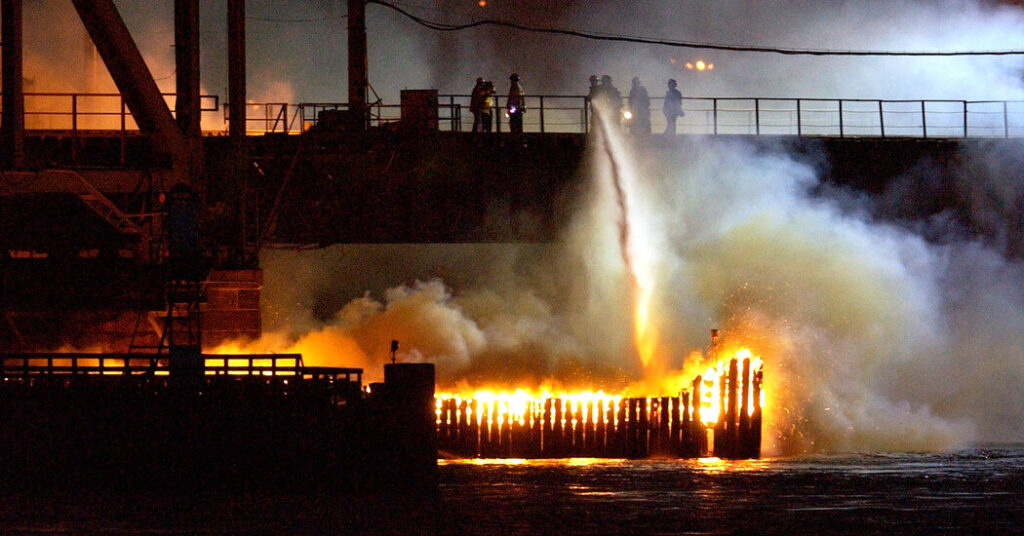
Because it is already a regional choke point, even minor problems can cascade into delays as far away as Washington. And problems do happen. In 1996, a train derailed after the bridge failed to close properly, injuring 30 people. It has caught fire at least twice.
This fall, as traffic is finally shifted from the old bridge to the new one, the Portal Bridge will inflict one final month of reduced service before it is retired for good.
Andy Newman writes about New Yorkers facing difficult situations, including homelessness, poverty and mental illness. He has been a journalist for more than three decades.
The post The Portal Bridge Has Caused Headaches for Decades appeared first on New York Times.