In 1968, as the filmmaker Frederick Wiseman was getting ready to release his second documentary, “High School,” he had reason to be a little uneasy. The release of his first effort, “Titicut Follies,” had turned out to be a fiasco. The film was a portrait of patient-inmates at the state-run Bridgewater State Hospital for the Criminally Insane in Massachusetts, made with the consent of all participants (as well as their legal guardians) and the hospital superintendent. It was shot in the direct cinema style: no narrator, no interviews with the subjects, no overtly contextualizing material. Viewers were left to figure out what they were watching — though, of course, Wiseman’s selections of footage and editing told a story.
The government of Massachusetts tried to ban its release shortly before the 1967 New York Film Festival premiere, claiming that the film violated the patients’ privacy and dignity. Wiseman — who had been a law professor before he became a filmmaker — would always maintain that the state wanted the film banned for political reasons, because it showed the actual conditions and treatment of inmates inside Bridgewater, and the government didn’t like what it saw. The N.Y.F.F. screening happened, but legal battles went on for years, all the way to the U.S. Supreme Court, which refused to hear the case. It was the first film to be banned in the United States for reasons other than obscenity and national security, and wouldn’t become available for public viewing until 1991. This 84-minute black-and-white film by a first-time director turned out to be a landmark, both in the history of cinema and in American free speech litigation.
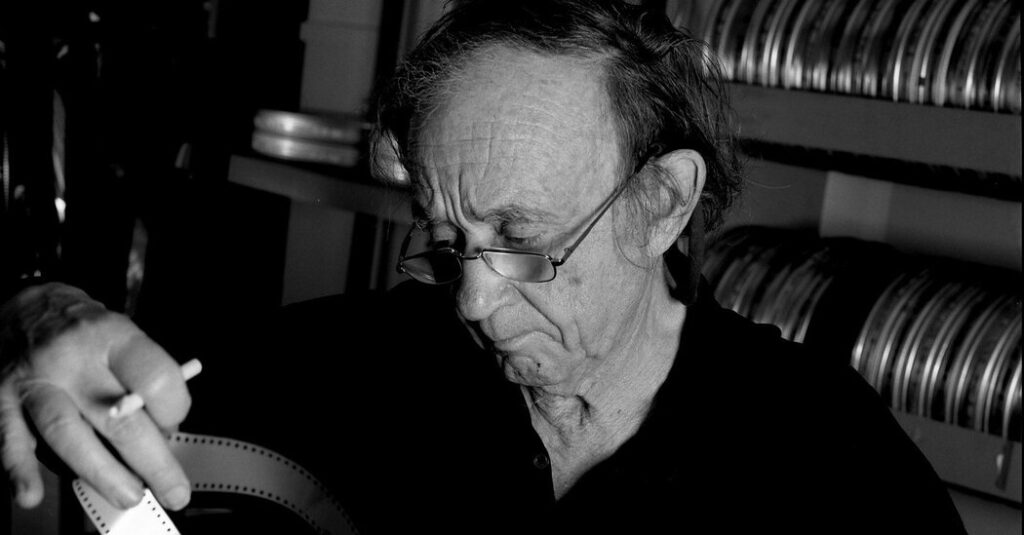
Documentaries are often in the business of capturing inconvenient truths. What made “Titicut Follies” so dangerous — and what made Wiseman, who died on Monday at age 96, one of the greatest documentarians of all time — was that it didn’t chronicle one event inside Bridgewater, nor did it have a simple, easy-to-follow story with clear-cut characters. Instead, it brought viewers into a previously closed-off place and established an important truth that Wiseman would return to in the 43 documentaries that followed: You can’t separate people from the institutions they’re part of, and their actions are shaped by them in powerful ways.
“High School” should theoretically have been a very different film from “Titicut Follies.” Inside Northeast High School in Philadelphia, Wiseman’s camera follows students, teachers and administrators as they go through ordinary days: classes, guidance counseling sessions, meetings with parents and the usual goings-on at any American high school in the mid-1960s. But while the aim of a school is to educate the students, it’s not hard to see what Wiseman saw: a system of hierarchy and militaristic rigidity that seemed not unrelated to creating good soldiers for the ongoing war in Vietnam, a point underlined in its final scenes. The film was threatening enough to the school district that though it was released widely, it was not permitted to be shown in Philadelphia. (“I didn’t want another lawsuit on my hands,” Wiseman explained.)
Since it was 1968, the students at Northeast couldn’t just stream the film. But they had a hunch about what it said. So they had T-shirts printed up that read “Fred Wiseman Was Right.”
These two films might suggest Wiseman had a political agenda for his movies, but if he did, it wasn’t planned out ahead of time. His approach was roughly similar across his career: He’d show up somewhere with his camera and a colleague and little else, and see what he saw. “For me, there’s no reason to make a film if I already have a thesis,” he told an interviewer in 2018. He would shoot between four and 12 weeks, and “the final film is a report on what I’ve learned as a consequence of making the film.”
In fact, Wiseman’s agenda might better be stated in terms of his full career, which spanned from “Titicut Follies” in 1967 to “Menus-Plaisirs — Les Troisgros” in 2023. To put it in the simplest terms: Frederick Wiseman loved to see what people did when they got together to do things, and to figure out why they did those things. His movies are full of meals, sports, conversations, church services. He showed us whispered bedside conversations in hospitals, salespeople patiently waiting on indecisive buyers, doctors tossing around gallows humor, artists rehearsing for performances. We have him to thank for the most hilariously drawn-out debates at the Lions Club about putting a second bench in town. Wiseman’s movies are loaded with meetings of every sort — bureaucratic, administrative, curatorial, educational, disciplinary, medical, I could go on forever. Meetings, it seems, are the basic unit of human interaction in the modern world, and watching them can be shockingly fun.
Watching a Wiseman movie, you might be fooled into thinking they’re objective, that there’s no narrator. But of course, the silent narrator is Wiseman himself, and he’s letting you in through his way of seeing things. “The thesis and the point of view would emerge from the editing,” he told an interviewer in 2016. Watching “Welfare” (1975), you begin to see the meaning: that underfunded, overworked staff members somehow still manage to see themselves as neighbors to those who come in needing services. “Ex Libris” (2017), about the New York Public Library, is a subtly full-throated argument for public funding of libraries as a means of preserving democracy. “Primate” (1974), perhaps the most terrifying of his films, contains an unexpected embedded warning about life in a surveillance state.
Wiseman would never really admit to specific meanings for the films. When I asked him in 2018 about the thesis of “Monrovia, Indiana,” he said, “I don’t think I should explain it — if you want to figure it out, well, good. It’s only necessary for me to create a structure to try to make something that works as a grammatical narrative.” He’d rather I come up with it myself — to pay as much attention as he did, but also enjoy these people along the way.
Cinephiles joke about the length of Wiseman’s movies, but in fact some are fairly short (“High School” is only 75 minutes long) while others do reach marathon length, like the nearly six-hour “Near Death.” But once you sink into a Wiseman film, it’s easy to lose track of time. Everyone is interesting. Every interaction is telling, or funny, or sweet, or heartbreaking. “There is great drama, tragedy, comedy in ordinary experience, which if you happen to be lucky enough to be present when it occurs, you can use in film,” he wrote when participating (perhaps improbably) in a Reddit Ask Me Anything in 2015. That is the miracle: He happened to be there with the camera on this person’s best or worst or, most likely, forgettably ordinary day.
But each person in the film is part of some larger fabric. What Wiseman attended to were not isolated, individual stories; no one is ever alone. Everyone’s actions have consequences. Fittingly, his gorgeous final film, “Menus-Plaisirs — Les Troisgros,” is about a three-star Michelin restaurant in France, focusing on the family that runs it and the farmers who supply it. As the movie unfolds, you slowly come to realize that it is about what it takes to sustain all of this — the culinary and agricultural traditions alike, which are not made for scaling or franchising, against cultural winds — across generations. It requires careful heed to things like soil, and water quality, and cultivating relationships with growers, and learning how to properly plate the snails and cook the veal. You have to love it all.
The larger fabric includes Wiseman, of course: In filming all of these people across more than 50 years, he gave them a kind of immortality. Just as important, he told us we ought to care about them in the here and now. They are your neighbors, even if you’ll never know them. And he did it with such close attention that it registers onscreen as something very beautiful. It is the sort of filmmaking that feels like love.
Alissa Wilkinson is a Times movie critic. She’s been writing about movies since 2005.
The post Nobody Watched People the Way Frederick Wiseman Did appeared first on New York Times.