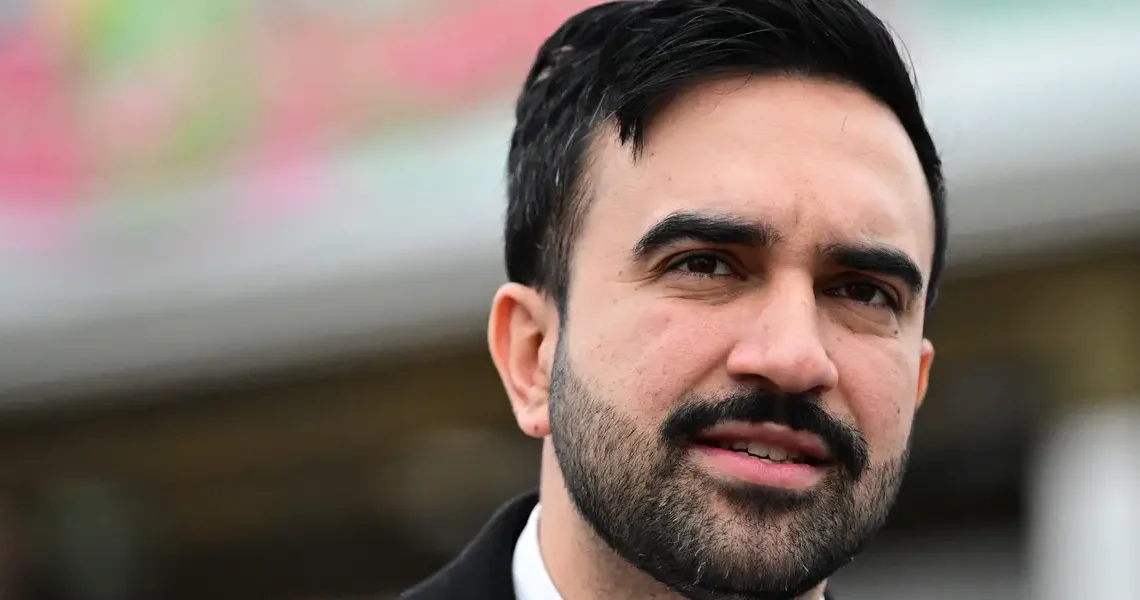
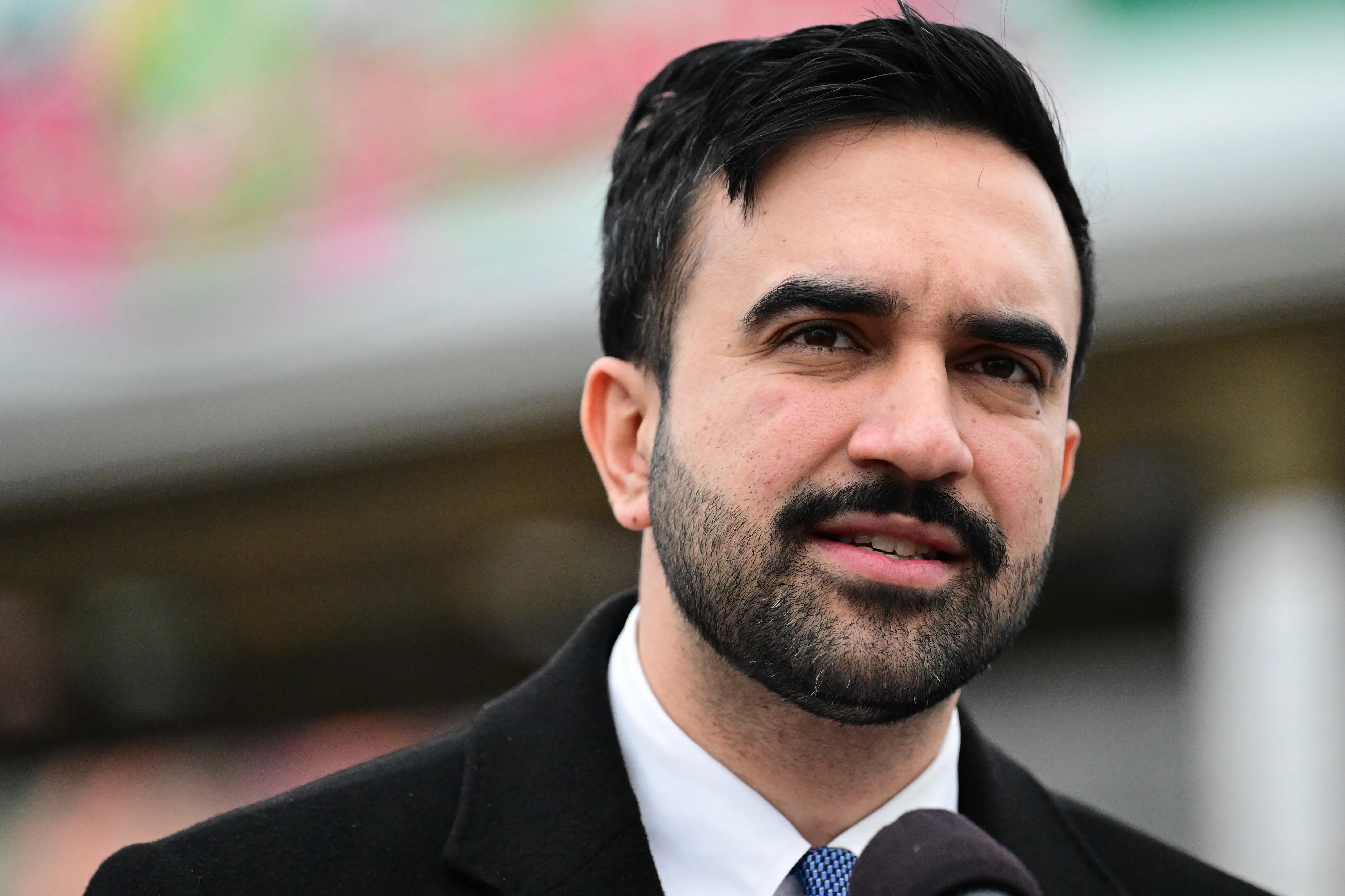
New York City Mayor Zohran Mamdani says that if the state won’t play ball on taxing the rich, he’ll have to impose a higher tax of his own — and it could hit middle-class New Yorkers.
At a Tuesday press conference, he laid out two options to address what he said is the city’s $5.4 billion budget deficit left by the prior administration.
In an effort to balance his preliminary $127 billion budget, Mamdani outlined two potential paths forward. The first — and Mamdani’s preferred — relies on cooperation from New York Gov. Kathy Hochul: increasing taxes on the wealthy and corporations, a cornerstone of Mamdani’s campaign. Hochul has been lukewarm on the idea.
Without Albany’s willingness to hike income or corporate taxes, Mamdani is signaling he will need to turn to other measures to fund his budget. He’s floating increasing property taxes for the city’s residents — which would hit the middle and working classes as hard as his typical targets on Wall Street — alongside drawing from funds that the city keeps in reserve in case of an economic downturn.
Mamdani called that option “painful,” and “a tool of very last resort,” and said that his administration would continue working with Albany to avoid it.
“This is a preliminary budget,” he said at the press conference. “This is a budget that reflects the only tools that the city has at its disposal.”
What a New York City property tax increase would mean
If Hochul or Albany do not budge, Mamdani said he would increase property taxes by 9.5%.
In the press conference, Mamdani said the tax would hit middle-class New Yorkers the most. His office did not immediately respond to a request for comment on which income groups would be most affected or on the proposal’s potential impact on middle-income New Yorkers.
Multi-unit buildings — where renters tend to live — are taxed at a higher effective rate than single-family or low-density homes, where more affluent New Yorkers tend to live. While renters don’t pay property taxes directly, higher property tax levies on their landlords could, over time, translate into higher rents.
“New York’s property tax system stems from the 1970s, trying to balance the needs of outer borough homeowners with the commercial and multifamily housing in Manhattan,” Rita Jefferson, a local analyst at the Institute on Taxation and Economic Policy who focuses on equity, said. “As a result, property tax rates on single-family homes are much lower than rates on multifamily units, which has led to vastly different bills for properties that have the same market value.”
New York City Comptroller Mark Levine, an elected position not appointed by the Mayor, said that Mamdani had proposed a budget that “honestly and transparently lays out the scale of our challenges,” and that the city “undoubtedly” needs more assistance from Albany.
“To rely on a property tax increase and a significant draw-down of reserves to close our gap would have dire consequences,” Levine said in a statement. “Our property tax system is profoundly unfair and inconsistent, and an across-the-board increase in this tax would be regressive. Drawing down reserves during a period of economic growth would leave us vulnerable to economic turbulence next year.”
The proposal was blasted by US Rep. Nicole Malliotakis, a Republican whose district includes Staten Island and parts of Southern Brooklyn.
“Year after year, City Hall squeezes the middle-class for more by raising the property tax levy, and now Mamdani wants to raise the rate, making the American dream of homeownership less attainable and the cost of housing even more unaffordable for property owners and renters alike,” Malliotakis said in a statement.
Mamdani’s proposal doesn’t mean that renters or property owners will get hit with a large tax bill immediately; as he stressed in his press conference, the budget is far from final. Hochul reportedly said at an unrelated event that she doesn’t think a property tax increase is necessary.
“This is something that we do not want to do,” Mamdani said, “and this is something that we are going to utilize every single option to ensure does not come to pass.”
Read the original article on Business Insider
The post Mamdani says if the state won’t tax the wealthiest New Yorkers, he’d have to tax the middle class as a ‘last resort’ appeared first on Business Insider.