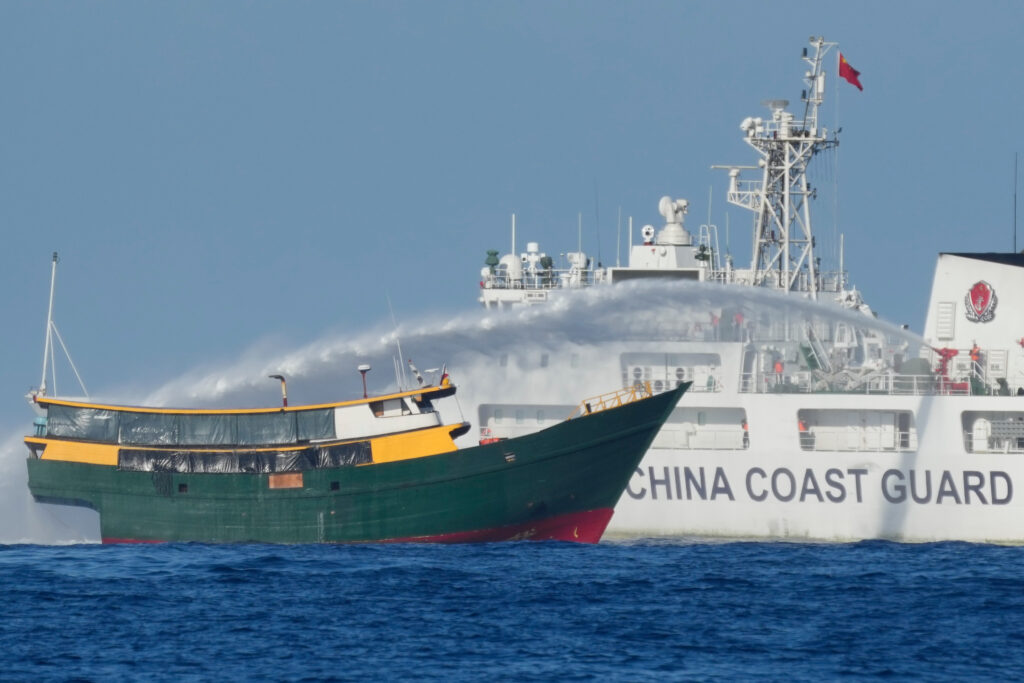
While the Trump administration’s high-profile foreign policy initiatives have focused on Europe and the Middle East, more lastingly consequential things are afoot in Southeast Asia, one of the world’s fastest-growing economic regions. In a joint statement commemorating the 75th anniversary of a mutual defense treaty, U.S. and Philippine leaders announced an increased pace of deployment of advanced missiles in the Philippines — likely land-based Tomahawks and NMESIS anti-ship systems.
China has complained about the deployment of such missiles before, calling them “destabilizing.” It claims nearly the entire South China Sea for itself, and has backed its illegitimate claims by building bases on barren atolls and aggressively confronting Philippine, Vietnamese, Indonesian and Malaysian vessels in these countries’ own waters. The missiles are meant to deter China from any attempt to turn those claims into lasting control.
It’s difficult to overstate the importance of the South China Sea for global trade. About 24 percent of global maritime tradepassed through it in 2023, as well as 45 percent of global seaborne crude oil and 42 percent of propane. That’s trillions of dollars a year in goods, including advanced semiconductors. The region isn’t as rich as Europe, but countries such as Vietnam and the Philippines have large populations and fast growth rates. The more leverage China has in Southeast Asia, the more it can dictate the rules of the global economy.
Progressive anti-interventionists often complain that defense spending is crowding out domestic spending. But keeping vital international arteries open to trade on terms favorable to the American people is worth some expense.
How much? The Philippines Enhanced Resilience Act allotted $2.5 billion over five years to arm a treaty ally with American-made defense systems. It was signed into law by President Donald Trump as part of the 2026 National Defense Authorization Act. That’s a rounding error in terms of total U.S. gross domestic product — and a bargain considering the significance of these contested waters to world markets.
The post Maintaining America’s edge in the South China Sea appeared first on Washington Post.