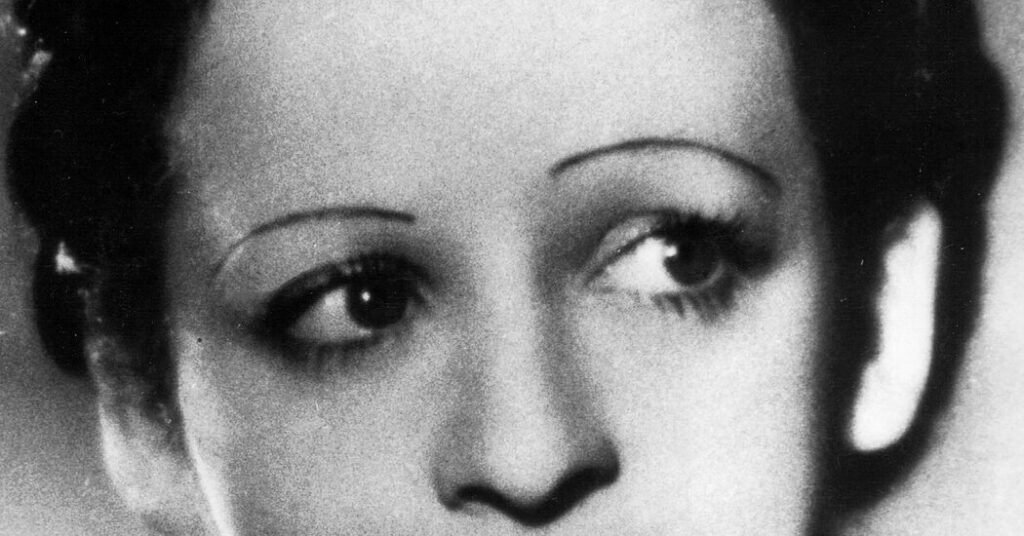
This obituary was originally published on Dec. 22, 1983. It is being republished for a package for Women’s History Month. To preserve these articles as they originally appeared, The Times does not alter, edit or update them.
Fania Fénelon, whose memoir of her experiences singing in the inmate orchestra at Auschwitz was made into a controversial television movie, died of cancer Tuesday in the Kremlin Bicêtre Hospital in Paris. She was 74 years old.
Miss Fénelon’s memoir, “Playing for Time,” described how she was saved from death in the Nazi concentration camp by being chosen to sing in the all-female orchestra. The orchestra, conducted by Alma Rosé, a neice of Gustav Mahler, gave concerts for 11 months in 1944 under orders of the SS, even performing for Heinrich Himmler.
The memoir was published in France in 1976 and in the United States the following year. The television movie, from Arthur Miller’s screenplay, sparked protests from Jewish groups in the United States and abroad after Vanessa Redgrave was cast as Miss Fénelon.
The protestors objected to Miss Redgrave’s support of the Palestine Liberation Organization, and Miss Fénelon herself came to the United States to criticize CBS-TV for what she said was its insensitivity in broadcasting the movie with Miss Redgrave in it.
At the time of her death, Miss Fénelon was at work on a new book recounting her experiences after the liberation. She is survived by her brothers, Leonide Goldstein, professor of psychiatry at the University of Medicine and Dentistry of New Jersey, and Michele Goldstein, a retired businessman in Paris. A memorial service is to be scheduled.
The post Fania Fénelon, 74; Memoirs Described Auschwitz Singing appeared first on New York Times.