Robert Duvall, whose screen presence was so natural and grounded that he could fit perfectly into almost any part, large or small, died on Sunday at age 95. He was best known for playing rugged, capable men drawn from America’s past, present and possible future. From the classic TV western mini-series “Lonesome Dove” to the gritty cop drama “Colors,” Duvall’s quiet intensity was consistently riveting.
Many top writers, directors and producers were eager to work with Duvall because even as showbiz changed, the actor’s simplicity and unforced machismo remains timeless. Here are 11 of his greatest performances:
‘To Kill a Mockingbird’ (1962)
After spending the first half-decade of his career doing live theater and television, Duvall made his big-screen debut in the small but memorable role of Boo Radley in an adaptation of Harper Lee’s best-selling novel “To Kill a Mockingbird.” Even before the premiere of the movie, by the director Robert Mulligan and the screenwriter Horton Foote, millions of readers had formed pictures in their heads of how Boo, the reclusive neighbor of Atticus Finch, might look and sound. Duvall’s haunting performance — playing a man at once anxious and kindly — gave moviegoers a Boo as vividly drawn as Lee’s.
Rent or buy it on Apple TV and Prime Video.
‘THX 1138’ (1971)
Duvall’s lack of pretension as an actor set him apart from both his more “method”-minded New York peers in the 1950s and the edgy screen actors who helped the New Hollywood of the early ’70s flourish. Nevertheless, Duvall worked multiple times with Robert Altman and Francis Ford Coppola, two of his era’s more adventurous filmmakers. And he starred in the highly experimental first feature by the “Star Wars” creator George Lucas, playing a drug-addled technician who finds love and then escapes an oppressive dystopia. While Lucas skews both geeky and arty with his sterile office buildings and futuristic fluorescent lighting, Duvall’s low-key acting — heavy on improvisation — gives the picture a human heart.
Rent or buy it on Apple TV and Prime Video.
‘The Godfather’ (1972)
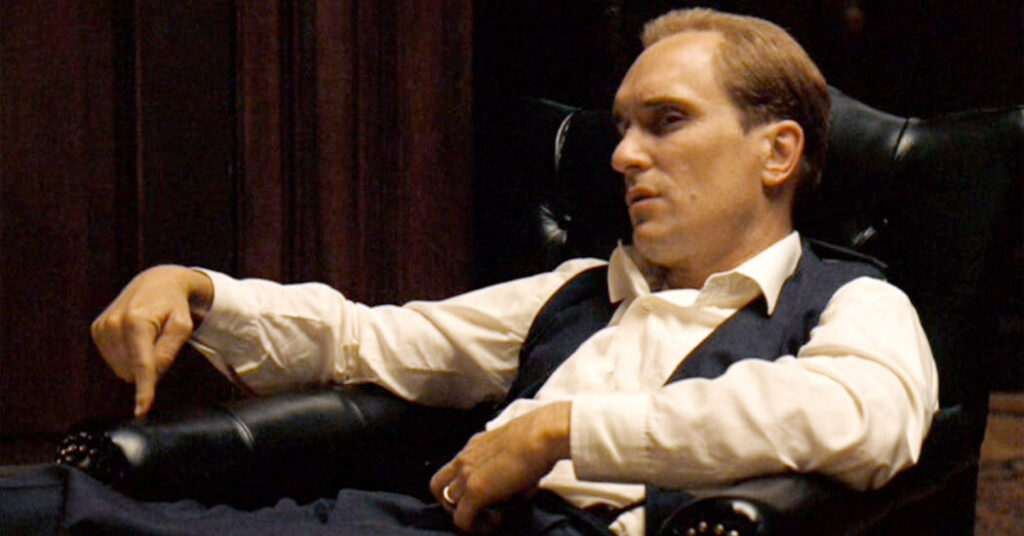
Coppola’s Oscar-winning adaptation of Mario Puzo’s sprawling Mafia exposé is renowned for its look, scope and sophistication, as well as for the performances of Marlon Brando as an aging crime-lord and Al Pacino as his reluctant heir. But Duvall is another of the film’s anchors, playing the Irish American lawyer Tom Hagen, an adviser to a band of Italians who respect his counsel but don’t consider him a trusted insider. In this film about the immigrant experience and the ruthlessness of entrepreneurs, Duvall’s character represents all those fellow travelers who willingly choose corruption while lying to themselves that they’re basically good people.
Stream it on Paramount+. Rent or buy it on Prime Video.
‘Apocalypse Now’ (1979)
Duvall appeared in five consecutive Coppola films between 1969 and 1979, including “The Rain People,” “The Conversation” and “The Godfather Part II.” He’s only in “Apocalypse Now” for about 15 minutes, but his scenes as Lt. Col. Kilgore are the film’s most blackly comic and among its best remembered. With enemy shells exploding around him and napalm fires burning in the distance, an unshaken Kilgore calmly expounds on the virtues of surfing and Richard Wagner, embodying American exceptionalism with both his confidence and his swagger.
Stream it on Fandango at Home. Rent or buy it on Apple TV and Prime Video.
‘The Great Santini’ (1979)
Duvall’s curt, gruff vocal cadences could play as avuncular or flinty, depending on the context of the role. In Lewis John Carlino’s adaptation of Pat Conroy’s semi-autobiographical novel “The Great Santini,” the actor takes on one of his scariest characters: a career Marine who’s so demanding of his wife and children that they walk on eggshells whenever he’s home. He’s not an outsize ogre. He’s just the kind of stern parent who can make the few words he says cut like knives.
Rent or buy it on Apple TV and Prime Video.
‘Tender Mercies’ (1983)
The flip side to Duvall’s “The Great Santini” character is the only one of his seven Oscar-nominated roles that resulted in an Academy Award. In “Tender Mercies” Duvall plays a country music singer who is striving to overcome his worst impulses while making himself useful to a young widowed mother. A sensitive story about life in rural Texas that was written by Horton Foote, “Tender Mercies” shows Duvall’s softer side, as a broken man earnestly trying to fix himself by serving others.
Stream it on Prime Video, Roku Channel and Hoopla.
‘Lonesome Dove’ (1989)
Like a lot of actors of his generation, Duvall honed his screen acting skills in the 1960s by doing guest spots on TV dramas like “The Fugitive,” “The F.B.I.” and “The Twilight Zone.” But his biggest success on television came in 1989, when he starred as a retired Texas Ranger in arguably the greatest American mini-series of all time, the CBS adaptation of Larry McMurtry’s novel “Lonesome Dove.” Set in the 1870s, the western follows Gus McCrae (Duvall) and his buddy Woodrow F. Call (Tommy Lee Jones) as they set off on one last adventure, planning to lead a herd of cattle from their small Texas border town to Montana. Both actors were nominated for Emmys and Duvall gives perhaps the finest performance of his career — or at least the one he considered his personal favorite — as a battle-scarred, aging cowboy, cursed with bad habits but blessed with a good heart. “Let the English play Hamlet and King Lear,” Duvall said, “and I will play Augustus McCrae, a great character in literature.”
Stream it on Prime Video and Peacock and Roku Channel.
‘The Handmaid’s Tale’ (1990)
Long before the Emmy-winning Hulu adaptation of Margaret Atwood’s speculative-fiction novel, the movie version cast Duvall as the priggish, hypocritical Commander, who employs the story’s sex-slave heroine. Duvall is at the center of the film’s two best scenes: one in which he condescendingly tries to show his servant he’s an OK guy by inviting her to play Scrabble, and another in which he goes on a rant about the pre-revolution dark days, when feminists, racial minorities and gay people acted as “pressure groups” against the will of decent Americans. In both scenes, the character’s kindness is conditional and self-congratulatory. The big show he makes of treating his employee as an equal — for an hour or so, anyway — is his way of putting her in a place.
Rent or buy it on Apple TV; buy it on Prime Video.
‘Rambling Rose’ (1991)
One of the great forgotten indie films of the 1990s, this rich adaptation of a Calder Willingham novel stars Laura Dern as a promiscuous young woman who becomes a servant-slash-ward to a prominent Georgia family during the Depression. Duvall plays the patriarch, who struggles to balance his compassion for Rose with his fear that her behavior is damaging his reputation — and possibly corrupting the morals of his teenage son. It’s one of his more nuanced roles: neither wholly virtuous nor villainous, but rather a complicated character who wrestles with whether social conformity and righteousness are one and the same.
Stream it on Kanopy and Hoopla. Rent or buy it on Apple TV and Prime Video.
‘The Apostle’ (1997)
A true auteur project, this indie drama was written, directed and co-produced by Duvall, who also stars as Sonny Dewey, an evangelical preacher attempting to build a new church in Louisiana while hiding a rocky past. The actor spent years researching the story, and the result is a film about faith and the South that’s neither blandly uplifting nor smugly judgmental. The protagonist is no angel, but also no phony. He believes what he preaches, and excels at winning people over. His deep understanding of his flock’s weaknesses and strengths — as well as his own — lead to a climactic sermon that’s one of the most electrifying pieces of screen acting of the late 20th century.
Rent or buy it on Prime Video.
‘Get Low’ (2010)
After a career spent playing stoic cranks with stubborn streaks, Duvall gave a master class in curmudgeonliness in this low-key indie dramedy, playing a 1930s-era Tennessee hermit who leaves his cabin in the woods and rides into town to ask for help planning his funeral — which he wants to hold while he’s still alive. Because his neighbors are disinclined to cooperate with a man who has shunned and frightened them for decades, the grump pays them to show up, and then tries to atone for past misdeeds. Duvall delivers a full complement of his usual guttural grunts and wistful, wrinkled stares, but with the added resonance of a character saying his last goodbyes.
Stream it on YouTube. Rent or buy it on Apple TV and Prime Video.
The post Where to Watch Robert Duvall’s Top Performances appeared first on New York Times.