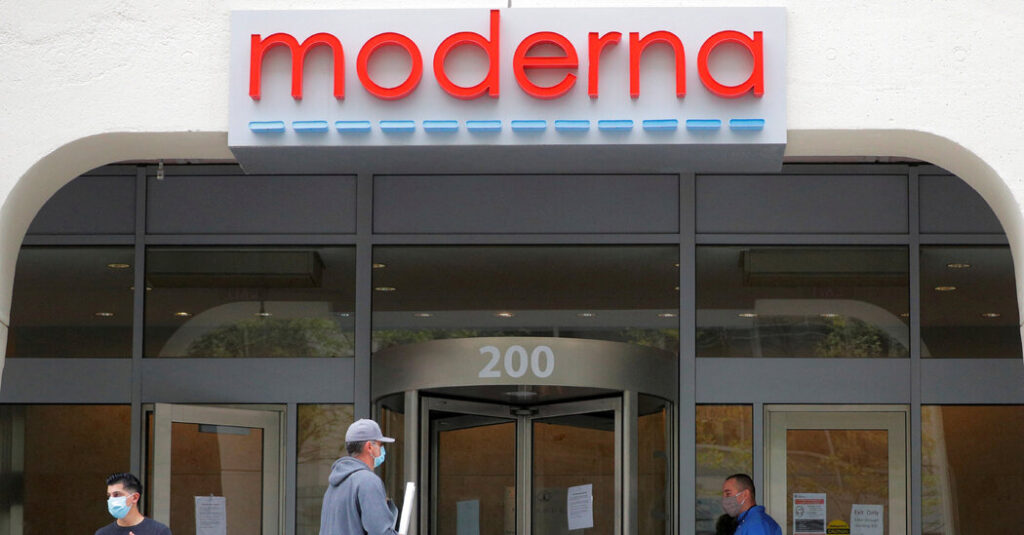
In Massachusetts, Moderna is pulling back on vaccine studies. In Texas, a small company canceled plans to build a factory that would have created new jobs manufacturing a technology used in vaccines. In San Diego, another manufacturing company laid off workers.
When Robert F. Kennedy Jr. was picked in November 2024 to become the next health secretary, public health experts worried that the longtime vaccine skeptic would wreak havoc on the fragile business of vaccine development.
Those fears are beginning to come true, according to executives and investors involved with companies that develop and sell vaccines and the technology that is best known for the Covid vaccines.
At conferences and in interviews, they described the emerging consequences of the Trump administration’s dismantling of the longstanding federal support for vaccines.
“There will be less invention, investment and innovation in vaccines generally, across all the companies,” Dr. Stephen Hoge, the president of Moderna, said in an interview.
The Trump administration said it was not discouraging innovation.
But investors have grown hesitant to bet on a field that has fallen out of favor in Washington. Major manufacturers are reporting declining sales of their shots. Smaller companies are taking the brunt of the impact, with some stocks whipsawing in response to the changes.
Perhaps no vaccine maker has been hit harder by the federal policy changes than Moderna. Mr. Kennedy has repeatedly questioned the safety and effectiveness of the technology around which the company has built its business. The technology, known as messenger RNA, or mRNA, instructs the body to produce a fragment of a virus that then sets off an immune response. It can be more quickly tailored and manufactured compared to traditional approaches.
Last week, the Food and Drug Administration refused to review Moderna’s mRNA flu vaccine, saying its research design was flawed.
The health officials’ decisions are a striking departure from President Trump’s first term, when the federal government funded and shepherded Moderna’s Covid vaccine. The company’s stock price has plummeted more than 90 percent since its peak in August 2021, erasing about $180 billion in market value.
Pharmaceutical companies have dodged several of Mr. Trump’s threats, reaching favorable deals with the administration to avoid tariffs and keep prices high for most of the drugs they currently sell. But they have been unable to find common ground on vaccines.
“It’s a different world when you start discussing vaccines,” Albert Bourla, Pfizer’s chief executive, said last month. “There is almost like a religion there.” Asked what needs to change, Mr. Bourla said, “the health secretary.” Mr. Bourla also characterized Mr. Kennedy’s rhetoric as “anti-science.”
Mr. Bourla talks about the president with a different tone. He once said Mr. Trump deserved a Nobel Prize for championing the Covid vaccines.
Mr. Nixon said, “We reject the claim that our approach to vaccines is anti-science or hostile to innovation.”
Mr. Kennedy has argued that Covid shots using mRNA are not effective because they do not prevent infection. He also once called them “the deadliest vaccine ever made.” Like all shots, mRNA vaccines sometimes cause side effects, but extensive research has found the shots are safe overall and that serious reactions occur rarely.
Under Mr. Kennedy’s leadership, the department has canceled contracts for mRNA technology, limited the use of Covid shots and remade a crucial committee that recommends which vaccines Americans should take and when.
Last month, federal health officials overhauled the childhood vaccination schedule, reducing the number of recommended immunizations to 11 from 17, deciding that that the six vaccines that were dropped should now be given only in consultation with a clinician.
The changes “sent a chill through the entire industry,” said Jeff Coller, a scientist who works on mRNA at Johns Hopkins University. Dr. Coller advises several small mRNA companies and is on the executive committee of the Alliance for mRNA Medicines, a trade group.
Andrew Nixon, a spokesman for the Department of Health and Human Services, defended the administration’s changes. “Vaccine policy at H.H.S. is guided by evidence-based science, public health outcomes and transparency, not by the business models or public statements of pharmaceutical executives,” he said.
So far, vaccine manufacturers say that they have no plans to exit the market and that their businesses are resilient enough to withstand the new pressures. Insurers have promised to continue to cover the vaccines that are no longer federally recommended, at least until the end of this year, promising to soften the financial blow for companies.
And despite increasing vaccine hesitancy, industry officials say they hope that Americans will be swayed by a vast body of research showing that vaccines save lives.
“Not everybody looks to the top of H.H.S. to get all of their guidance on how to live their lives,” Paul Hudson, the outgoing chief executive of Sanofi, told reporters last month. Still, he predicted a continued slowdown in vaccine sales because of “the misinformation that is going around.”
Sanofi recently halted early development of an mRNA flu vaccine, but said its decision was motivated by concerns about effectiveness, not politics.
Vaxcyte, a vaccine company near San Francisco, said last summer that it was pausing development of vaccines to protect against strep and the diarrhea-causing bacteria Shigella, attributing the decision to other priorities and a changing political and business climate.
Lost jobs for American workers
The federal vaccine policies coupled with declining demand for Covid shots have translated into hard times for Moderna.
Last year, the company laid off more than 800 workers, a tenth of its work force. It also lost more than $700 million in contracts to develop a shot to protect humans against bird flu after the Trump administration canceled the agreements. And the company shelved vaccines to protect against herpes, chickenpox and shingles.
Moderna plans to continue late-stage studies of mRNA products for cancer. But citing the Trump administration’s stance, the company is pausing late-stage development of shots to prevent infectious diseases and infections that lurk in the body.
For example, Moderna has halted preparatory work for large late-stage clinical trials of vaccines to prevent and treat Epstein-Barr, a common virus that may be linked to multiple sclerosis. The vaccines had shown promise in early studies.
In several cases, the Trump administration’s policies have impeded the president’s often-stated goal of bringing pharmaceutical manufacturing and its accompanying jobs back to the United States.
Last week, Moderna announced a manufacturing deal with Mexico.
Some smaller companies test shots in hopes of eventually being bought by a big company that will bring them to market. Other small firms provide services like manufacturing to vaccine developers.
Plano, Texas, lost out on more than 170 new jobs when NTx Bio, which manufactures a device about the size of a microwave for producing mRNA, retreated from plans to build a plant there. The small company attributed its decision to a considerable slowdown in sales last year amid a challenging business climate.
The company’s chief executive, Joan Haab, pointed to “headwinds around vaccine hesitancy and initiatives with the administration.”
A few small companies recently notified regulators of their plans to lay off dozens of workers. They include Inventprise, a vaccine developer near Seattle, and TriLink BioTechnologies of San Diego, which promises to help “bring your mRNA vaccine or therapeutic to market faster.”
Big companies face new pressures
The biggest players in the U.S. vaccine market — Merck, Sanofi, GSK and Pfizer — have largely been buffered from recent vaccine policy shifts because most of their sales come from medicines.
Some new vaccines, like the ones to prevent shingles or pneumococcal disease, turn into lucrative blockbusters. Old, routine childhood shots like the one that protects against measles, mumps and rubella generate more modest profit.
The government now recommends that children receive one, instead of two, doses of Gardasil, a vaccine which protects against the human papillomavirus and has sharply reduced cases of cervical cancer in women.
But Gardasil’s manufacturer, Merck, told investors last month that it was not worried about sales for the product. Insurers say they will still cover both for families who want them. And even before the policy change, many people were not returning for their second dose.
A major concern for the big companies is whether the Trump administration will do away with the special liability protections afforded to vaccine makers that have helped them stay in the market.
Allies of Mr. Kennedy who have sought to undermine vaccines — including Aaron Siri, a plaintiff’s lawyer representing vaccine injury claims, and Del Bigtree, a prominent anti-vaccine activist — have said they believe the decision to rescind recommendations for certain immunizations provides an opening to strip manufacturers of existing liability shields. That could expose the companies to big-dollar lawsuits.
Mr. Nixon, the H.H.S. spokesman, said the administration did not comment on “speculative policy decisions.” He said that the vaccines with changed recommendations “continue to be covered” under a program affording those liability protections.
Declining sales and skittish investors
Steady declines in the number of Americans getting vaccinated are dampening sales for the big vaccine manufacturers, a trend dating back to well before Mr. Kennedy’s tenure.
Vaccination rates among kindergartners have been falling for years, and efforts to weaken immunization requirements in a handful of states, including Idaho, could further erode those rates.
This season, the number of flu vaccine doses distributed in the United States is on pace to fall to its lowest level in 12 years. That figure has dropped steadily since reaching a high point five years ago during the Covid pandemic. Researchers blame the rise of misinformation about vaccines.
A major maker of flu shots, CSL, has been so rattled by declining vaccination rates among Americans that it indefinitely delayed plans to reorganize its business to cut costs.
As the government has turned on vaccines, investors’ appetite for the sector has cooled.
“We are more wary,” said Peter Kolchinsky, a biotechnology investor in Boston. “It’s clear that some vaccines are going to be harder to get through than others, so we have to invest more cautiously, if at all.”
Last year, venture capital investors poured $174 million into companies developing new mRNA vaccines, down from $510 million in 2023, according to GlobalData, a firm that tracks industry deals.
The newfound perils for investors are illustrated by Blackstone, the investment firm, which invested $750 million in the development of the Moderna flu vaccine that the F.D.A. refused to review — and that now might never make money in the United States. Blackstone stood to receive royalties and other payments if the shot came to market.
Last year, David Dodd set out to raise money for GeoVax, a small publicly traded vaccine company in Georgia where he is chief executive. He raised $3.2 million in December, about a third of what he thought he could have gotten in a more vaccine-friendly climate. Last week, he only raised an additional $1 million.
“There’s a lot of uncertainty,” he said.
Rebecca Robbins is a Times reporter covering the pharmaceutical industry. She has been reporting on health and medicine since 2015.
The post Vaccine Makers Curtail Research and Cut Jobs appeared first on New York Times.