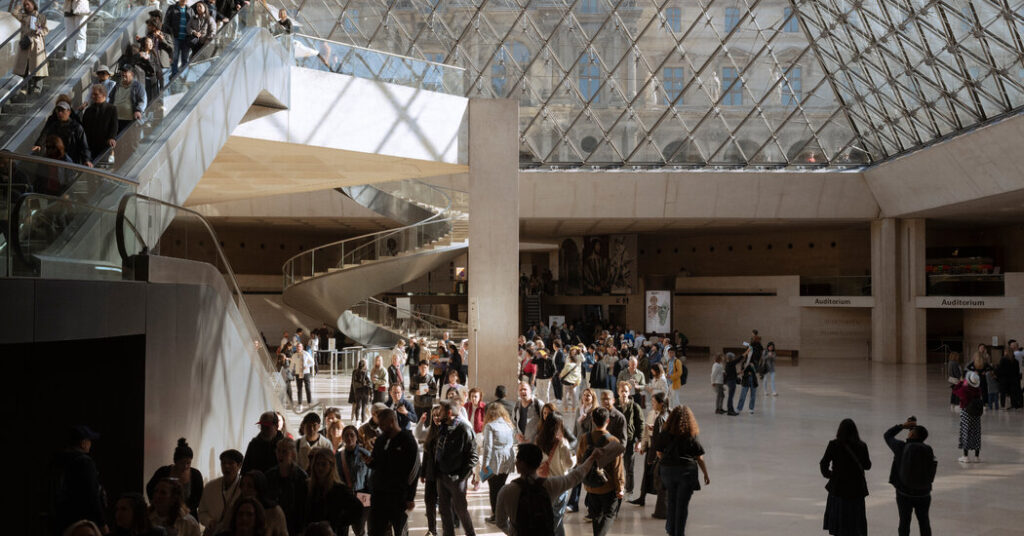
When officials at the Louvre in Paris suspected a couple of tour guides of reusing tickets in late 2024, they did not expect to learn that a broad scamming network had cost the museum nearly $12 million over a decade.
But investigators say that evidence uncovered over the past year points to exactly that, including bribes of museum employees, tickets reused multiple times, and groups of tourists being split up to avoid paying an extra fee.
Last week, the police arrested nine people in the case, including two museum employees, according to the Paris prosecutor’s office. Its investigation suggested that for the past 10 years, a scamming network had been bringing in up to 20 groups per day. Investigators think the ticket fraud also took place at the Versailles Palace, the office added.
Part of the money was invested in real estate in France and Dubai, said the investigators, who have seized more than $1 million in cash and more than $500,000 from bank accounts, according to the prosecutor’s office.
The identities of the nine people arrested have not been made public. The suspects have been charged with crimes including fraud committed by an organized gang, use of forged documents, corruption and aggravated money laundering. One suspect has been placed in pretrial detention on several charges, and the remaining eight have been released under strict conditions.
The scam is the latest hardship for the Louvre, which has been engulfed in an ever deepening crisis since royal jewels valued at more than $100 million were stolen in a heist in October.
The prestigious institution has had to account for its deficient security system and the fragility of its infrastructure, with two water leaks reported since the heist and one gallery preemptively closed after officials found weaknesses in its beams. A strike by part of the museum’s staff has also forced the building to fully or partly close about a dozen times since December.
The Louvre said in an email that it was encountering “an increase and diversification of ticket fraud” and that its management was working with the police to better identify and prevent it.
In an interview with a French TV channel on Friday, Kim Pham, the general administrator of the Louvre, acknowledged “difficulties in checking tickets that have been purchased online when visitors go through and enter the museum.”
According to the prosecutor’s office, the investigation into the suspected ticket scam was opened after the Louvre filed a complaint in December 2024 in which it said that a couple of Chinese tour guides were suspected of reusing tickets several times for different people. After uncovering evidence that supported those claims, investigators then suspected that guides could be bribing museum employees in order to carry out the scam.
The arrests were announced in the same week that the Louvre acknowledged that a water leak from a heating supply pipe had damaged a 19th-century ceiling painting by Charles Meynier. Although firefighters stopped the seepage, part of the painting was torn and one layer of paint is blistered in some areas.
Even the museum’s international architectural competition for a planned renovation has been met with setbacks.
A year ago, President Emmanuel Macron and the director of the museum, Laurence des Cars, unveiled a vast renovation project called “Louvre New Renaissance” that included plans to ease overcrowding by moving the Mona Lisa to a separate room and creating a new entrance, as well as a refurbishment of aging infrastructure.
But the plan and the director have attracted increased criticism since the heist, in spite of des Cars’s efforts to push the initiative forward. The winner of the architectural competition for part of the project was supposed to be announced last week, but the museum’s email said the meeting to select the winner had been postponed.
Rachida Dati, France’s culture minister, who had refused des Cars’s resignation in the immediate aftermath of the heist, told the radio station France Inter last month that “major decisions” about the museum’s management would be made “shortly.”
Ségolène Le Stradic is a reporter and researcher covering France.
The post Ticket Scam Cost the Louvre $12 Million, Investigators Say appeared first on New York Times.