Scott Solomon is a biologist and professor at Rice University and the author of “Becoming Martian: How Living in Space Will Change Our Bodies and Minds.”
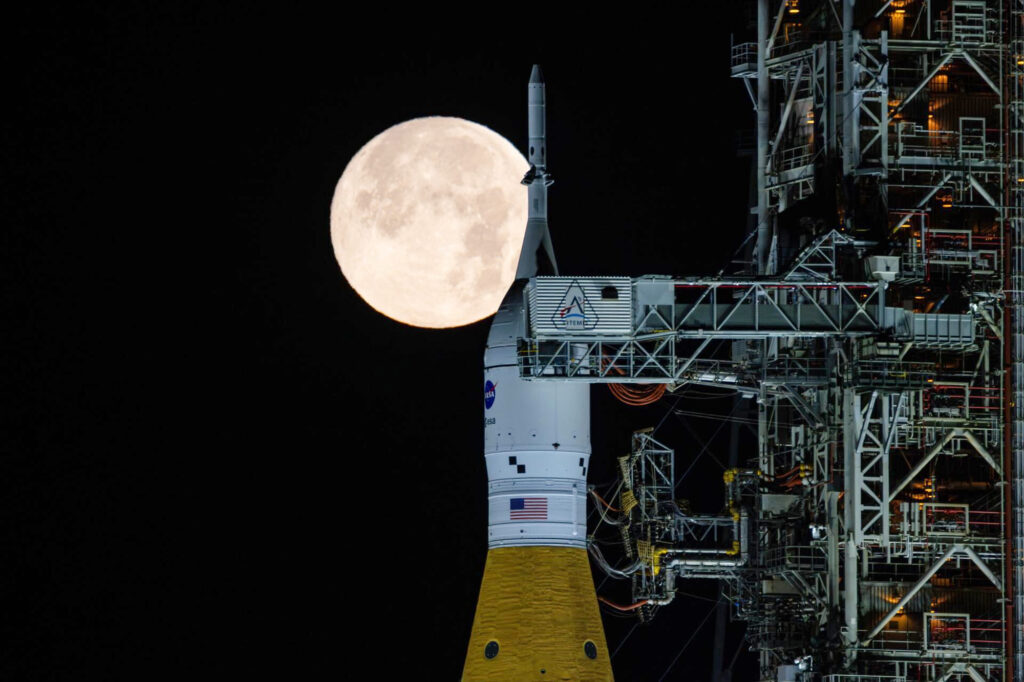
Astronauts are heading back to the moon — the first time anyone has approached it since 1972.
After a recent delay, NASA is targeting March to launch four astronauts from Cape Canaveral, Florida, for a 10-day journey around the moon. As part of NASA’s Artemis program, the trip is intended to pave the way for a moon landing by 2028. The long-term goal is more ambitious: to create a lunar base where astronauts can prepare for missions to more distant destinations — specifically, Mars.
As a scientist and explorer, I understand the allure. NASA has landed multiple probes on the Red Planet, but their utility doesn’t compare to what a human could accomplish. Humans, however, have one essential flaw that makes us poorly suited to being deep-space explorers: our biology.
We have learned a tremendous amount in the last 60 years about how space affects the body. Without Earth’s gravitational pull, muscles weaken and bones become brittle. In space, the fluids that normally accumulate in the legs spread to the upper body, where they put pressure on sensitive tissues in our eyes and impair vision. There’s radiation in the form of particles shooting from the sun, which can damage human DNA. Even more dangerous particles known as galactic cosmic rays travel from distant supernovas at near light speed. Our microbiome, the collection of microorganisms in the body that provides benefits from helping digest food to fending off disease, is significantly altered in space.
There are also psychological challenges from being confined in an enclosure with only a few companions and realizing how far from home you are. Astronauts experience what they call “space fog,” an inability to think clearly. Evidence from animal studies shows that increased radiation exposure can hurt cognitive abilities.
While astronauts have learned how to cope with many of these challenges, deeper space travel involves greater risks. NASA’s plans for Mars involve round-trip journeys that would last at least 2½ years, which would exceed the longest time a person has been away from Earth by about a year. Most human space exploration has occurred in low Earth orbit. That is close enough to our planet that those aboard the International Space Station and China’s Tiangong space station are largely protected from the most harmful forms of radiation thanks to Earth’s magnetic field.
Still, when astronaut Scott Kelly spent a year aboard the ISS, he came back with changes to his DNA. While most of these are thought to be largely harmless, anyone who ventures farther and for much longer should expect even more genetic damage.
Another challenge of going to Mars is food. Astronauts typically eat prepackaged, shelf-stable food. On a mission to Mars, you won’t be able to enjoy fresh food for more than a few weeks after departure unless you grow it, something that has been accomplished in space on a small scale. Subsisting on packaged provisions for years can cause physical and psychological distress.
Yet, despite all we’ve learned about how space affects the body and mind, and the importance of that knowledge to long-term cosmic ambitions, surprisingly little research focuses on human biology. The vast majority of government funding in the space sector is spent on engineering hardware, including what is needed to get astronauts out there and keep them alive. Rockets and space stations are essential, but what good are they unless the people inside them are not only living but also thriving?
Government agencies are no longer the only entities focused on space travel. Companies such as SpaceX and Blue Origin are now responsible for the majority of space flights. Neither has sent passengers beyond low Earth orbit. But Blue Origin has plans to take visitors to the moon, and SpaceX founder and chief executive Elon Musk is planning a lunar base while maintaining that the company’s long-term goal is to create a settlement on Mars. (Blue Origin founder Jeff Bezos owns The Washington Post.) It’s uncertain whether these commercial enterprises will invest as much energy and resources on human biology as they have on engineering.
As the Artemis astronauts prepare to fly around the moon, it is worth remembering that humanity is on the cusp of being able to leave Earth and live among the stars. Yet we must recognize that our bodies and minds, resilient as they are, have limits. If we choose to embark on deeper space missions, we should recognize that the risks will be far greater than anything a human being has experienced. And if, like the Artemis astronauts, we intend to return to Earth, we should treat our biology with as much care as we do our rockets.
The post The flaw that could prevent humans from becoming deep-space explorers appeared first on Washington Post.