Two weeks out from the Super Bowl, the trusty old plasma-screen TV I bought in 2008 gave up the ghost. I had purchased it because I loved movies: At the time, plasma screens were capable of rendering a more film-like image than competing liquid crystal displays, or LCDs. Heartbroken (and in a hurry, since I had a Super Bowl party looming), I went and bought a new OLED — which stands for organic light-emitting diode, a much more modern technology, also known for delivering a cinema-like experience to the living room.
But as I sat down to put the new set through its paces, I realized that in the past few years I had stopped watching movies at home. I also never really cottoned to the binge-watchable TV series revolution; multi-episode, multi-season storyline arcs of prestige series frequently just lost me. While I still head to the movie theater with friends to consume and discuss the latest it-film, settling into my couch to watch a movie over the weekend rarely happens these days.
It’s easy to curl into a conservative crouch about popular culture: Things obviously used to be better. Especially in film. The blockbusters of my youth, the Star Wars and the Indiana Jones films, may have been overcommercialized franchise operations. But they had a warm glow missing in today’s equivalents, like the distended and bewildering Marvel Cinematic Universe (which has made an eye-watering $32 billion in global box office gross to date). And the 1970s … now that was the real golden age of American cinema! Sweeping and gritty dramas like “Chinatown,” “Taxi Driver” and “Apocalypse Now” managed to say something visceral about America in ways that today’s auteur efforts struggle to match.
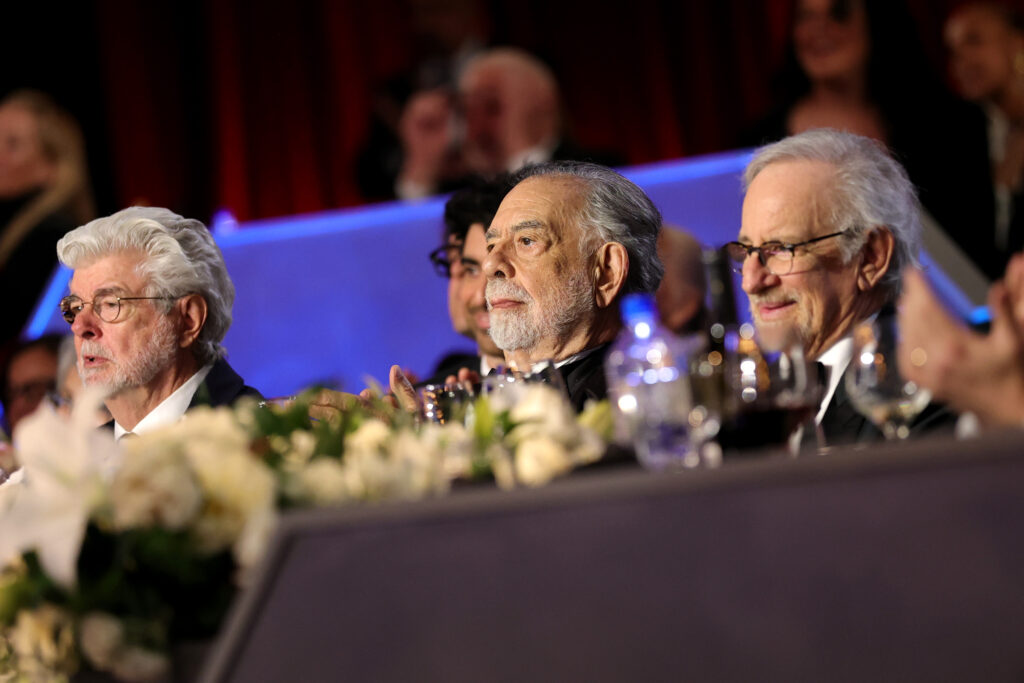
Right? Sort of. Paul Fischer’s sprawling new history, “The Last Kings of Hollywood: Coppola, Lucas, Spielberg — and the Battle for the Soul of American Cinema,” provides plenty of biographical texture for what surely was a golden age. It traces the intertwined careers of a group of young men who first barged into Hollywood, determined to make more “personal” films just as the old studio system was running out of steam. They largely succeed in the 1970s, but paradoxically end up recreating the very system they had sought to replace.
Fischer quotes Walter Murch, the award-winning editor and sound designer who also came up in that era: “It’s the trajectory of every revolution, you know. As Eric Hoffer said, every great idea starts as a movement, becomes a business, and winds up as a racket.” By the end of the book, my cranky conservatism was giving way to an appreciation of just how cyclical Hollywood has always been — and what that means for today.
The three main protagonists, Francis Ford Coppola, Steven Spielberg and George Lucas, end up in different places, though all three prove Murch right in their own way. Coppola, the self-destructive auteur, crashes spectacularly and repeatedly after every towering success — losing his studio, going bankrupt, even burying his son after a freak accident. But he keeps circling back to the independent, personal filmmaking he always aspired to. He ends up, almost in spite of himself, closest to the original revolutionary vision.
Spielberg, the perennial outsider who studies every move the insiders made, eventually becomes the establishment — co-founding DreamWorks in 1994 with Jeffrey Katzenberg and David Geffen, who at the time owned former studio titan Jack Warner’s house. And Lucas, who railed against the studio system louder than anyone, sells his franchise empire to Disney for $4 billion and builds himself a gated compound as opulent as anything the old moguls ever owned.
Of the three, Lucas is the most perceptive and farseeing. In 1996, he sketched out his vision to Randall Lane of Forbes magazine. The future was digital, he said. Films sets would be designed for computer-generated imagery. Producers could download “digital images of actors” and place them as extras. And delivery would be via internet rather than in theaters. Instead of theatrical releases where the whole world would get to partake in a shared experience, each “product will have small market niches.”
Early in the book, in 1968, Arthur Knight — Lucas’s own former film professor — sits on a panel alongside his former student and complains that film schools are oversubscribed and the craft is being debased. “All you have to do today to be a moviemaker is put your eye behind a camera,” he says. Lucas, still young and furious, fires back in defense of the new generation.
The irony is that Knight’s nightmare came true beyond anything he could have imagined — and Lucas’s own generation kicked off the revolution in personal filmmaking that helped get it there. YouTube, which pulled in $60 billion in revenue last year and now commands more total TV viewership than any other platform, has helped make filmmaking so democratic that over 500 hours of new video are uploaded every minute.
I turn on my new television and scroll through the apps. Yes, some of them are streaming services delivering movies directly to my couch. But a surprising amount of the real estate is given over to self-produced independent creators with audiences numbering in the millions, making exactly the kind of personal work that Lucas and Coppola once dreamed of — just not in a format anyone from 1968 would recognize as cinema.
Anyway, I put on “Raiders of the Lost Ark” — a film that epitomizes the revolution-to-racket pipeline. Lucas-produced, Spielberg-directed, it spawned four sequels, a television series and several theme park rides. By any honest accounting, it’s the prototype for the franchise machine that eventually gave us the MCU.
And yet there’s something in it that the MCU can’t touch — a handmade quality, a sense that two absurdly talented people are having the time of their lives. Two hours later, the credits roll and I’m sitting there grinning. Meanwhile, somewhere out there, someone with a cellphone camera is probably getting started on the next revolution.
The post How a filmmaking revolution sparked the slow march to YouTube appeared first on Washington Post.